Bernardo O'Higgins National Park
Bernardo O'Higgins National Park
Chile's largest national park, Bernardo O'Higgins protects 49 glaciers and a labyrinth of fjords accessible only by boat or helicopter.
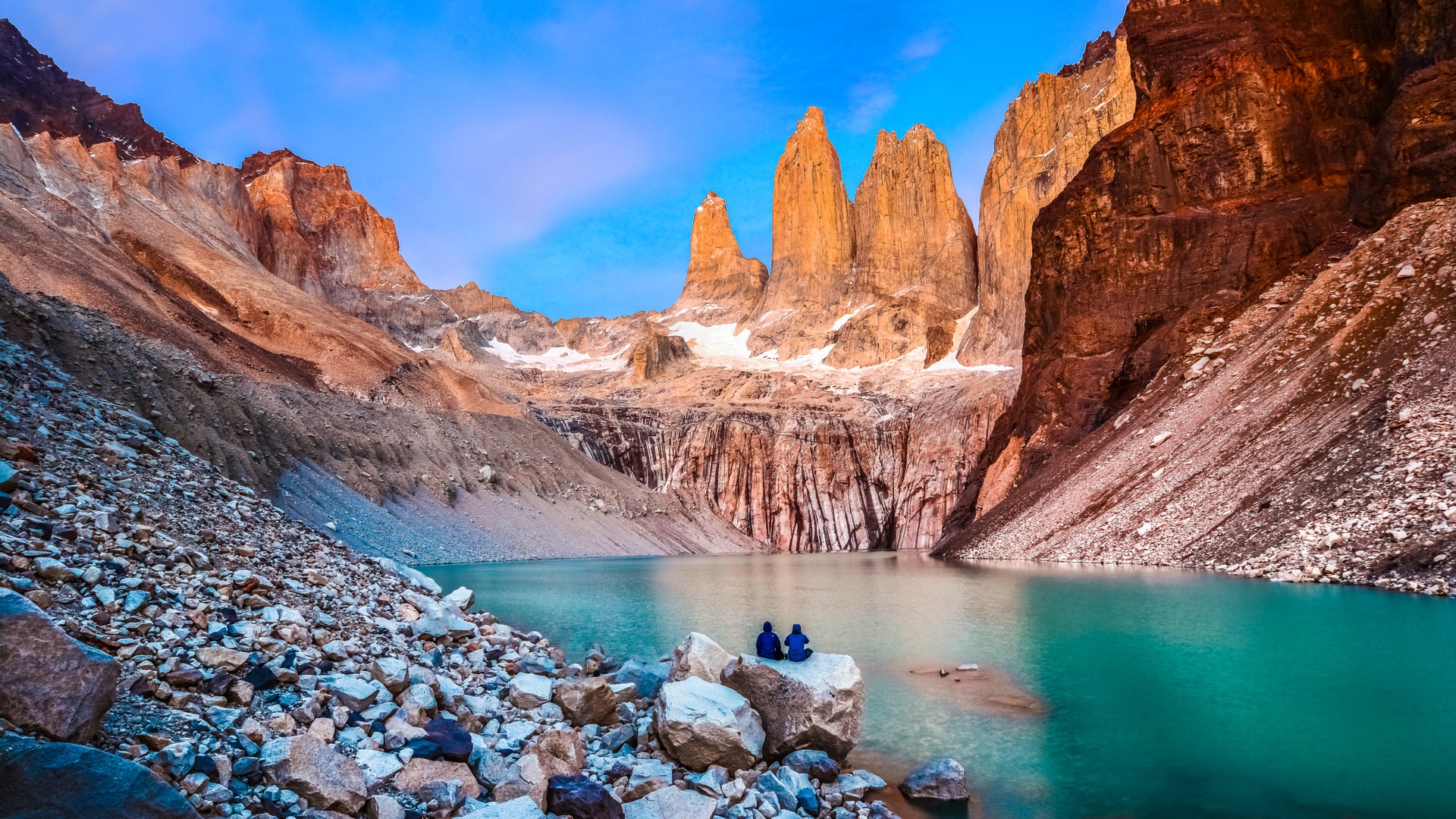
Patagonia is a land where nature reigns supreme, exemplified by the Bernardo O'Higgins National Park, barely altered by human activity. Situated between Aysén Patagonia and the Magallanes region, it covers the Chilean portion of the South Patagonian Ice Field, the world's third-largest ice cap.
Set your course for one of Chile's most extraordinary destinations:
A brief history of the park
Bernardo O'Higgins National Park was established on July 22, 1969, then expanded in 1985. It was named in honor of Bernardo O'Higgins (1778–1842), a Chilean military officer. The park's central-eastern region remains the subject of a sovereignty dispute between Argentina and Chile.
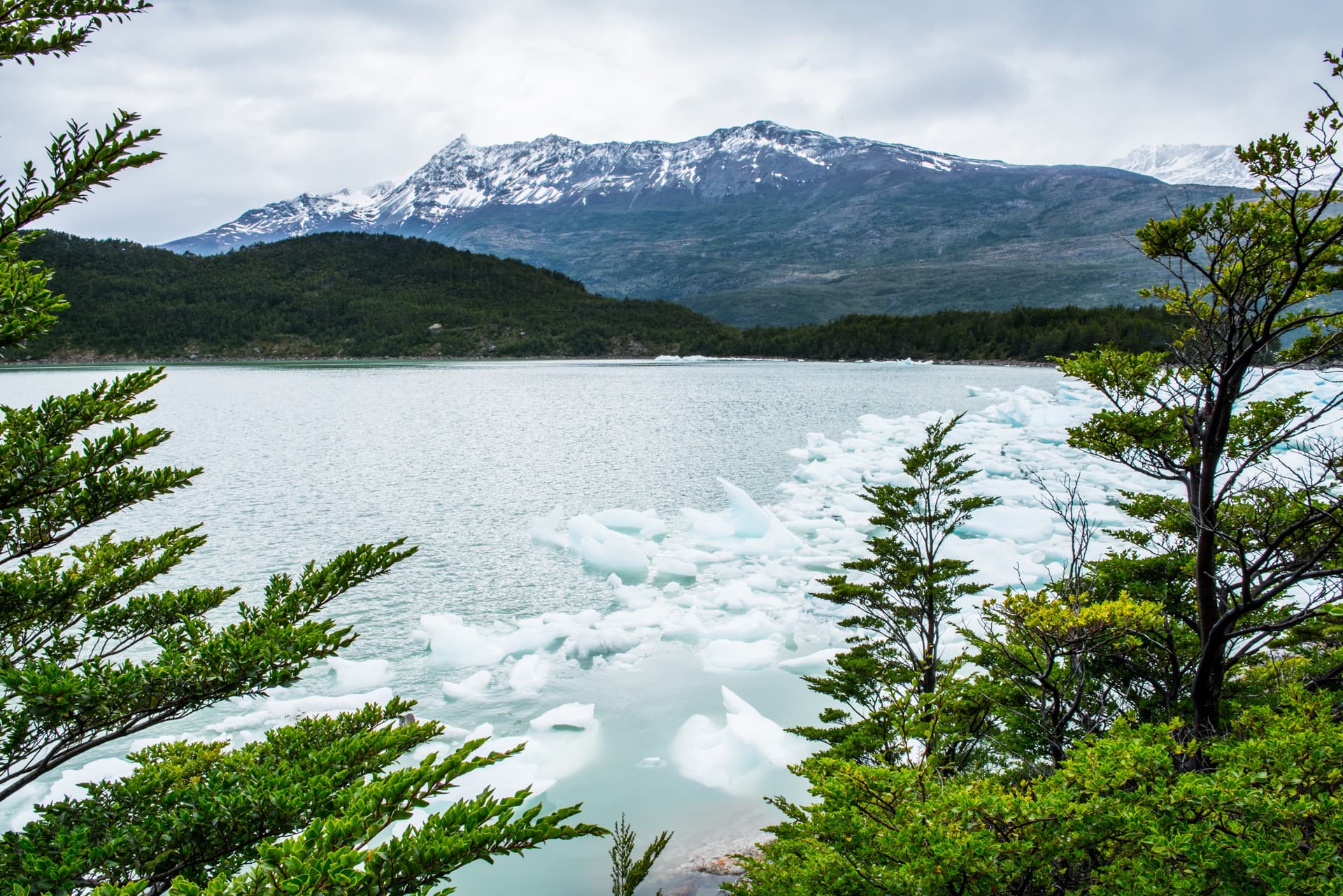
In June 2007, park authorities announced the disappearance of a glacial lake, which resulted in the formation of a crater 30 meters deep. Only the blocks of ice that once floated on the lake's surface bear witness to this past at the crater's bottom. According to scientists' findings, the water's disappearance is a consequence of climate change.
Bernardo O'Higgins National Park today
Bernardo O'Higgins holds numerous records: it is Chile's largest park, the largest protected area in South America, and the world's most significant freshwater reserve. Roughly one-quarter of the park is located in the XIth region of Aisén del General Carlos Ibáñez del Campo, in southern Chile. The remainder lies within the XIIth region of Magallanes and Chilean Antarctica.
Visiting this park offers the chance to witness nature in its purest state. This reserve contains the world's largest continuous fjord system. Such is the beauty of the park's landscapes! Moreover, as ancestral territory of the Kawésqar people, it holds vestiges of this hunter-gatherer civilization.
The park is home to incredible wildlife, particularly within the indigenous forests that flourish amid the network of fjords and channels. Beyond observing animals, discovering glaciers by sea kayak is another popular activity. By navigating the Ultima Esperanza fjord, you'll reach the park's most renowned glaciers: Balmaceda and Serrano.
The park remains largely untamed because tourism struggles to develop here due to its remoteness. Only boat and helicopter journeys provide access to O'Higgins park.
Bernardo O'Higgins at a glance
Bernardo O'Higgins is Chile's largest national park with an area of 35,259.01 km² (3,525,901 hectares). It is characterized by the presence of vast glacial zones, including the Campo de Hielo Dr. Juan Bruggen and the Patagónico Ice Field.
The park's highest peak is Lautaro volcano (3,607 m). Mount Fitz Roy, Cerro Chaltén, and Cerro Torre rank among the park's other notable summits.
In its southern section, with Monte Balmaceda (2,035 m) as its highest point, the altitude remains relatively modest. Nevertheless, the landscapes are spectacular. It is in this area that the Balmaceda and Serrano glaciers stand.
Along the coastline, numerous narrow fjords penetrate deep into the mountains. These are regularly swept by violent winds.
The 49 glaciers within the park represent its principal asset. Indeed, Glacier Pío XI, from which immense blocks of ice periodically calve, is the park's most visited glacier and attracts travelers from around the world. Considered the largest glacier in the southern hemisphere after Antarctica, this glacier covers an area of 1,265 km².
The park is also renowned for its extraordinary biodiversity. It is predominantly covered with virgin evergreen forests and vast peatlands. Among these trees, the most emblematic are the Coigües, the Cipreses de las Guaitecas (Pilgerodendron), the Canelos, the Mañíos, and the Tineos. At higher elevations, Lenga and Ñirre forests dominate the landscape.
Regarding wildlife, the park hosts one of Chile's largest populations of Huemul (Southern Andean deer), particularly in regions near the Bernardo, Jorge Montt, and Témpano glaciers. In the fjords, various animal species have made their home, including Huillíns, Chungungos, penguins, cormorants, and wild geese. During hikes, you may encounter, with a bit of luck, pumas, Magellanic foxes, sea lions, dolphins, whales, condors, and more.
Bernardo O'Higgins, a natural site waiting to be explored
The vast majority of Bernardo O'Higgins National Park is a pristine wilderness, preserved from human footprints. This park is a majestic realm where animals inhabit freely among forests and fjords.
The glaciers of the South Patagonian Ice Field are the principal protagonists of this exceptional landscape. The best approach is to plan a boat excursion to admire their beauty up close.
Don't miss the Pio XI and O'Higgins glaciers. At times, the towering turquoise ice walls crack under water pressure, sending massive blocks crashing into the glacial lakes with tremendous force. The spectacle is truly grand!
Beyond boat excursions, countless activities await. You can explore the park on horseback, relax around a campfire, or camp along the riverbank. Trekking, mountaineering, and rock climbing abound!
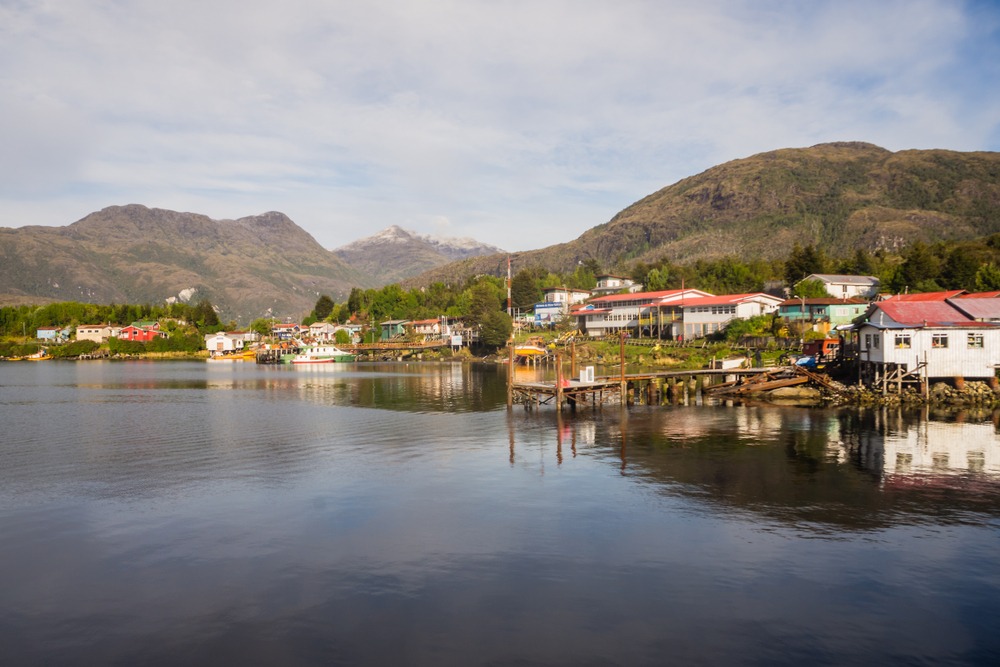
Chile's largest park, fragmenting into islands, is a rather untamed expanse. It has long been inhabited by the Kawésqar people (or Alakalufe). The village of Puerto Edén, founded in the 1960s, will simply enchant you. It sits in a remote zone at the tip of a deep fjord, in the heart of South America's mountains. Among its 250 inhabitants, 15 are descendants of the indigenous Kawéskar community.
Villa O'Higgins, a small village of 600 inhabitants, rests on the shore of Lago O'Higgins at the end of the Southern Route. This village, nestled in the heart of Chilean Patagonia, is accessible by ferry. Among wind-swept landscapes, towering snow-capped Andean peaks, and the absence of human traces, you feel a sense of absolute freedom.
By boat
The park currently has no overland access. It is reachable only by boat from Punta Arenas, Puerto Natales, Puerto Montt, Tortel, and Villa O'Higgins.
By air
Various airlines offer daily flights to Punta Arenas and Puerto Natales. It is also possible to take a helicopter to access the park directly.
Interested in this visit?
We can include it in your personalised itinerary.