Saltos de Petrohué
Saltos de Petrohué
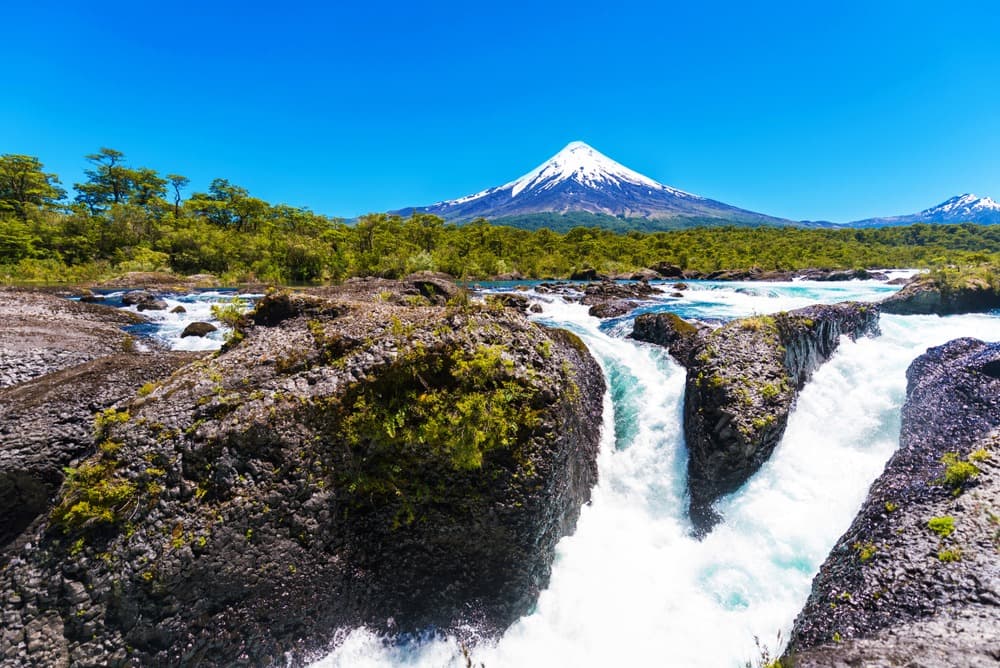
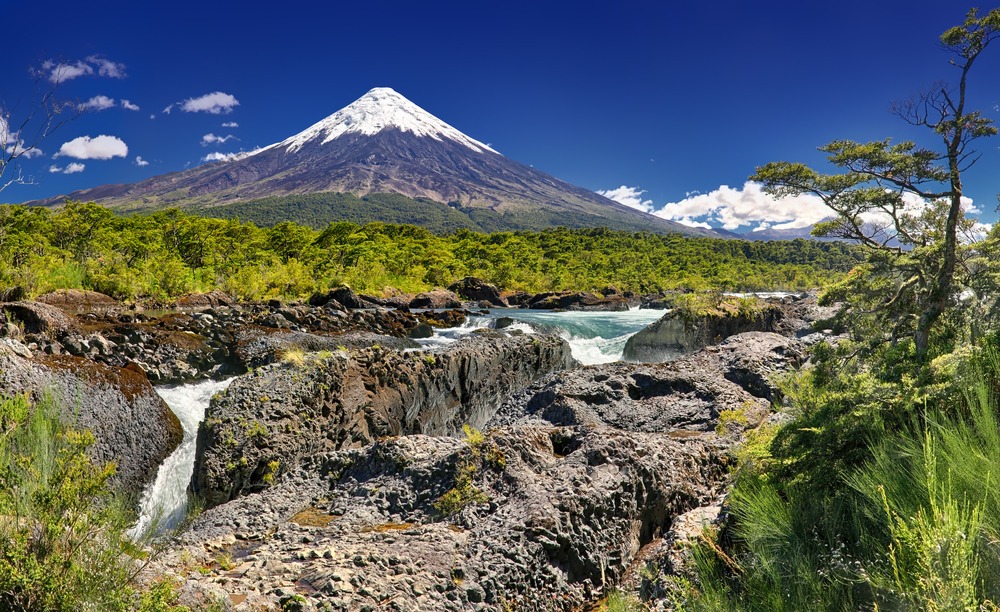
55 km from Puerto Varas, the Saltos de Petrohué cascade down a basalt riverbed sculpted by lava flows from Osorno volcano, within Chile's oldest national park.
Just 50 km from Puerto Varas, the majestic Petrohué waterfalls plunge into view, with the Osorno volcano as a dramatic backdrop. Los Saltos de Petrohué are a true postcard image of Chile's Lake District. Spilling through the lush volcanic landscape of the Vicente Pérez Rosales National Park in Patagonia, they captivate with their blue-green waters and the thunderous roar of cascading torrents. Discover this Chilean natural wonder, an unmissable stop on the road to Petrohué village.
History of the Petrohué waterfalls
The formation of the Petrohué waterfalls dates back approximately 600 years and is believed to have been caused by the accumulation of lava rocks from an eruption of Osorno volcano.
The Petrohué waterfalls today
The Petrohué waterfalls are situated in the upper course of the Petrohué River in Chile, near Lago Todos los Santos. They lie precisely 70 kilometres northeast by road from Puerto Montt and 55 kilometres east of Puerto Varas. Travellers along the international route between Puerto Montt (Chile) and Bariloche (Argentina) typically pause here for an extended stop.
This iconic attraction in southern Chile comprises a group of waterfalls belonging to the Petrohué River. The beautiful site is located within Vicente Perez Rosales National Park, Chile's oldest, founded in 1926. As throughout southern Chile, vegetation is dense and evergreen, thanks to a temperate, rainy climate.
The Petrohué falls offer one of the most breathtaking spectacles in the country. Waterfalls crashing relentlessly against basalt create an excellent photography subject. The falls are accessible on foot. The echo of roaring waters announces your arrival at the destination.
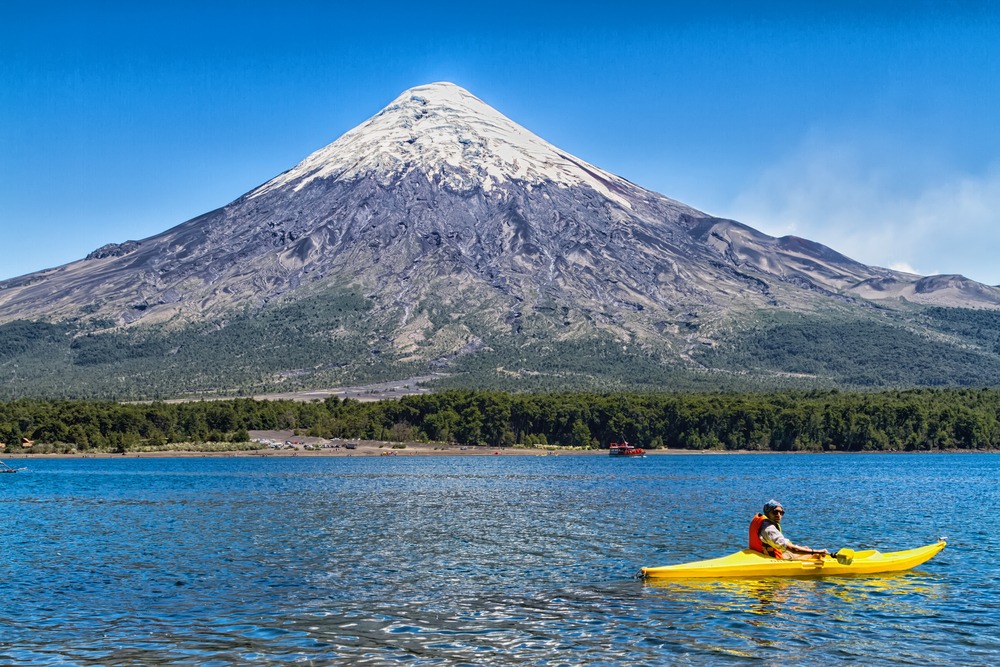
The water, turquoise and translucent, sometimes carries sand and stones swept down by volcanic mudflows. From the falls, you enjoy a panoramic view of Osorno volcano, whose majesty reveals destructive power.
The rushing waters and rocks constitute the natural habitat of the Torrent Duck, an endemic Andean species. As you approach the falls, a refreshing mist envelops you. For more adventure, you can descend the river by rafting or kayaking.
The surrounding forests are crisscrossed by trails where you'll discover a great variety of trees (coigüe, canelo, and myrtle). For wildlife, you'll often spot deer or pumas.
The falls are also one of the park's best picnic spots. You're treated to the magnificent contrast between the white of the rapids, the green of the trees, the black of the rocky riverbed, and the snow-capped volcano.
Best time to visit
Like the rest of the Lake District, the Petrohué waterfalls can be visited year-round, though access is limited between June and September due to winter weather conditions. The ideal time to visit is the summer season, from December to March, when temperatures are particularly mild, averaging 19°C.
To reach Petrohué, first head to Puerto Varas and make your way to the city centre near the Plaza de Armas on Del Salvador Street.
Buses (especially in summer) regularly connect Puerto Varas to the falls entrance via Route 225. You can continue to Petrohué village, 6km further, where you'll find the park entrance.
Interested in this visit?
We can include it in your personalised itinerary.