Punta Arenas Cemetery
Punta Arenas Cemetery
Inaugurated in 1894 and designated a national monument, the Sara Braun Cemetery in Punta Arenas tells the story of great Patagonian families through its mausoleums and legends.
The municipal cemetery of Punta Arenas, officially known as the "Cementerio Municipal Sara Braun," is far more than a simple resting place for the departed. Located in this legendary city of Chilean Patagonia, it attracts thousands of visitors each year, intrigued by its history, architecture, and the unique atmosphere it radiates. Whether you're passionate about history, funerary art, or simply curious, a visit to this cemetery promises to be a memorable experience.
History
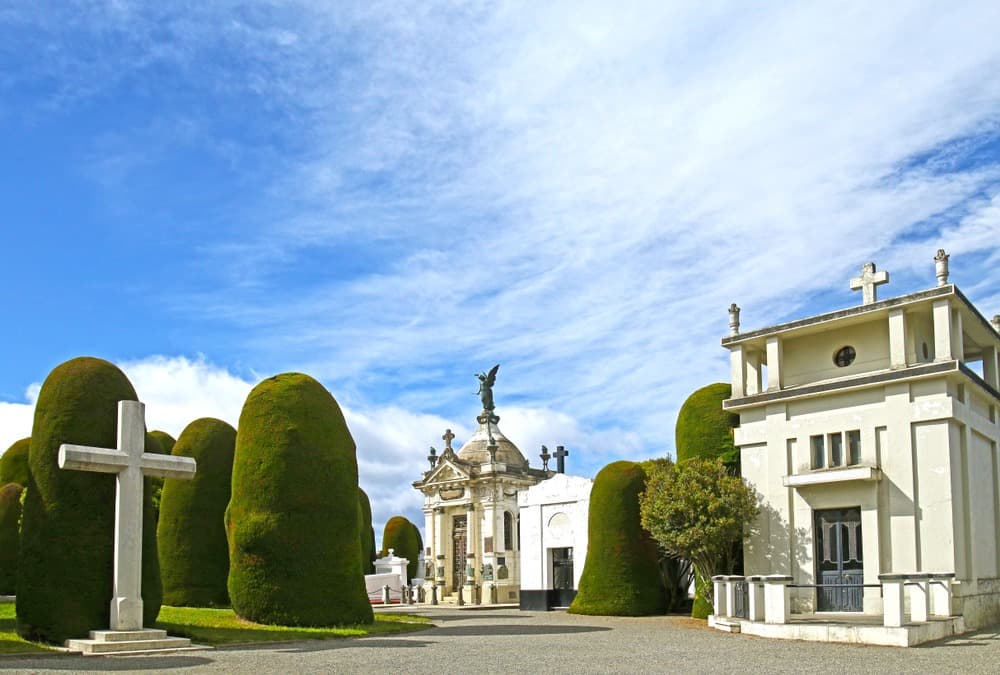
On April 18, 1894, under the government of Manuel Señoret, the new cemetery was inaugurated to replace the old one located at the current site of Plaza José de los Santos Mardones. The land, spanning 4 hectares, had been donated by benefactress Sara Braun and enabled the creation of this place designed to honor the deceased with dignity. Engineer Carlos Prieto was tasked with developing the master plan, giving birth to an octagonal structure with wide avenues lined with cypress trees. These trees serve to organize the pathways while delineating sections called "casernes," arranged as plots or blocks where the mausoleums stand.
In 1919, Sara Braun made another donation enabling the construction of the surrounding walls and entrance portico, supervised by engineer Fortunato Circutti. He would also design the ironwork that today surrounds the cemetery, lending a solemn and majestic dimension to this sacred space. The Punta Arenas cemetery is not only a place of reflection but also a witness to local history.
Distinctive Architecture
The Punta Arenas cemetery stands out for its great diversity of funerary monuments, ranging from sumptuous mausoleums to more modest tombs. Among the notable sepulchers are those of sailors and immigrants. You'll also notice the magnificent graves of aristocratic family members such as José Menéndez, Jovino Fernández Martínez, and others.
The mausoleums, often constructed with noble materials such as marble and granite, reflect European influence. Many are richly adorned with sculptures representing angels, crosses, or religious motifs, testifying to the Catholic faith that predominated in the region.
This cemetery is also a true open-air museum, with varied architecture ranging from sepulchers inspired by ancient Egyptian pyramids to finely carved crypts. The avenues reveal fascinating tombs, some adorned with wrought-iron sculptures and ceramics depicting the deceased.
Captivating Stories and Legends
Like any old cemetery, Punta Arenas abounds with captivating stories and fascinating legends, transforming this place into a mysterious space:
Sara Braun's Gate
When Sara Braun made her donation for the construction of the cemetery's entrance, she made a particular request. Indeed, after her death, the central gate of this place was to be permanently sealed. Since then, this gate has remained closed and has not been opened since her passing.
Moreover, another intriguing myth surrounds Sara Braun: it is said that upon her death, she was embalmed and that every November 1st, her body is exhumed to be made up and coiffed. What makes this legend even more captivating is that many people visit her tomb on this date to verify whether this is truly the case.
The Tomb of the Unknown Indian
One of the most well-known legends of the Punta Arenas cemetery is that of the "Indio Desconocido." The story begins in 1929, when an indigenous Indian dies on Diego de Almagro Island, following a confrontation with explorers who came to establish a quarry on Cambridge Island. The Indian was buried in the Punta Arenas cemetery thanks to a donation from the local administration. Twenty years later, candles and coins are discovered around his tomb. In 1968–1969, offerings and wishes testify to the gratitude of those who consider this man to possess miraculous powers.
Artist Edmundo Casanova also created a bronze statue of the Indian, which was installed on his tomb. This place quickly became a center of popular devotion, with many wreaths of flowers and thank-you plaques left by those whose wishes were granted. The statue, its feet polished by the gestures of the faithful, is today one of the cemetery's most frequented attractions.
The Punta Arenas cemetery is located in the northern part of the city, on Bulnez Avenue, between Francisco Bilbao and Angamos streets. It is situated approximately 10 minutes by car north of Plaza Muñoz Gamero in downtown. For those who prefer to walk, this cemetery is accessible on a twenty-minute stroll. Additionally, there are numerous shared taxis (colectivos) that stop there regularly.
Tourists arriving by car can park free of charge in the parking lot located just across from the cemetery entrance. You can also find a map and detailed information about the site's important monuments to guide visitors. The cemetery is open daily.
Protected Heritage
The Punta Arenas cemetery was declared a national monument of Chile on November 26, 2012, in the category of historic monuments. Moreover, CNN qualifies it as one of the world's most beautiful cemeteries. This recognition ensures the preservation of its tombs, cypress trees, and unique stories for future generations. Efforts are also being made to document the histories of families buried here, to safeguard the collective memory of the region.
Information and Practical Tips
The cemetery is open to the public and constitutes a must-see visit for anyone traveling to Punta Arenas. Although it's possible to stroll freely, it's recommended to take a guided tour in order to fully understand its history and secrets. Local guides, often passionate enthusiasts, share fascinating anecdotes and help visitors better appreciate this exceptional place.

Interested in this visit?
We can include it in your personalised itinerary.