Queulat National Park
Queulat National Park
Along the Carretera Austral, Queulat National Park protects 154,093 hectares of cold forests, fjords and glaciers, including the famous Colgante Glacier.
Queulat National Park, located in the Aysén region of southern Chile, is one of Patagonia's ecological jewels. This breathtakingly beautiful park captivates visitors with its wild landscapes, majestic mountains, impressive glaciers and lush forests. Covering an area of 154,093 hectares, it is an essential destination for nature lovers and adventurers seeking pristine landscapes and rich biodiversity.
A place shaped by nature and history
Queulat National Park was established in 1983 to protect its fragile ecosystems, which include humid temperate forests, fjords and glaciers. Since then, it has been managed by CONAF, the Corporación Nacional Forestal.
The geological history of the region stretches back millions of years, when glaciers shaped the park's present-day landscape. Indeed, glacial activity sculpted the imposing mountains, deep valleys and crystal-clear rivers visible today.
The origin of the park's name is subject to two interpretations. According to some, it derives from the Kawésqar word "kenelat," meaning "distant lands." Others, however, suggest it comes from the Chono word "keolat," evoking the "sound of waterfalls." Regardless of its exact origin, the park embodies the wild beauty of Patagonia, with its majestic landscapes, evoking the heritage of the peoples who once traveled through it.
The region was first explored around 1766, when Jesuits, led by Father José Garcia Alsue, ventured into it in search of the mythical City of the Caesars.
Climate
The park region is characterized by a temperate maritime climate, with cold and humid conditions in the west becoming progressively drier moving eastward. In winter, precipitation is abundant, and high-altitude areas experience snowfall. The average annual temperature hovers around 8°C.
The best time to visit Queulat National Park extends from November to March, during the southern summer, when weather is milder and trails are accessible. However, even during this period, the region can experience frequent showers. It is therefore important to prepare for changing weather conditions.
Breathtaking landscapes
Queulat National Park presents a variety of landscapes that make it a unique destination. The diversity of ecosystems and particular topography allow flora and fauna to thrive in perfect balance.
Temperate forests
The park is home to humid temperate forests, typical of Chile's Patagonian region. These are dominated by tree species such as:
- Coihue
- Lenga
- Ñire
- Tepa
- Chilean rhubarb
- Giant ferns
- Various plants and mosses
Moreover, the trees are covered with lichen, giving the forest a magical and enchanting appearance. Carnivorous plants like sundews and bladderworts, which grow in marshy areas, add a distinctive touch to the ecosystem.
Glaciers and mountains
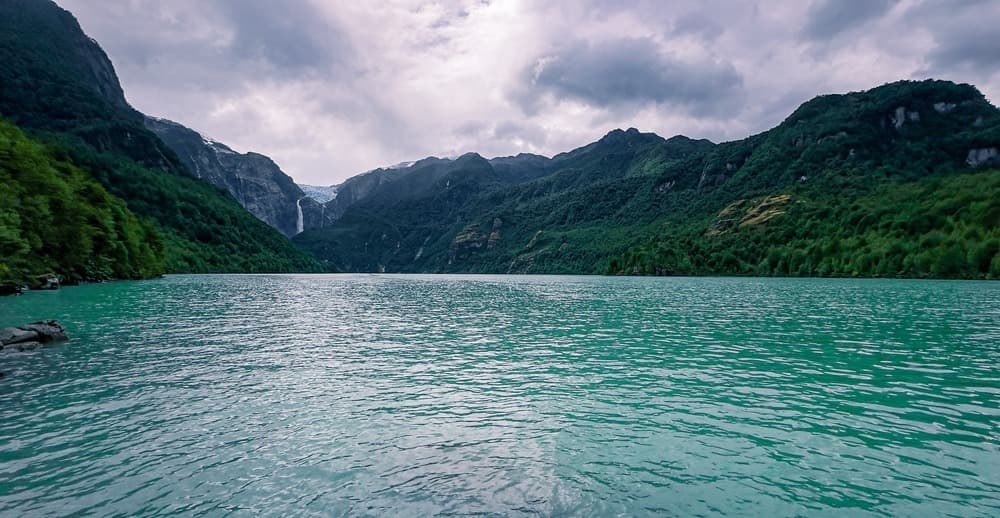
One of the park's most striking features is undoubtedly the Colgante Glacier, discovered by Captain Enrique Simpson in 1875. It is a hanging glacier and one of the region's most beautiful natural wonders. According to his descriptions, the glacier, once located just 100 meters from the shore, now sits 7,800 meters away. Today, the Colgante Glacier extends above an enclosed valley and offers an incredible visual spectacle, with icy walls plunging into impressive waterfalls.
Additionally, the mountains of Queulat National Park, forming a complex network of steep ridges and deep valleys, also offer ideal terrain for hiking and climbing. Cerro Ventisquero, one of the park's highest points, offers breathtaking views across the entire region, including surrounding glaciers and fjords.
Waterfalls and lagoons
The region is also dotted with magnificent waterfalls, lagoons and lakes, some visible from hiking trails. These include:
- Padre Garcia waterfall
- Salto del Cóndor
- Tempanos Lagoon
- Los Pumas Lagoon
- Lake Risopatrón
The most famous waterfall is Cascada de los Vientos. Falling in several stages, it is fed by meltwater from the Colgante Glacier and creates a spectacular sight.
Wildlife of Queulat National Park
Queulat National Park is a true refuge for diverse wildlife. One of its most fascinating aspects is how different animal species adapt to this harsh yet rich environment.
The park's fauna is varied and well-adapted to the glacial and forest ecosystem. Among the animals that can be observed are:
- Puma
- Pudú
- Kodkod
- Magellanic fox
The park is also conducive to birdwatching, with a wide variety of species, including:
- Andean condor
- Patagonian swift
- Magellanic goose
- Huet-huet
- Giant coot
- Whistling duck of Chiloé
- Kingfisher
- Chilean finch
- Black-necked swan
- Thorn-tailed rayadito
Moreover, in the park's lakes and waters, you'll find salmon and trout, fish species well-suited to fly fishing. Near marshy areas, you may occasionally spot amphibians like the four-eyed frog.
Although access to Queulat National Park is somewhat complex due to its remote location, it is entirely possible to reach it by following a few simple steps. Here are the main options for getting there:
By car
The most common way to reach Queulat National Park is via the Carretera Austral, a road famous for its spectacular scenery. From Puerto Montt, take Route 225 southward, then Route 7 toward Cochrane and Coyhaique (approximately 165-170 km from the park). From there, continue heading south and follow Route 231, which leads directly to the park entrance, about 2 hours away. Multiple trails and campsites are accessible from this route. Once you're on Route 231, simply follow the signs indicating the park's various entry points. Several hiking trails and campsites are accessible from this road.
By bus
If you prefer not to drive, taking the bus is a viable alternative. From Puerto Montt or Coyhaique, several bus companies offer regular services to towns near the park, such as Puyhuapi, a small locality located about 30 minutes from your destination. From there, you can easily reach the park entrance by taxi or local bus.
By plane
For those preferring to save time, it is possible to fly to the Aysén region. Coyhaique, the capital of this territory, has a small airport, Teniente Vidal Airport, served by regular flights from Puerto Montt. Once you arrive in Coyhaique, you can continue your journey by car or bus to the park, as mentioned above.
Activities
Queulat National Park offers a multitude of activities for nature enthusiasts and adventure seekers. Here are the main activities you can enjoy during your visit:
Hiking and trekking
The park has several hiking trails suitable for all levels. Among the most popular are:
- Sendero Ventisquero Colgante: this 3-hour trail takes you through dense forest and offers spectacular views of the hanging glacier.
- Cascada de los Vientos trail: this approximately 2-hour trail leads to a magnificent waterfall fed by glacier meltwater. It allows you to witness the raw power of nature up close.
- Cerro Ventisquero trail: this more challenging route, taking about 6 hours, leads to the summit of Cerro Ventisquero and offers breathtaking views of the entire park and its glaciers.
Wildlife and flora observation
Queulat National Park is an excellent place to discover Chilean wildlife in its natural habitat. It is possible to spot various animals while traversing the trails. Birdwatching is particularly popular, as the region is home to rare, endemic and fascinating species.
Interested in this visit?
We can include it in your personalised itinerary.