Glacier Grey
Glacier Grey
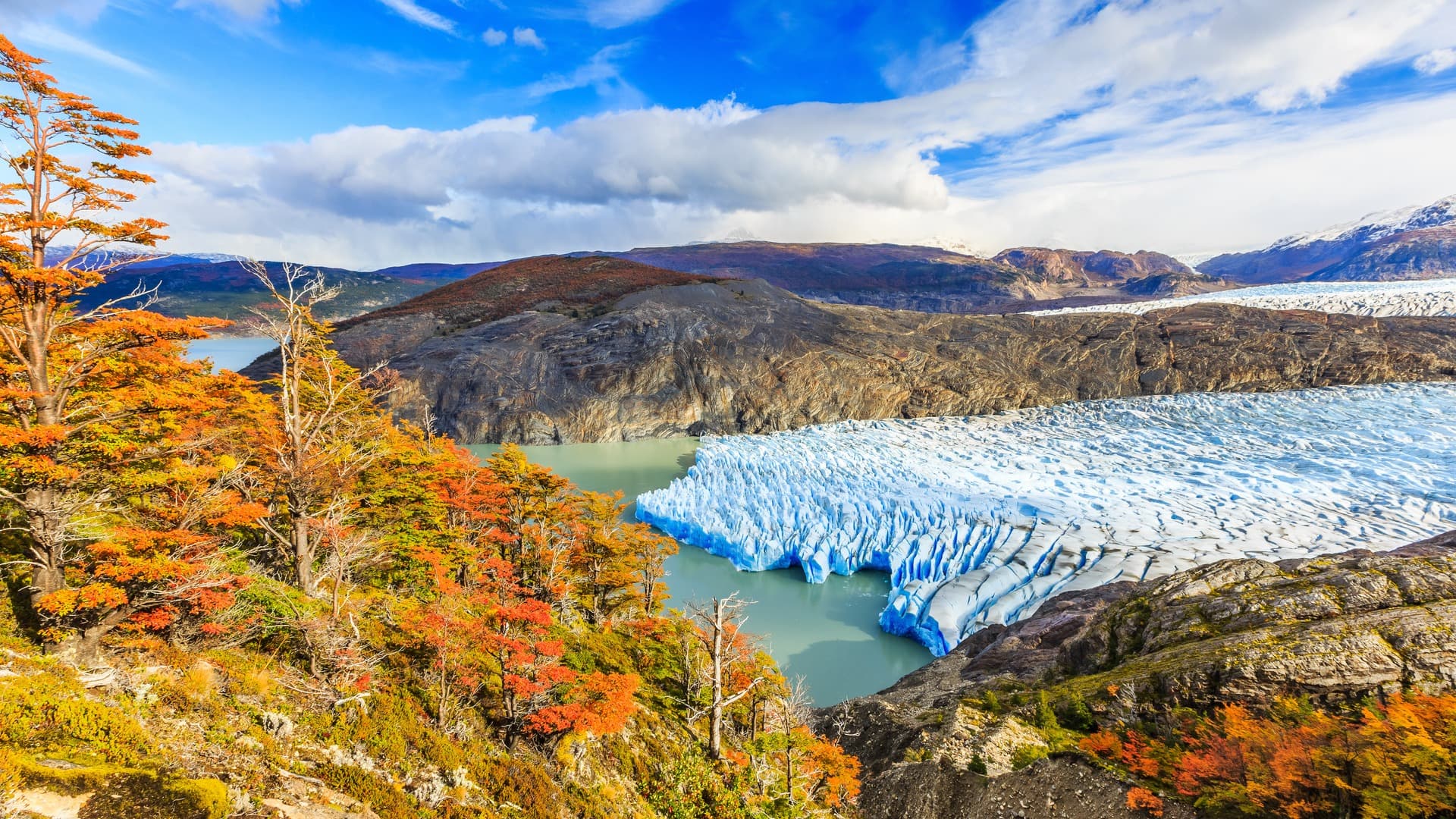
With a 6 km ice front in the western reaches of Torres del Paine National Park, Glacier Grey can be explored by boat, on foot, or via ice trekking departing from Puerto Natales.
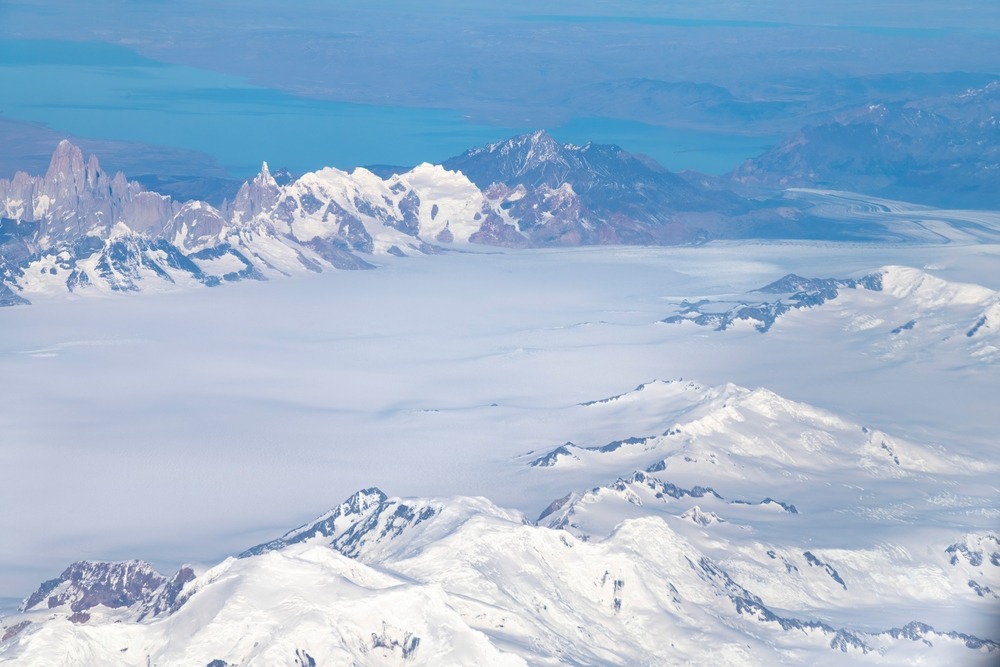
Beyond Antarctica and Greenland, the ice fields of Southern Patagonia comprise the world's third-largest ice cap. 49 glacial tongues were born there, with 5 forming an integral part of the Torres del Paine National Park, in Chilean Patagonia.
Glacier Grey, nestled in the Andes of Patagonia at the border between Argentina and Chile, is undoubtedly the most renowned among them. A gateway to one of the most captivating natural attractions of Chilean Patagonia, it offers landscapes of unparalleled beauty.
The History of Glacier Grey
Discovered only about fifty years ago, Glacier Grey likely formed millions of years in the past.
In 1996, this glacier measured 28 km in length and covered an area of 270 km².
While the calving of icebergs from glaciers is a natural phenomenon, the rising frequency of fractures has begun to alarm experts.
The most significant ruptures of the glacier date back to the early 1990s. However, it was in November 2017 that Glacier Grey experienced another major fracture.
On February 20, 2019, a colossal iceberg of 8.8 hectares (equivalent to 6 football fields) broke away from one of Glacier Grey's walls. Shortly thereafter, on March 7 of that same year, a second block of approximately 6 hectares also detached from the glacier.
These two fractures occurring within 15 days caused the glacier to retreat 500 meters—more than half of what had been recorded during the previous decade.
Scientists have observed that the frequency of ruptures is higher on the glacier's eastern section.
Glacier Grey Today
Glacier Grey is part of the Southern Patagonia Ice Field, located in Chilean Antarctica and the Magallanes Region. It extends southward, and meltwater from the glacier feeds Grey Lake.
Grey Lake captivates with its colossal icebergs calving from the glacier's base, offering magnificent vistas. Furthermore, a boat excursion along Grey Lake provides the opportunity to view the Paine Massif up close from diverse angles.
The reward of a 12 km trek through rivers, forests, lakes, and glacial winds is the breathtaking view of Glacier Grey. It mesmerizes with its capacity to regenerate despite climate change and the passage of time.
For those not inclined toward trekking, the best alternative is to sail aboard the Grey III catamaran. You'll drift among floating icebergs watching blue-tinted walls detach from the glacier's surface before tumbling into the turquoise waters of Grey Lake.
Currently, Glacier Grey enjoys protection from various government entities due to the national parks established within its bounds. Unfortunately, efforts to preserve this magnificent natural heritage remain insufficient.
Facing events attributed to climate warming, the melting of small ice fragments in Grey Lake occurs with increasing frequency.
The Characteristics of Glacier Grey
The Southern Patagonia Ice Field, spanning 16,800 km², is the second-largest contiguous ice field in the world. Positioned at the tip of the Southern Patagonia Ice Field within the western section of Torres del Paine National Park, Glacier Grey stands as one of the iconic landscapes of Patagonia.
This vast blue-tinted lake is among the 24,100 glaciers documented in Chile. Measuring approximately 270 km², standing 30 meters tall and 6 km wide, this glacier is nonetheless considered among the smallest in the Magallanes Region.
Glacier Grey is divided into two fronts by a nunatak. This landmass emerged as the ice retreated approximately 50 years ago. Roughly 85% of this immense ice cap belongs to Chile, with the remaining 15% to Argentina.
In Argentina, it is called the Continental Patagonian Ice, while on the Chilean side, it is known as the Southern Ice Field. In Chile, this glacier is part of both the Bernardo O'Higgins and Torres del Paine National Parks, while on the Argentine side, it belongs to Los Glaciares National Park.
Exploring the Surroundings of Glacier Grey in an Original Way
One of the most beautiful natural sites within Torres del Paine National Park is Glacier Grey. Upon first glimpse, it becomes immediately clear how the glacier earned its name. Its blue-gray color is initially captivating. Viewing this glacier up close reveals an incredible spectrum of hues and immense blocks of ice in unusual forms.
With its 19-kilometer span, this colossal natural ice construction possesses unique beauty. Along its sides you'll find moraines and varying shades of white, creating a striking contrast with the glacier's deep, brilliant blue.
The adventure begins along the shores of Grey Lake. You'll embark on a walk through lush forests before emerging onto a vast expanse of black sand bordering the lake's edge. Notice the richness and diversity of fauna and flora found within Torres del Paine National Park.
From high, sheer cliffs, you may spot a condor nestled within the rock faces. Glacier Grey's backdrop showcases sumptuous landscapes: towering mountains shrouded in clouds, suspended glaciers, and occasional waterfalls.
The grand finale? A ride aboard the Grey III catamaran (capacity of 90 passengers) on Grey Lake, with 3 different entry points. As you observe this ice desert up close, you'll discover it abounds with natural wonders—from lagoons to ice pits, crevasses, ice tunnels, and glacial rivers.
In the heart of the glacier lies a "nunatak," a piece of earth dividing the glacier in two. This is where you can disembark and set out on an excursion across the immense ice cap. This earthen island is what makes Glacier Grey particularly distinctive compared to other glaciers within Torres del Paine National Park.
The spectacle presented by Glacier Grey is simply extraordinary, with its gigantic floating ice blocks displaying enchanting shades of blue. Along the glacial waters, immense icebergs, called "tampanos," drift slowly away. If you listen carefully, you'll hear the distinctly audible cracking sounds as icebergs from the glacier shift or fracture. This is a highlight of the excursion not to be missed!
Activities Available on Glacier Grey
There are several ways to explore Glacier Grey, whether on foot or by boat.
W Trek
If you have the time and are physically fit, undertake the W Trek, a 4 to 5-day hike covering 76 km through Torres del Paine National Park. The "W" designation derives from the W-shaped formation of trails crossing the southern sector of the Paine Massif.
The "W" trek is well-known among experienced hikers as one of the world's finest. You can begin the hike from Paine Grande Refuge. Your route will be dotted with trails leading to magnificent landscapes, spanning from Glacier Grey to the French Valley, passing by the 3 Granite Towers.
Boat Excursion
Those preferring the maritime route can embark on a boat excursion along Grey Lake, which leads directly to Glacier Grey. While sailing among floating icebergs along the way, enjoy stunning views of snow-capped mountains.
Ice Trekking
If you possess an adventurous spirit, strap on crampons and prepare yourself for an intense hike across Glacier Grey. This trek takes hikers toward the glacier's western face, where lagoons, tunnels, and crevasses unfold in succession.
Kayaking
Enjoy a leisurely paddle in the waters around Grey Lake and come to observe more closely, and even touch, this impressive glacier.
The Climate
Before planning your excursion to Glacier Grey, be aware that temperatures on site can drop below 0 °C. As for rainfall, it typically exceeds 2,000 mm annually.
By Air
From Colombia, you access Torres del Paine National Park via flights departing from Medellín or Bogotá.
From Bogotá, you have two daily flights connecting Lima to Santiago. Three flights per week are also offered between Bogotá and Santiago (Tuesday, Thursday, and Sunday).
The ideal itinerary is to stopover in Santiago, then continue the following day with a round-trip flight connecting Santiago to Punta Arenas, with a stopover in Puerto Montt.
By Bus
Various bus companies serve Torres del Paine National Park daily from Puerto Natales. Most companies depart from the Rodoviario Bus Terminal in Puerto Natales at 7:30 am and 2:30 pm. However, the Bus Sur company offers two daily departures at 7:00 am and 11:30 am. The journey takes over 1 hour 30 minutes. Once you arrive at the park, buses serve three different stops.
The stop you'll want is Pudeto, which is the departure point for catamarans heading to Paine Grande Refuge. From this refuge, you can begin your hike to Glacier Grey. The journey costs 18,000 Chilean pesos, with a travel time of 30 minutes. Boats depart the port at 9:00 am, 11:00 am, 4:15 pm, and 6:00 pm.
Nearby
Interested in this visit?
We can include it in your personalised itinerary.