Osorno
Osorno
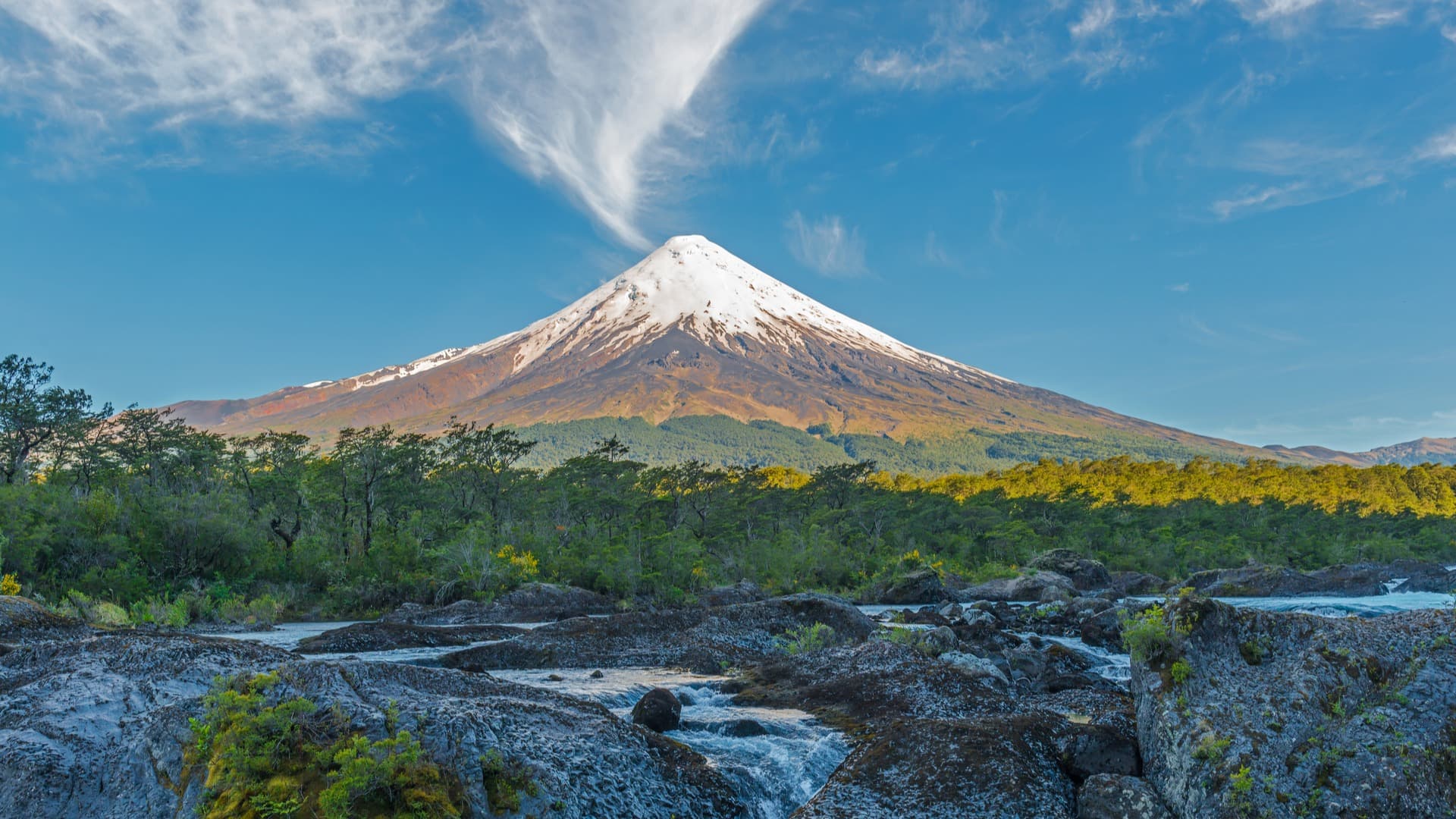
A conical stratovolcano standing at 2,652 m and nicknamed 'the King of the South,' Osorno dominates Lake Llanquihue within Vicente Pérez Rosales National Park.
Osorno is a stratovolcano located in the Lake District of Chile, straddling the provinces of Osorno and Llanquihue. Rising to 2,652 m above sea level, it is the most active volcano in the southern Andes of Chile.
Shrouded in clouds and local legends, Osorno stands as one of the South's iconic landmarks and one of the most celebrated peaks of the Chilean Andes**. Climbing it is an unforgettable experience**—let yourself be captivated by the splendor of its natural landscapes.
The History of Osorno
The volcano was first sighted by Charles Darwin, who glimpsed it from afar during his second voyage aboard the****HMS Beagle. He witnessed its eruption in January 1835. The first ascent of Osorno was accomplished by Jean Renous in 1848.
Between 1575 and 1869, the date of its last eruption, Osorno was one of the most active volcanoes in the southern Chilean Andes. All 11 recorded eruptions occurred only within the craters, never at the volcano's summit.
Osorno also served as a backdrop for promotional videos and photographs during Motorola's global advertising campaign in 2005.
Osorno Today
The first region in Chile to be protected within a national park, the Vicente Pérez Rosales reserve encompasses dense, humid forests and the magnificent "Todos los Santos" lake. Yet this reserve is particularly renowned for harboring three volcanoes: Puntiagudo (2,190 m), Osorno (2,652 m), and Tronador (3,554 m).
Rightly so, Osorno volcano is a conical stratovolcano located near Puerto Montt, in the Chilean portion of Patagonia. With its pyramidal appearance, it rises to the east of Lake Llanquihue, a world-renowned body of water.
Nicknamed "the King of the South," Osorno is a majestic snow-capped volcano dominating Lake Todos Los Santos and kilometers of dense forests crisscrossed by marked trails. The views from the summit are exceptional. Osorno volcano is far more than a simple hiking destination.
A winding road leads you to the base of a ski resort located near the volcano. Each year it draws skiers and snowboarders of all levels. It features 12 runs, ski lifts, and a snow park. You'll also find a restaurant, ski equipment rental shop, and ski school.
Reaching the summit of Osorno is a worthwhile excursion, especially for the stunning views of the alpine lake. Experienced mountaineers can undertake a full day's trek to the summit.
About Osorno
Osorno is a stratovolcano rising majestically on the southeastern shore of the great Lake Llanquihue. Its worldwide fame comes from its resemblance to Mount Fuji. Osorno sits atop an eroded stratovolcano dating back 250,000 years, called La Picada. It is characterized by a caldera measuring 6 km across.
The near-perfect shape of the volcano results from 40 craters scattered along its base. Flows of andesite and basalt lava, generated during various eruptions, descended to the Llanquihue and Todos Los Santos lakes. The upper slopes are nearly carpeted with glaciers despite the volcano's low altitude and latitude.
The route to reach it is fairly long, approximately 5 hours of ascent and 3 hours of descent. However, it is an easy trek with steep slopes of around 30°. Cramponed shoes, plastic boots, thermal clothing, and ice axes are nevertheless necessary to prevent frostbite. This is Patagonia, and it's cold nearly year-round. Moreover, snowfall is substantial.
The best period for climbing this volcano runs from December to March. It's worth knowing that the Osorno volcano has no connection to the city of Osorno. Despite sharing the same name, they are separated by over 100 km.
Osorno, a Natural Wonder to Discover
The smooth, broad cone of snow-capped Osorno rises against the alpine landscapes of Puerto Varas, a peaceful setting that belies tumultuous geology. Its great height makes it visible from every vantage point in the Osorno district, and even from the island of Chiloé.
While climbing to Osorno's summit, take in the exceptional views of the craters and lakes. Before the volcano, a sparkling turquoise river winds along the Petrohué waterfalls. To better appreciate the magnificent landscape unfolding before you, take a chairlift that will carry you across the valley.
Its striking silhouette and a snow-covered summit visible nearly 365 days a year account for the volcano's success among climbers.
Along its steep slopes, the volcano harbors remarkable flora. In a zone located at 200 m above sea level, vegetation is dominated by lengas and coihues. Higher, at 800 m above sea level, grows a forest of southern beech, a tree species aged between 4,000 and 5,000 years. Today it is an endangered species protected by strict regulations.
As for fauna, you may observe the pudu, the culpeo (Patagonian fox), the chingue (Patagonian skunk), the puma, and the quique (belonging to the weasel family). The huet-huet, the long-nosed weasel, the common kestrel, hummingbirds, titmice flycatchers, and woodpeckers prefer the humid forests.
The southeastern slope of Osorno is particularly sought after by mountaineering and trekking enthusiasts. On this section, you can observe snow down to 2,000 meters elevation, as well as bluish crevasses.
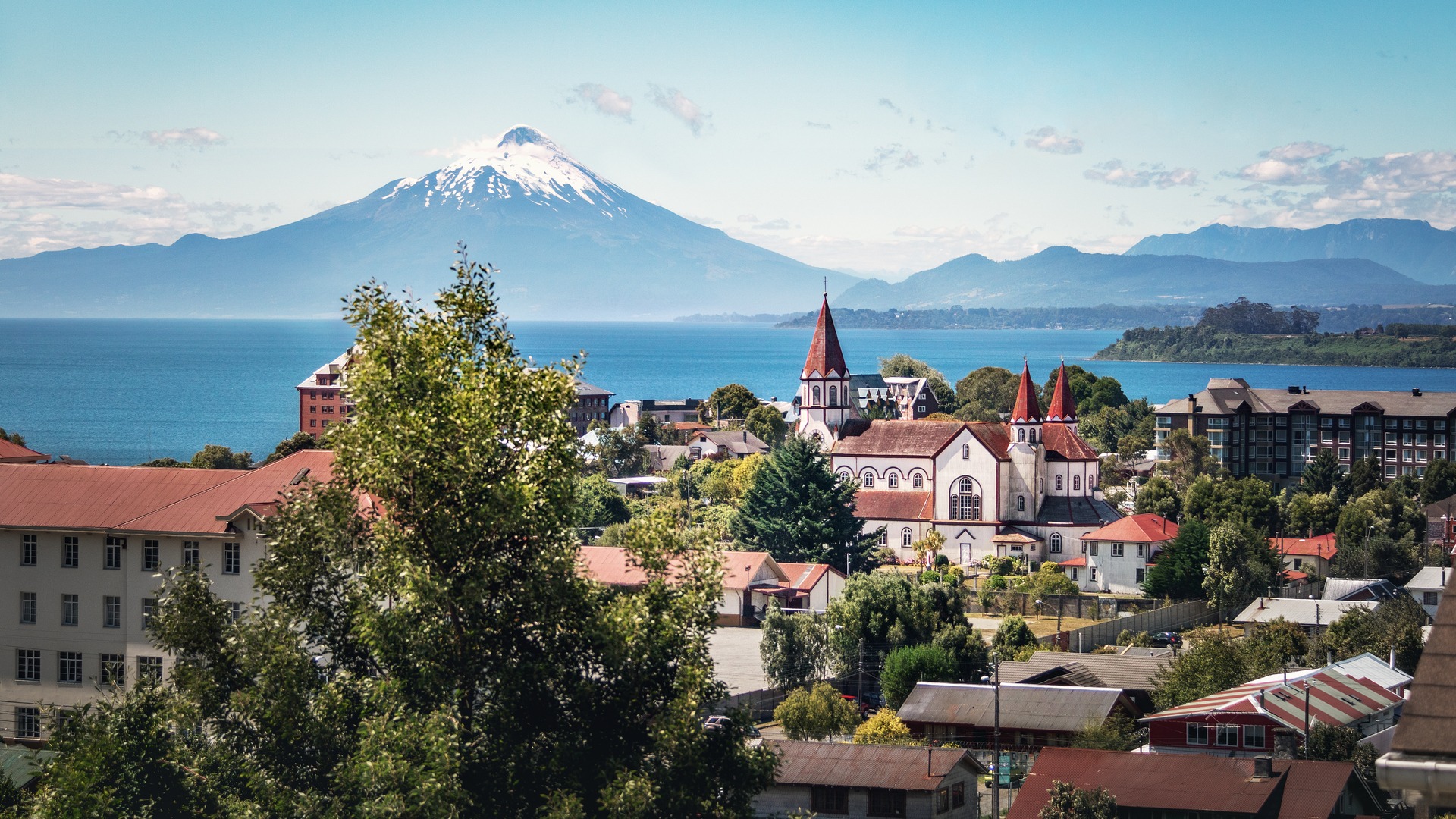
Puerto Varas, besides being an excellent departure point for those seeking adventure, is a charming small town with picturesque character. Located on the western shore of Lake Llanquihue, it offers an unobstructed view of Osorno volcano, which rises at the far end of the lake.
A 4 to 7-hour hike awaits you to enjoy a 360° view of the volcano and its surrounding lakes. Most often, ascents are organized with a local guide.
A Full-Day Excursion to Osorno Volcano and Its Surroundings
The starting point for the excursion to Osorno's summit can depart from Puerto Montt. The same applies to the return. It's best to leave before dawn to make the most of the finest viewpoints.
From Puerto Montt, travel along the southern shore of Lake Llanquihue for 50 minutes, along one of Chile's most picturesque routes. A landscape of verdant fields unfolds before you until you approach the volcano's base.
Following Lake Llanquihue, you'll reach the town of Ensenada, which is the gateway to Vicente Pérez Rosales National Park. It is one of the most beautiful natural spaces in this region of Chile and a protected nature reserve. From there, head toward Osorno volcano's ski resort. The views from the downtown brewery and Osorno's chairlift are magnificent.
From the ski station, embark on a memorable climb to Osorno's summit, where a vast crater of the extinct volcano comes into view. Pause at the summit to contemplate the panoramic and spectacular vista over the Petrohué valley and the volcanoes bordering Lake Llanquihue. With good visibility, the Lanín and Llaima volcanoes, located in the distant Araucanía region, are simply magnificent to behold.
By Air
From Santiago, Chile, take a flight lasting one hour and 40 minutes. Numerous airlines offer daily flights from Santiago to Puerto Montt. This city is approximately 20 km from Puerto Varas, the closest town to Osorno volcano.
By Bus
For ground transportation, several bus companies operate daily service between Santiago and Puerto Varas. With a journey duration of 12 hours, some bus companies offer all necessary comforts for sleeping or resting during the trip.
In either case, you'll need to cover an additional hour of travel from Puerto Varas to reach Osorno volcano.
Interested in this visit?
We can include it in your personalised itinerary.