Karukinka Park
Karukinka Park
A private reserve spanning 3,000 km² managed by the Wildlife Conservation Society on Tierra del Fuego: lenga forests, peatlands and exceptional sub-Antarctic wildlife.
Head to Karukinka Natural Park to breathe in the pure air of pristine landscapes and interact with wildlife. Get ready for an adventure on Tierra del Fuego.
Karukinka Natural Park
On the vast island of Tierra del Fuego, at the far southern tip of South America, stands the majestic Karukinka Natural Park. It represents an ode to wild nature and conservation. Adventure trekking enthusiasts invite you to an escape beyond the beaten path. Here's an overview.
Its history
In 1992, Trillium Corporation purchased an immense tract of land spanning between Chile and Argentina, covering approximately one million acres (roughly 4,000 km²) on Tierra del Fuego. Nearly half of this land was covered in lenga forests. Initially destined for logging operations, the company reconsidered its plans due to opposition from local environmental advocates. Consequently, it ceded the Chilean portion of the property, which included Karukinka. In 2002, this section was acquired by Goldman Sachs Bank.
In 2004, Goldman Sachs generously donated this expanse to the Wildlife Conservation Society (WCS). That same year, Karukinka was officially designated as a protected area. The name means "our land"—the very name the first inhabitants of Tierra del Fuego used to speak of their home.
Ecotourism at Karukinka Natural Park, located on Tierra del Fuego island
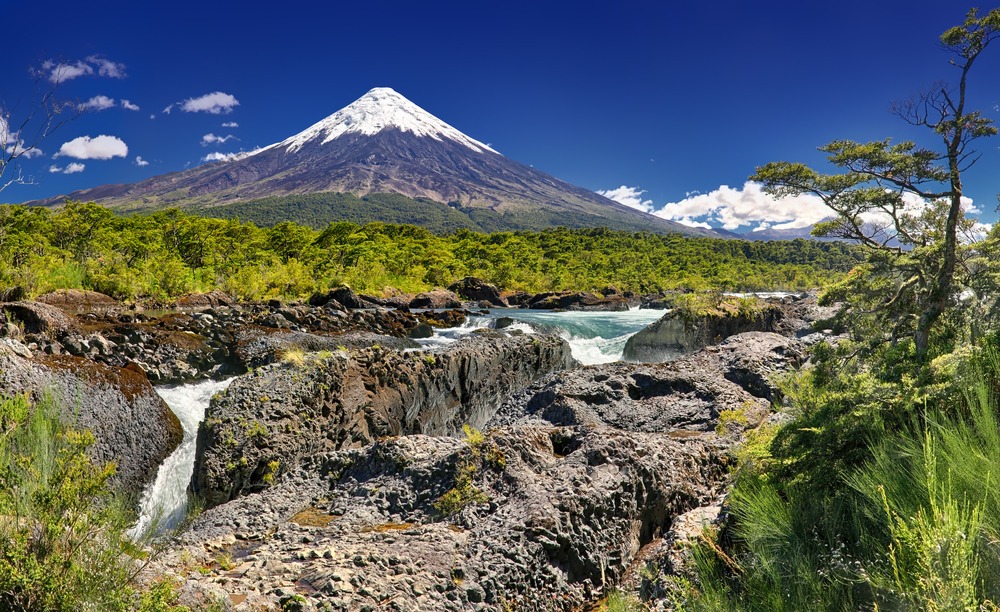
Karukinka reveals itself as an earthly paradise ideal for ecotourism enthusiasts at the end of the world. This natural park, of remarkable dimensions, holds a special place in the province of Magallanes and Chilean Antarctica, at the southern extremity of Patagonia, in the Tierra del Fuego archipelago. Covering nearly 3,000 km², it is four times larger than Greater Santiago. Its rugged terrain offers a mosaic of plateaus and mountains, harboring diverse ecosystems such as shrublands, steppes, forests and vast peatlands.
Wildlife enthusiasts will be delighted, whether during a hike or trekking adventure through trails offering an authentic experience of the wild.
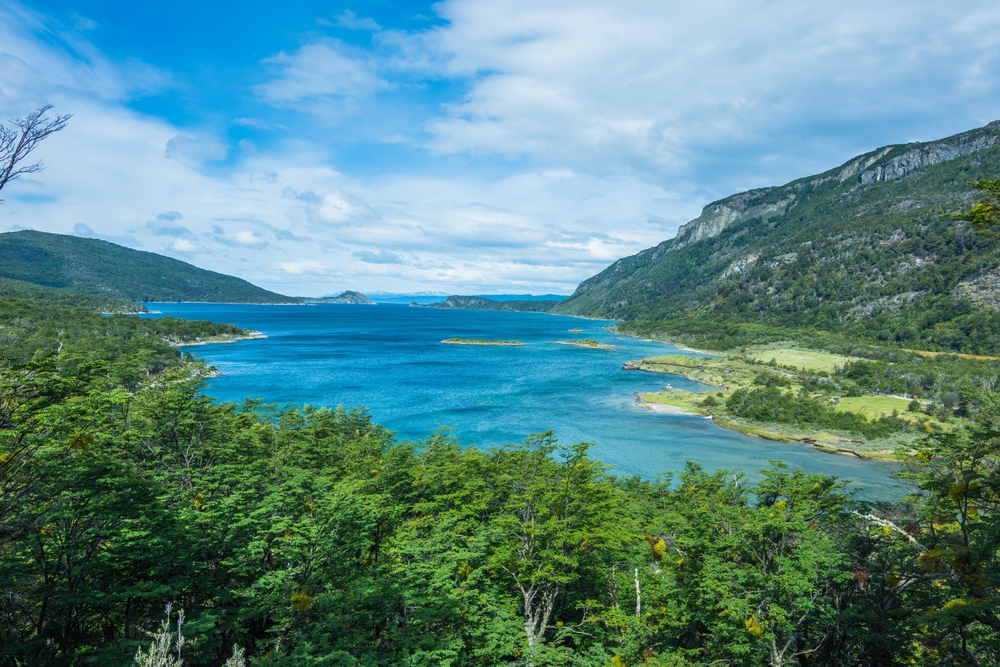
From the summits of verdant mountains to the glimmering waters of Lake Deseado meandering through colorful peatlands, the La Paciencia valley offers breathtaking views. The emerald forests, described as primary "cathedrals," are a precious vestige of exceptional biodiversity, preserved throughout time. The peatlands, veritable miniature forests, harbor teeming life, from the plant kingdom to insects, microbes, fish and specific lichens.
A narrow strip of sea, Admiralty Sound, which surrounds Karukinka, creates an isolated coastal marine ecosystem that attracts rare marine species found nowhere else in the country. Southern elephant seals, black-browed albatrosses, rock cormorants, South American sea lions, Magellanic albatrosses, penguins, kelp geese, Magellanic oystercatchers and leopard seals contribute to the biological and economic richness, but also to the fragility of this region.
A magnificent encounter with terrestrial and avian wildlife
Mammals
Karukinka reveals a panorama of animal diversity, accounting for at least 99 species, including 17 mammals, 77 birds, and 5 fish species. Among these creatures, the Guanaco roams freely across the steppes and forests, forming elegant herds of adults and young. The Fuegian Culpeo Fox, rarer and more timid, represents a threatened species. It feeds on indigenous flora and fauna and finds refuge in the park's forested areas. This is why it's difficult to spot. Rodents, with charming names such as the common woolly mouse and Magellanic mouse, yellow-nosed mouse, silky mouse or Magellanic tuco-tuco, add a picturesque touch to the local fauna.
The park is also home to bats. In the surrounding waters, marine mammals such as the Southern sea otter, leopard seal, Southern elephant seal, South American sea lion and Southern fur seal thrive, feeding on shellfish, fish and crustaceans. Antarctic fur seals have even been occasionally spotted. These waters are also home to a variety of cetaceans such as Peale's and Commerson's dolphins.
Birds
Diverse avian species inhabit Karukinka's various habitats. The coastal marine habitats are the preferred terrain of the Steamer Duck and the Kelp Goose. At the boundary between coastal and freshwater habitats, the Black-necked Swan moves gracefully.
The lush Nothofagus forests provide ideal shelter for a diversity of raptors such as the Chilean hawk, red-tailed hawk and rufous-legged owl. Other winged inhabitants populate Karukinka such as the Magellanic woodpecker, austral parakeet, Magellanic tapaculo, Patagonian tyrant, chestnut-collared sparrow, austral thrush, white-crested elaenia, grey-hooded sierra finch and black-chinned siskin.
The botanical splendor of the park
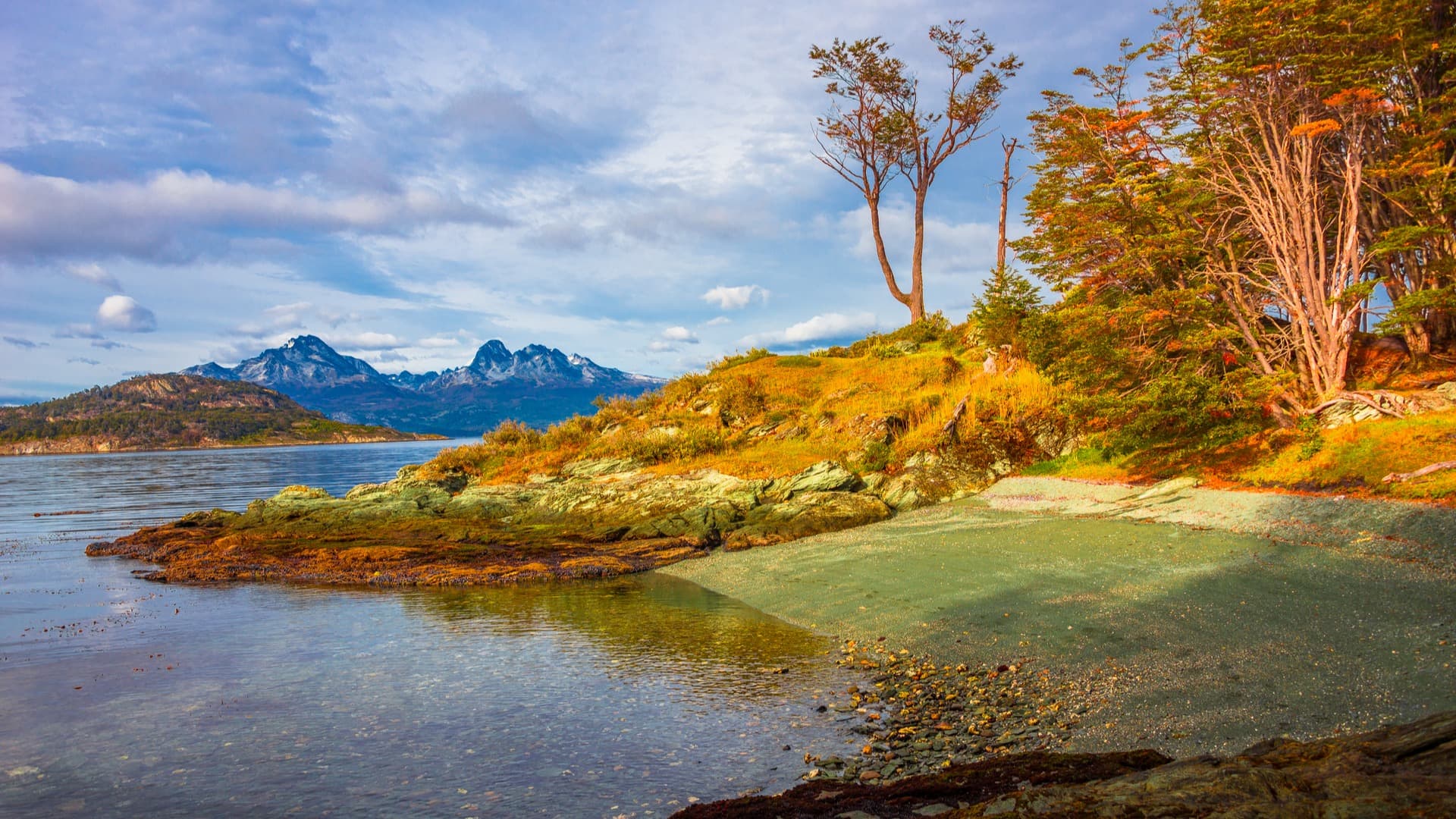
The botanical survey at the park reveals a profusion of 416 vascular plant species. Among these, six trees, sculpted by the winds into unique shapes, dominate the landscape. Nothofagus, winter's bark, Chilean firebush and leñadura paint the mountains in brilliant hues.
Explore this natural sanctuary where each trail guides you through the richness of sub-Antarctic forests. Among these treasures, the southern beech of Lenga, Nothofagus pumilio, stands as a centennial guardian, resisting the elements with timeless grace.
What to do?
Ready to plunge into an adventure rich with discovery? The park offers a wealth of activities for outdoor enthusiasts:
- hiking
- kayaking
- fishing
- biking
Interested in this visit?
We can include it in your personalised itinerary.