Vicente Perez Rosales National Park
Vicente Perez Rosales National Park
Chile's first national park (1926), Vicente Pérez Rosales brings together volcanoes, an emerald lake, and lava waterfalls 72 km from Puerto Varas.
The Vicente Pérez Rosales National Park is THE star of the Lakes Region, with its emerald-colored lake. It is the second most visited Chilean National Park, just after Torres del Paine. Within its remarkably varied landscape stands the Osorno Volcano, the Lake Todos los Santos, and the Petrohué Falls, among others. Discover this national treasure and its succession of tumultuous rivers, steep canyons, and alpine lakes.
A Unique History
The history of Vicente Pérez Rosales National Park is far from ordinary. Created in 1926, Vicente Pérez Rosales is Chile's first national park. Its story traces back, however, to the pre-Columbian era with Mapuche settlements.
To connect Puerto Montt to San Carlos de Bariloche in Argentina during the 17th century, Jesuit missionaries preferred traversing the park's valleys, following routes similar to those used by indigenous peoples.
This reserve owes its name to Vicente Pérez Rosales, a renowned adventurer. His travels in the mid-19th century literally opened the way for European pioneers.
But long before Europeans arrived in the region, indigenous peoples had already blazed a trail through Paso de Vuriloche to cross the Andes.
The park began gaining recognition among tourists in the 1890s, notably through numerous boat crossings of Lake Todos los Santos. Large numbers of tourists first arrived in 1903. In 1913, the park even welcomed U.S. President Theodore Roosevelt.
Vicente Perez Rosales National Park Today
Vicente Pérez Rosales National Park is located in northern Patagonia, on the Chilean side of the Andes Cordillera. Entry is through Laguna Verde, situated at Ensenada.
Situated near the cities of Puerto Montt and Puerto Varas, it constitutes one of the last border points with Argentina. Spanning 253,780 hectares (2,530 km²), it is home to Lake Todos los Santos, Petrohué Falls, and three dominant volcanoes: Osorno, Puntiagudo, and Tronador.
It is part of the biosphere reserve of temperate rainforests in the Southern Andes. The most popular activities here are small cruises across Lake Todos los Santos.
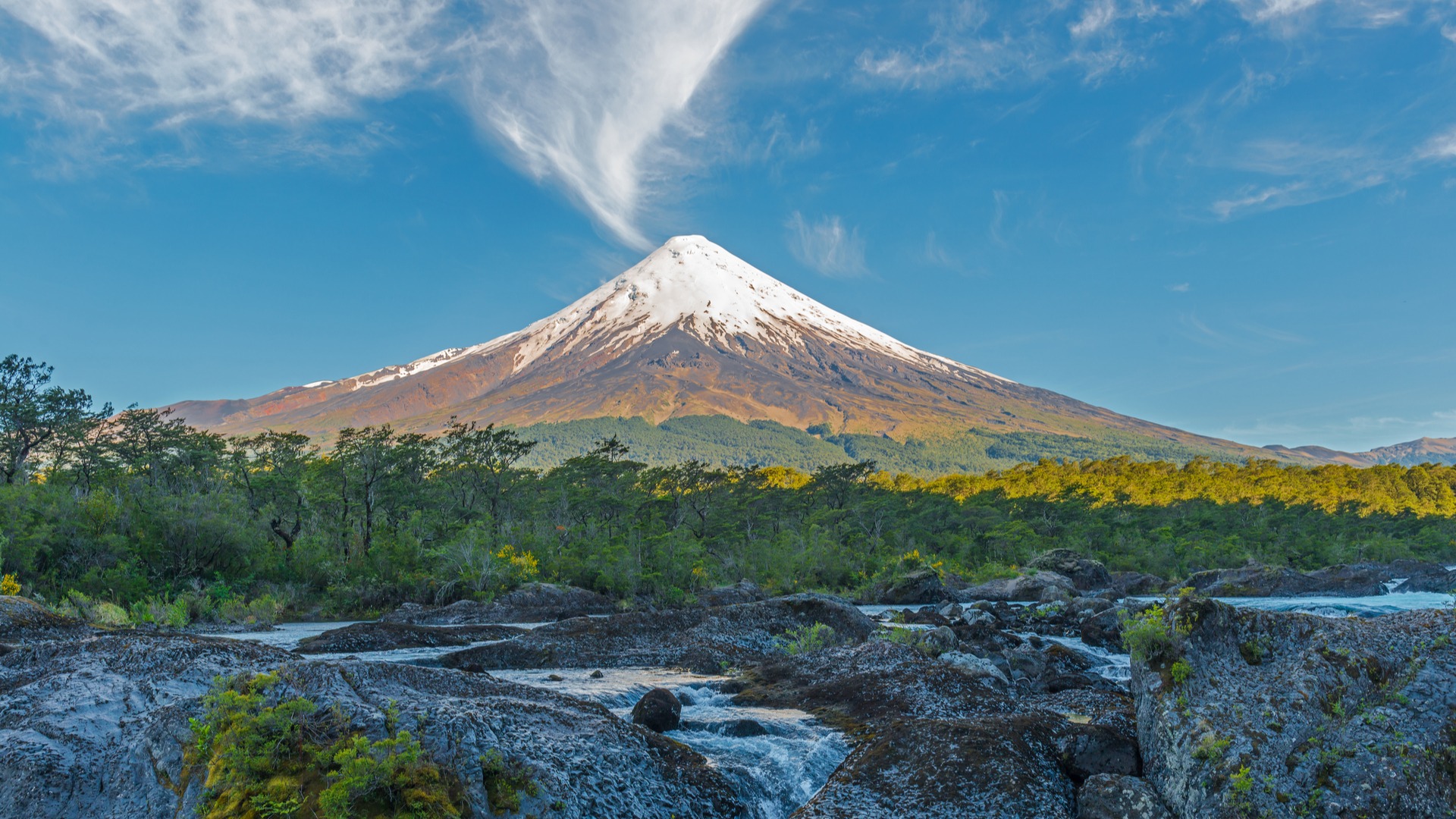
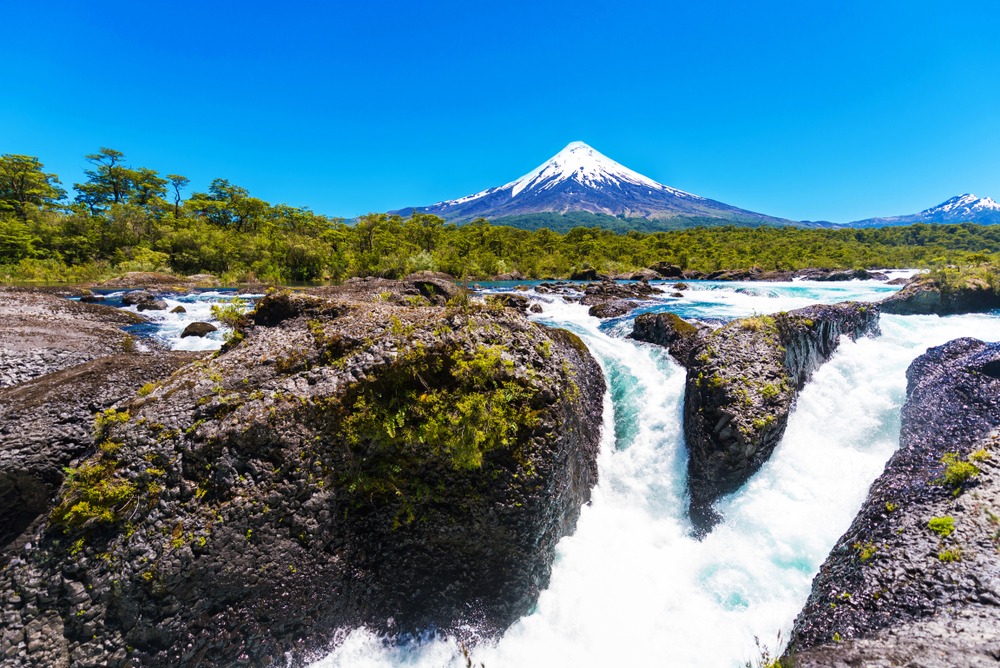
Unlike many parks of similar scale, this one has few hiking trails. The most well-known leads to the Petrohué Falls. Here, you'll discover a wooden walkway erected above the source of the Petrohué River. The view of the lake's waters mingling with lava channels is impressive. These channels formed following the great eruption of Osorno Volcano in 1850.
You may also spot the Monito del Monte, a marsupial found exclusively in the temperate forests of south-central Chile.
An Incredible Natural and Cultural Heritage
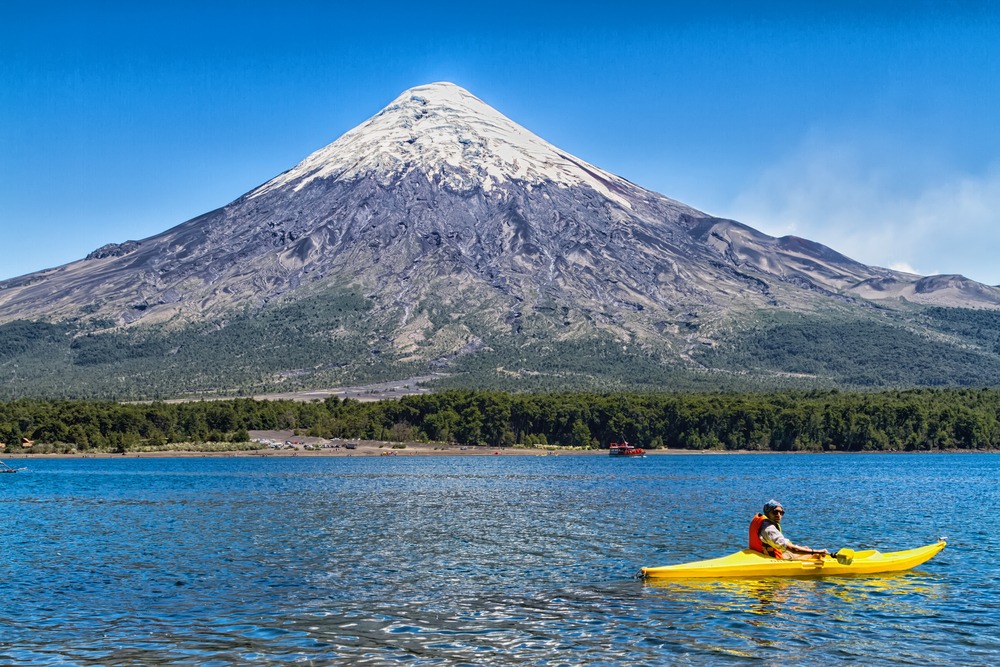
Vicente Pérez Rosales National Park is one of Chile's most beautiful parks. Surrounding it rise imposing volcanoes, such as Puntiagudo (2,490 m), the symmetrical snow-capped cone of Osorno (2,661 m), Picada (1,710 m), or Tronador (3,491 m).
The retreat of glaciers favored the formation of Lake Todos los Santos. This lake is surrounded by steep peaks, the Petrohué River, and the Reloncaví estuary. The volcanic activity of Osorno volcano has given rise to numerous hot springs, the most famous being Vuriloche, Ralún, and El Callao.
Regarding flora, evergreen forests are dominant. In flat areas, particularly around Cayutué Lagoon, you find the Húmedo de Galería, composed of cinnamon, patagua, and pitra. The shores of Lake Todos los Santos are dotted with endemic species, such as olivillo, tiaca, ulmo, and coigüe. At higher altitudes, you discover primarily lenga forests.
Concerning fauna, there are both mammals (pudu, puma, kodkod, mountain cat, South American gray fox, etc.) and various bird species. Among the most well-known are the huala, Fuegian steamer duck, torrent duck, and common kingfisher. Fish are also abundant, including Chilean trout, a fairly unique species.
Vicente Pérez Rosales National Park is also of ethnological interest, as its lands were inhabited by the Huilliche people.
Discovering Vicente Perez Rosales National Park
Located 72 kilometers from Puerto Varas, Vicente Perez Rosales National Park is a must-see in Patagonia. Walking along the hiking trails, you follow the lava trail to reach lakes, rivers, and waterfalls.
You'll be amazed by the mighty Petrohué Falls. The waters flow through a canyon of volcanic rocks shaped by lava. Their name "Petrohue", meaning "Place of Mists", derives from the vapor rising from Lake Todos los Santos when the volcano's lava pours into it.
Also take an hour to hike "El sendero de los enamorados" (Lovers' Trail), which offers the best viewpoints of the park's most beautiful falls. Then reach Lake Todos los Santos and the slopes of Osorno volcano to hike "Paso Desolación", which lasts approximately five hours.
The Osorno volcano, located at 1,200 meters altitude, with its pyramidal silhouette, is a world-renowned tourist attraction.
The Climate
In the park, the climate is cold and rainy, with annual precipitation exceeding 4,000 mm, particularly in autumn and winter. The average annual temperature reaches 11°C. In winter, temperatures can drop to −5°C, with snowfall.
By Car
This national park is accessible via international Route 225 Puerto Varas–Ensenada and Petrohué. Just after Petrohué Falls, you must take a paved road 64 km long. Then, a well-maintained gravel road leads to Lake Todos los Santos.
By Minibus
From Puerto Varas, minibuses depart approximately every 45 minutes toward Petrohué. A ticket costs 2,500 pesos per person.
Interested in this visit?
We can include it in your personalised itinerary.