Walking on Grey Glacier: Everything You Need to Know
Trekking in Chilean Patagonia is a unique experience for nature lovers.
Trekking in Chilean Patagonia is a unique experience for nature lovers. Renowned for its famous W trek and O trek – and designated a "biosphere reserve" by UNESCO – the Torres del Paine National Park offers pristine landscapes of ridges, mountains, lakes, and glaciers. Among the wonders of the massif, one river of ice particularly captivates travelers… Do you also dream of walking on Grey Glacier? We tell you everything you need to know to prepare your glacial hiking adventure well!
How to reach the famous "Chile's glacier"?
Grey Glacier is a destination worth the effort. Located between the Andes cordillera and southern Patagonia, several stages are necessary to admire its glacial landscape, unique in the world:
1 - Reach the town of Puerto Natales from the airport
Based about sixty kilometers from the Torres del Paine National Park, the town of Puerto Natales is the gateway to Torres del Paine. There are shuttles from airports, as well as regional flights to get there. To reach Grey Glacier, you will then need to:
2 - Take a bus to Torres del Paine
Several bus companies serve the site daily: most depart from the Rodoviario terminal at 7:30 am and 2:30 pm.
The Bus Sur company offers two daily departures at 7:00 am and 11:30 am and serves three stops in the park. Get off at Pudeto!
3 - Choose a hike
Day excursion
There are excursions departing from several hotels, as well as from various lodges:
Paine Grande lodge;
Laguna Amarga lodge;
Pudeto lodge.
To reach them, Lake Pehoé crossings are organized daily by catamaran. These short boat rides (approximately 30 minutes) offer incredible views of the mountains.
Multi-day trek
For more experienced hikers, multi-day excursions allow access to Grey Glacier. Among them:
The W trek (3-5 days): accessible to good hikers, it allows you to admire the main attractions of the park;
The O trek (8-10 days): more comprehensive, but also more challenging, it leads to remote corners of the massif (and requires excellent physical condition).
While it is possible to visit the site independently, organized excursions make travel between different locations easier and offer programs accessible to all – regardless of hiking level. An example? The Best of Patagonia introduces you to the country's most beautiful national parks, as well as the rocky islet "Nunatak" at the heart of Grey Glacier!

What is the best time to walk on Grey Glacier?
The climate of Torres del Paine is "subpolar oceanic" type. Its main characteristics? An average temperature of 6.3°C and heavy rainfall throughout the year! To prepare for all weather eventualities, here are 3 criteria to consider:
1 - Temperatures
Since Patagonia is in the southern hemisphere, the seasons are reversed compared to European seasons:
summer: December to February (between 5°C and 22°C);
autumn: March to May (between 0°C and 10°C);
winter: June to August (between -3°C and 5°C);
spring: (between 2°C and 18°C).
Do winter temperatures seem mild to you? Bear in mind that wind creates a wind chill much lower than the actual temperature!
2 - Wind gusts
The del Paine massif is as famous for its landscapes as it is for wind gusts reaching 180 km/h. More persistent during summer, they can lead to the closure of certain trails.
3 - Precipitation
Due to its temperatures, summer is the most touristy season. However, it is also the one with the heaviest rainfall! You're wondering when to visit Grey Glacier? The answer is simple: there really is no ideal time to discover this wild expanse!
How to dress and equip yourself for a glacial hike?
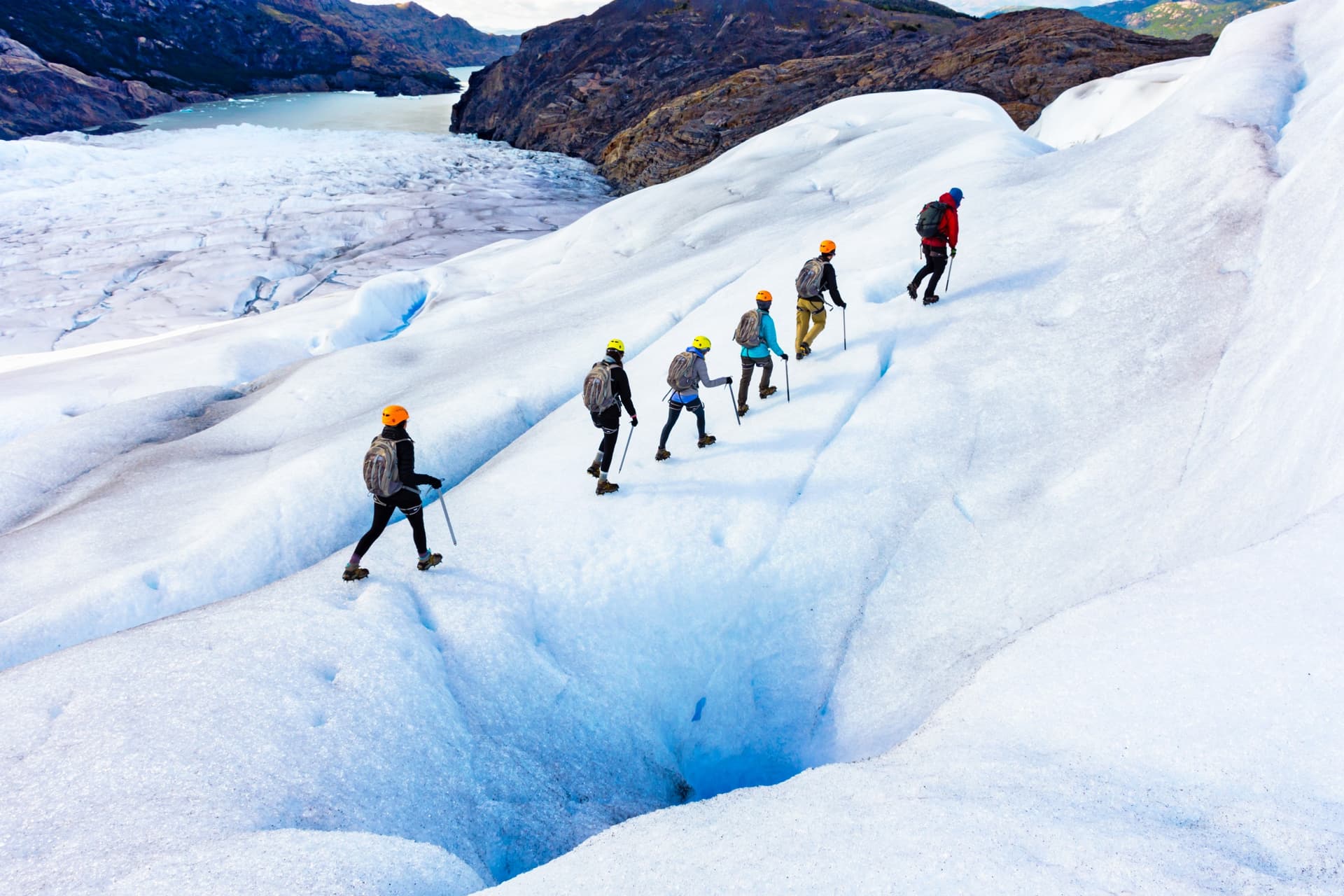
A hike on Grey Glacier requires appropriate gear:
full outfit (combination suit, windbreaker, hat, gloves, etc.);
waterproof hiking boots and crampons;
an ice axe (designed to serve as support or anchor point, it will facilitate your progression on the ice).
a helmet (not mandatory but highly recommended).
If you opt for a multi-day trek, your backpack should also contain:
spare clothes (warmer or cooler to handle the many climate changes);
camping and cooking equipment (note that certain products run out of stock in Puerto Natales food stores after 4:00 pm, as all hikers prepare for their trek the next day!).
If you don't have equipment, you can rent it from one of the many trekking shops in Puerto Natales. Want to continue the adventure beyond the del Paine massif? The Lakes Region and Patagonia itinerary will let you explore new territories while practicing outdoor activities.
Frequently asked questions
Yes, walking on Grey Glacier is a guided activity that must be done with a certified guide. Excursions depart from Paine Grande lodge and typically last between 3 and 5 hours. No independent access is allowed on the ice for safety reasons (crevasses, serac falls).
Entrance to Torres del Paine National Park is paid. The rate varies by season and visitor nationality. It is highly recommended to book your access in advance on the official CONAF website, as daily quotas are applied, especially during high season (December to February).
There is no perfect time to visit Grey Glacier. The austral summer (December-February) offers the longest days but also the most violent winds and greatest crowds. The months of November and March often make a good compromise: more stable weather, fewer people, and acceptable temperatures between 5°C and 15°C.
From Puerto Natales, take a bus to Torres del Paine (daily departures from the Rodoviario terminal at 7:30 am and 2:30 pm, or with Bus Sur at 7:00 am and 11:30 am). Get off at Pudeto stop, then cross Lake Pehoé by catamaran to Paine Grande lodge, the starting point for excursions to Grey Glacier.
Yes, it is entirely possible to visit Grey Glacier without completing the W trek (3-5 days) or the O trek (8-10 days). Day excursions are organized from Paine Grande lodge, accessible by catamaran from Pudeto. This option is ideal for travelers with limited time or who want a less physically demanding experience.