Magallanes Regional Museum
Magallanes Regional Museum
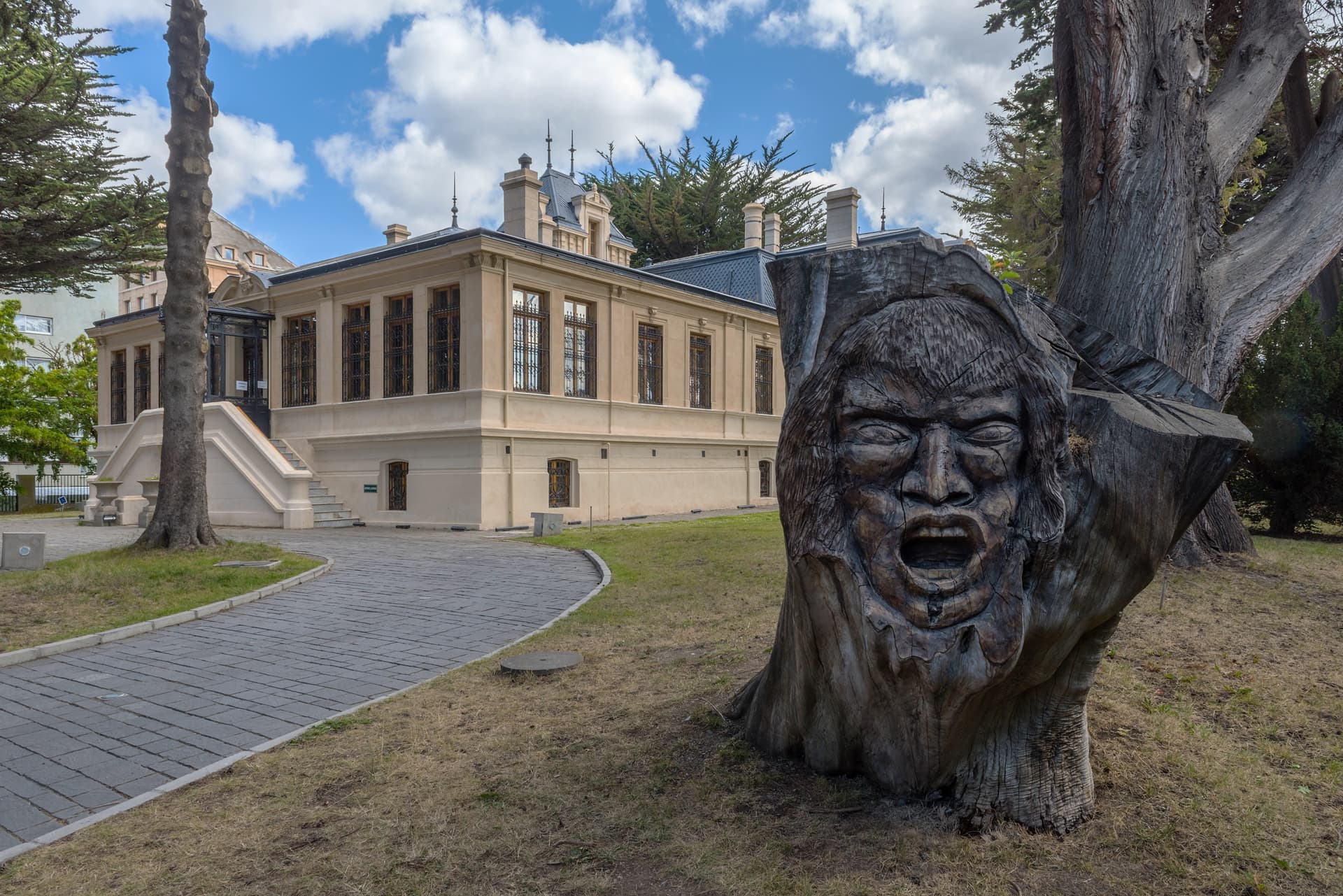
Carefully preserved within the sumptuous Braun-Menendez family palace, the Magallanes Regional Museum stands as a living archive of the events that shaped the southernmost tip of the American continent.
Carefully preserved within the sumptuous Braun-Menendez family palace, the Magallanes Regional Museum stands as a living archive of the events that shaped the southernmost tip of the American continent. Explore Magellan's golden age through a remarkable collection of furnishings and artifacts. From displays of archaeological objects to the narratives of explorers, this institution offers a concise yet comprehensive immersion into the region's past.
Its History
In 1969, the Magallanes Regional Museum, also known as the Braun-Menendez Palace, came into being with the creation of the Patagonia Museum. At that time, it was directed by Roque Esteban Scarpa, a visionary director of Dibam and accomplished writer. Owned by Maurice Brown and Josephine Menendez, the palace housed collections focused on archaeology and natural sciences from the outset.
In 1983, the Braun-Menendez family generously donated the residence to the city of Punta Arenas, giving rise to the Magallanes Regional Museum. Since then, its management has been overseen by Chile's National Library, Archives, and Museums Bureau.
The next challenge was to create an exhibition that transcended the simple presentation of antiquated objects.
Museum Tour
Located in the heart of Punta Arenas, the museum occupies an eclectic neoclassical building designed by Antoine Bully. This historic residence reflects the opulence of the Braun-Menendez family, who invested their wealth in constructing iconic residences. Comprising approximately 1,800 objects spanning the 16th to 20th centuries, its collection is divided into three distinct zones.
You are invited to explore artifacts inherited by the family, delve into the region's history through maps and photographs, and discover the daily routines of restored servants during a tour of period quarters.
The museum unveils sumptuous hearths, bathing facilities, a billiard room, and walls adorned with Cordoba leather, all meticulously preserved. Explore galleries organized by Salesian missionaries in the late 1800s, revealing the ethnology, archaeology, fauna, and diversity of the region.
Discover current exhibitions across three departments: Time, History, and Life. They showcase European furniture ranging from neoclassical to modern styles, household objects, historical documents, offering an immersion into the daily lives of the region's earliest inhabitants. The museum also proudly presents temporary exhibitions, highlighting the work of contemporary artists, sculptors, and photographers.
On the ground floor, within the former staff quarters, a café welcomes you for a moment of respite. Savor a pisco sour while soaking in the grandiose atmosphere of the era.
The museum is easily accessible by bus, taxi, or on foot from the city center, approximately a 15-minute walk.
Nearby Attractions
Nao Victoria Museum
Located in Punta Arenas, the Nao Victoria Museum showcases a unique collection of full-scale replicas of historic ships, displayed along the Strait of Magellan. It also exhibits reproductions of weapons, ancient navigation instruments, and reproductions of documents and books related to these iconic vessels, alongside an open-air shipbuilding workshop.
Plaza de Armas
At the historic center of Punta Arenas, this square is framed by magnificent buildings from the late 19th and early 20th centuries, including the cathedral, Government Palace, Palacio Sara Braun, the residence of José Ménendez, Palacio Jose Montes, and the Blanchard Residence. Overlooking the Plaza de Armas stands a bronze statue of Ferdinand Magellan, erected in 1910, commanding majestic presence.
Cathedral of the Sacred Heart
Inside, you will marvel at the church's half-dome, adorned with a representation of Christ the Almighty. Magnificent Corinthian columns, arranged in pyramids, divide the aisles of this romantically styled structure.
Punta Arenas Cemetery
This is a peaceful and welcoming space for contemplative walks. Its broad avenues, lined with cypress trees, lead to mausoleums erected by the city's affluent families. As an open-air museum, the cemetery offers insights into local architecture and history. Be sure to visit the tomb of the Unknown Indian, an important site of remembrance for the community.
Cerro de la Cruz
Just a few streets west of the Plaza de Armas, you will find Cerro de la Cruz and its viewpoint, from which the colorful rooftops of Punta Arenas unfold before you. Exploring Punta Arenas also means contemplating it from this unique vantage point. With some fortune, you might even glimpse Tierra del Fuego.
Give it a go!
Our local experts arrange this activity for you.