Buenos Aires
Buenos Aires
The capital of tango and a land of contrasts, Buenos Aires reveals itself through its distinctive neighborhoods: a complete guide to planning your Argentina trip.
Buenos Aires, Argentina's capital and largest city, is developing at a rapid pace today. What strikes visitors first upon arriving in this city are the distinctive atmospheres of each neighborhood.
Buenos Aires is the center of Argentina, but also the birthplace of tango, Argentine football, and the asado. It's a captivating destination, full of contrasts, dynamic and cosmopolitan.
The history of Buenos Aires
Buenos Aires was discovered by navigator Juan Dias de Solis. His expedition on the Río de la Plata was, however, cut short by an attack from indigenous peoples (a native Charrua tribe), which cost him his life.
On February 2, 1536, Pedro de Mendoza, who was searching for gold, founded a small colony at the mouth of the Río de la Plata, which he named "Nuestra Señora Santa Maria del Buen Ayre". But the pioneers fled the city in 1541 following attacks by indigenous peoples.
In 1806 and 1807, the Río de la Plata was the subject of two British invasions, but both failed. On May 25, 1810, Buenos Aires ended Spanish Vice-Royalty rule and established a local government. Argentina gained its independence in 1816.
During the nineteenth century, Buenos Aires' life was disrupted several times. It experienced two attempted occupations by the French in 1830 and 1840, then by a Franco-British alliance in 1845. However, the city managed to resist.
In 1880, Buenos Aires became the seat of the Argentine government. Its mayor then became President. It was also at this time that Argentina's first underground railway network (subway) was constructed.
The city's factories contributed to its economic growth. The trade in raw materials made the city an important multicultural hub, as evidenced by the Teatro Colón.
During World War I, Buenos Aires experienced a prosperous period economically. Tons of meat were shipped to war-torn Europe each week from the city's port.
In the 1920s, the city became the preferred destination for European migrants. It was also during this period that shanytowns began to appear around industrial zones.
The twentieth century was marked by major confrontations, particularly between left-wing revolutionary movements and the right-wing paramilitary group called Triple A. This group enjoyed the support of Isabel Peron (the wife of President Juan Peron), who was elected President of Argentina after her husband's death.
Buenos Aires today
Given its cuisine, towering modern buildings, and inhabitants, Buenos Aires is an almost European metropolis. It's an almost obligatory stop when traveling through Patagonia.
Located at the mouth of the Atlantic Ocean, on the western bank of the Río de la Plata, Buenos Aires has become the most vibrant city in Latin America. For Porteños (which translates as "port dwellers"), Buenos Aires is a unique city in Argentina.
This metropolis is the economic and political center of Argentina, but it also hosts the country's main port. Rich in museums, libraries, art galleries and theaters, it holds the first place culturally in the country.
Buenos Aires is one of the world's largest urban agglomerations. One-third of Argentines live there. The influence of the Old Continent is still evident in the grid-like layout of its vast avenues or in French residences, as well as in the Madrilenian buildings of Centro…As for Teatro Colón (with a capacity of 3,000 spectators), it remains as impressive as it was at its inception.
Shopping enthusiasts will find their haven in Buenos Aires. In fact, it's nicknamed the shopping capital of Latin America. Along Calle Florida extends a wide selection of luxury boutiques. In the streets, groups of folk musicians provide various entertainments. As night falls, head to Avenida Corrientes, where theaters, restaurants, historic cafés and cinemas animate the nightlife.
Discovering Buenos Aires and its neighborhoods
Buenos Aires is a cosmopolitan city, nestled between southern lands and the ocean. It has seen successive generations of overseas immigrants settle there.
Considered the birthplace of tango, it best embodies Argentine multiculturalism. It fascinates with its contrasting neighborhoods, featuring either contemporary or colonial-era architecture, its warm atmosphere and vibrant porteño culture.
THE CENTRO
Plaza de Mayo, surrounded by palm trees and overlooked by the Casa Rosada, is a must-see location in Buenos Aires. This is where the city's first foundations were laid.
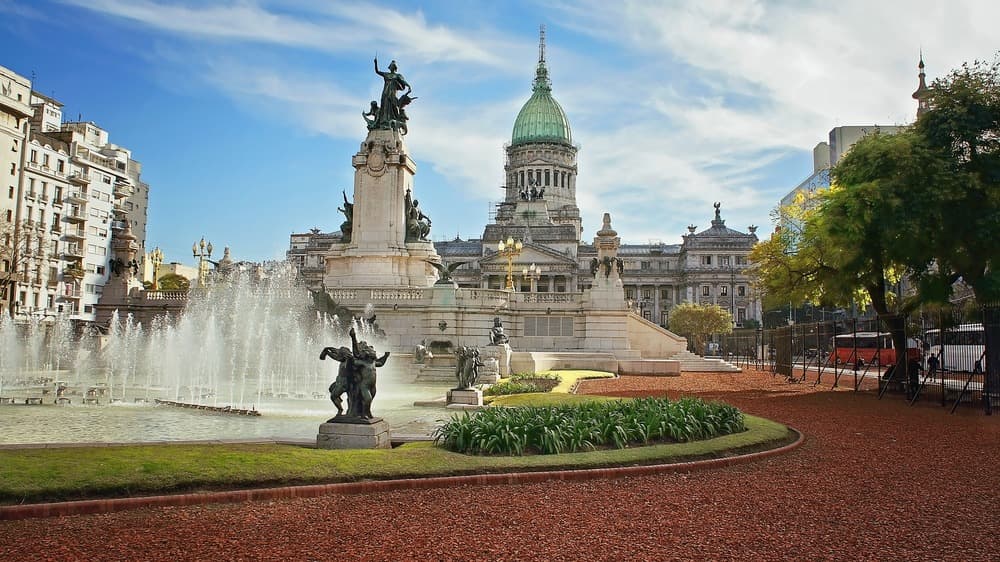
Continuing along Avenida de Mayo to its end, you'll reach the Congreso, where senators and deputies meet.
A first stop at the Casa de la Cultura, located at number 575, is a must. It was the former headquarters of the newspaper La Prensa.
You can then take a culinary break at Café Tortoni, the city's oldest café. Founded in 1858, it counted celebrities among its regulars such as French singer-songwriter and actor Carlos Gardel and Argentine writer Jorge Luis Borges.
Just a few blocks from this avenue stands the Palacio Barolo, a monument whose architectural style falls between Art Nouveau and eclecticism.
It's on Avenida Julio, the widest avenue in the world, that you discover the tumultuous atmosphere reigning in the metropolis. With its 16 lanes spread over 140 meters, this avenue cannot be crossed in a single crossing.
After taking in the obelisk and Evita's portrait, two major symbols of the city, you'll arrive at Avenida Corrientes, the entertainment hub. Nearby, the Colón Theater testifies to the importance Buenos Aires placed on operatic arts during the twentieth century.
After exploring the Microcentro, Buenos Aires' business district, you can treat yourself to something sweet by enjoying a submarino in one of the Centro's cafés. It's a large glass of hot milk accompanied by a chocolate bar.
MATADEROS
The working-class neighborhood of Mataderos is known for its artisan fair. Merchants come to sell handcrafted objects and offer some regional specialties, such as choripán (a small sandwich made with sausage and salsa criolla). This market has an appealing folkloric character, with locals dressed in traditional attire and dance and music performances.
BELGRANO
Belgrano is a pleasant neighborhood dotted with residential and commercial zones. Between the shops lining Avenida Cabildo, the large public park of Barrancas de Belgrano and the Chinatown district, there's plenty to do. Belgrano is especially known for the "Monumental", the city's largest football stadium.
LA BOCA
La Boca is a lively, pleasant and working-class neighborhood located near the city's old port. This neighborhood is chiefly famous for its colorful facades. In the 1950s, artist Quinquela Martín encouraged residents to paint their homes.
El Caminito, meaning "the little path", is the most recognizable street in La Boca.
Today, La Boca is a vibrant neighborhood inhabited by bohemian artists, where open-air theater and tango dancers are among its attractions.
It's also a paradise for football enthusiasts. This neighborhood is home to the famous "La Bombonera" stadium, where the legendary Maradona made his debut.
PALERMO
The city's "green lung" is found in the Palermo neighborhood. Here you'll find the vast Bosques de Palermo, a Japanese Garden, a golf course, a polo field, walking paths and a planetarium. Near the forest lies the Río de la Plata and its magnificent riverbank.
It's a typical Argentine residential neighborhood. Brick walls, rooms arranged around a patio…, these dwellings are called "Casas Chorizo".
PUERTO MADERO
Puerto Madero is a chic and recent neighborhood in Buenos Aires. You'll find high-rise buildings, 5-star hotels, restaurants, nightclubs, offices and the Reserva Ecológica Costanera Sur. This is where you can admire the famous "Bridge of the Woman".
RECOLETA
With its green spaces, Haussmann-style buildings and luxury boutiques, Recoleta exudes Parisian charm. In fact, this neighborhood is nicknamed "the little Paris of Buenos Aires". This is where much of Buenos Aires' cultural life is centered. Notable attractions include the National Library, the National Museum of Fine Arts, the Recoleta Cultural Center and the famous Recoleta Cemetery.
SAN TELMO
San Telmo, the birthplace of tango in Buenos Aires, is one of the city's oldest neighborhoods. Its authentic and bohemian character is undeniably appealing, much like its antique shops, legendary cafés and the Plaza Dorrego Fair held every Sunday.
San Telmo is today a particularly sought-after place by intellectuals and artists, who have set up their studios here. Don't forget to visit Zanjon de Granados, a maze of tunnels built beneath the neighborhood.
The climate in Buenos Aires
The climate in Buenos Aires is humid subtropical. Winters are generally mild there. However, negative temperatures are sometimes recorded during the winter season, particularly in July. Summers are hot and humid. The city is also frequently swept by cold, dry winds, called the "Sudestada" and the "Pampero".
Air
Buenos Aires is South America's gateway thanks to its two airports. The city's main airport is Aeropuerto de Ezeiza. Located 22 km from central Buenos Aires, this international airport is one of the largest in Latin America. From the airport, you can reach downtown by bus or taxi.
The city's second airport is the Metropolitano Jorge Newbery Airport. Located 4 km from central Buenos Aires, on the banks of the Río de la Plata, it's mainly used for domestic flights.
A Paris – Buenos Aires flight takes approximately 14 hours.
Train
The city's rail service is efficient and inexpensive. The main railway station in Buenos Aires is the "Estación de la Constitución".
Bus
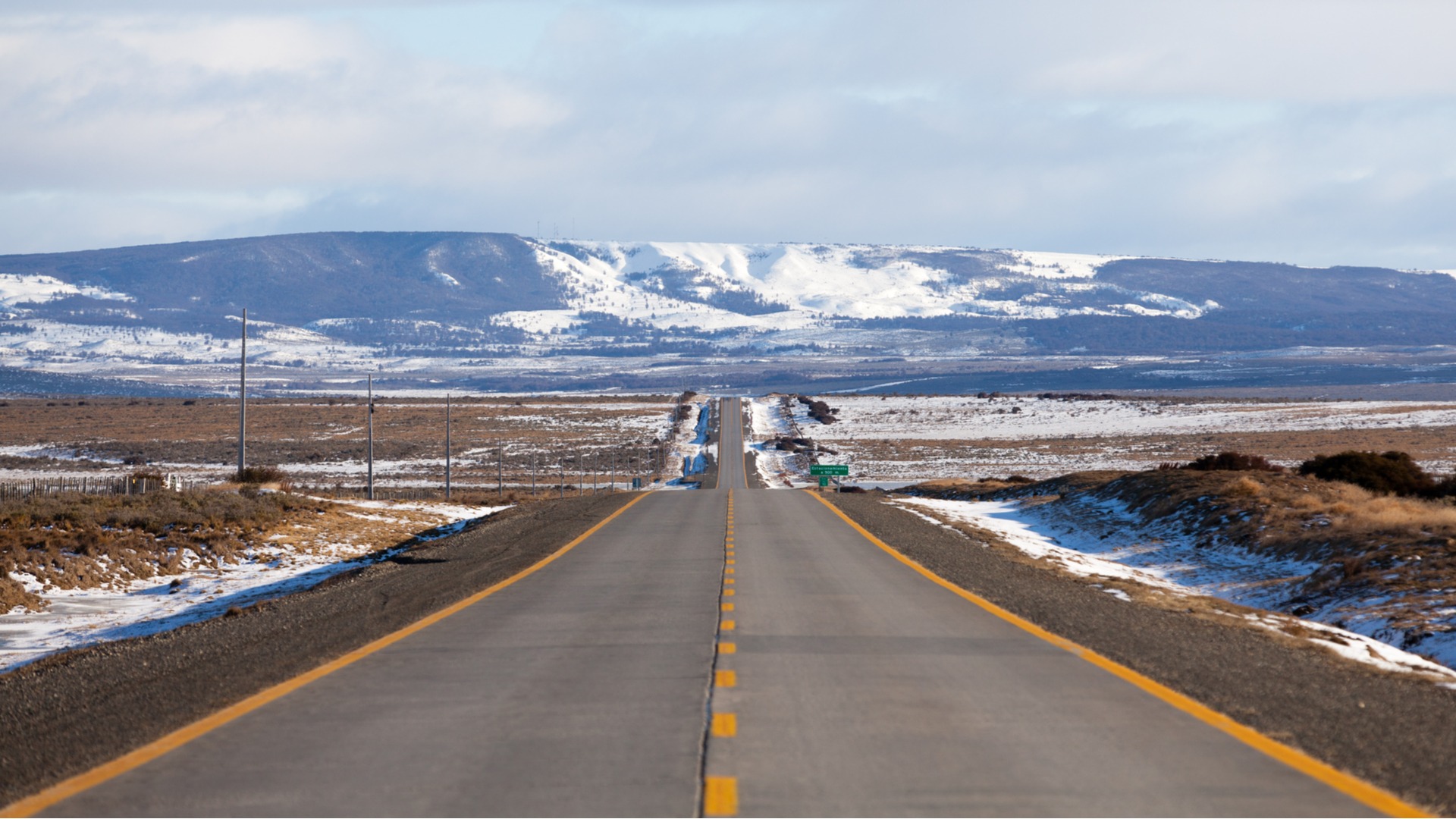
Traveling in Argentina by bus is quite easy thanks to the two main highways running through Argentine Patagonia (National Route 3 and National Route 40).
Boat
A ferry service connects Colonia and Montevideo, in Uruguay, to Buenos Aires, in Argentina (and vice-versa).
Want to discover this destination?
Our local advisors design your tailor-made trip.