Punta Arenas
Punta Arenas
In the heart of the Strait of Magellan, Punta Arenas blends Patagonian open waters, the legacy of explorers, and the gateway to Antarctica and Torres del Paine.
Situated at the far south of Chile, in the heart of the legendary Strait of Magellan, Punta Arenas is a symbol of Chilean Patagonia. The contrast is striking between its rich historical past and modern architecture.
Surrounded by lenga and coigue forests and Patagonian steppe, this port city stands as an essential waypoint for exploring the mysteries of Patagonia. Set course toward one of the world's southernmost stopover cities.
The History of Punta Arenas
Four Amerindian tribes—the Selk'nam (or Ona), the Tehuelches, the Alacalufes, and the Yaganes—inhabited Punta Arenas. The Selk'nam and Tehuelches were excellent walkers who lived primarily by gathering and hunting. The Alacalufes and Yaganes, nomadic peoples, subsisted on fishing and hunting.
The discovery of the Strait of Magellan in 1520 by Hernando de Magallanes changed the course of history. It was the first and only commercial route between the Pacific and Atlantic oceans at the time that could be traversed by ship.
In 1843, the Chilean government decided to send an expedition to colonize the Strait of Magellan. After surveying the entire site, in 1848, Governor José de los Santos Mardones gave the place the name Punta Arenas (meaning "Point of Sands").
Originally established as a penal colony, Punta Arenas was able to develop thanks to the Gold Rush and sheep farming. The city's port became one of the most important in Chile, before the construction of the Panama Canal in 1914.
Punta Arenas Today
Punta Arenas sits on the shore of the Strait of Magellan, on the Brunswick Peninsula. Located on the 52nd parallel south, the capital of the Magallanes and Chilean Antarctica region attracts all those wishing to navigate maritime routes bound for Antarctica. The city also boasts a lovely pedestrian promenade, flanked by a cycling path, that borders the Strait of Magellan.
Today, Punta Arenas is the most populated city in Southern Patagonia with 130,000 inhabitants. Much of its economy depends on port activities (mining and coal extraction), as well as fishing, sheep farming, and tourism.
The Incredible Historical Heritage of Punta Arenas
Punta Arenas is a relatively young city. The Plaza de Armas, also known as plaza Munoz Gamero, located north of the port, forms its historic heart. Here you'll find several emblematic buildings dating from the late 19th and early 20th centuries.
In the middle of the Plaza de Armas, shaded by cypress and birch trees, stands the bronze statue of Ferdinand Magellan. West of this square rises the Cathedral of the Sacred Heart. It was built in 1901 on the site of the first wooden church, which had been constructed by the Salesians in February 1892.
North of the Plaza de Armas stands the Palacio Sara Braun, built in 1895 over two stories. In French neoclassical architectural style, it is one of Punta Arenas' most emblematic buildings. It symbolizes the opulence of a family that grew wealthy in the late 19th century through sheep farming. On the west side of the palace, a winter garden has been arranged.
The Palacio Braun Menéndez is another testament to the enrichment of a few businessmen in late 19th-century Punta Arenas. Also built in French neoclassical style, this palace captivates with its entirely brick structure. In 1983, it was transformed into the Regional Museum of Magellan.
Also noteworthy is the José Bohr Municipal Theatre, one of the city's most important cultural institutions. Built in 1899 at the request of José Menéndez, it was fully restored in 2012.
Heading north along Calle Carlos Bories from the Plaza de Armas, discover the Mayorino Borgatello Salesian Museum. Founded by Salesian missionaries in 1893, this museum spans 1,700 square meters. It features fine collections on ethnography and history, as well as the endemic fauna and flora of Southern Patagonia.
In the city center, about one kilometer northeast of the Plaza de Armas, you'll arrive at the Punta Arenas Cemetery, created in 1894. This cemetery is unique for its long avenues lined with cypress trees. It is here that several illustrious figures of the city rest, including members of the Menéndez and Blanchard families.
Continuing along Avenida Bulnes, you'll encounter the Monument to the Shepherd (Monumento al Ovejero). This sculpture depicts a shepherd accompanied by a horse, a dog, and nine sheep.
Around Punta Arenas
Strolling along Avenida Bulnes, four kilometers from the Plaza de Armas, you'll arrive at Punta Arenas' Free Trade Zone, called the "Mall ZonAustral". This is a large shopping center hosting over 100 shops.
Your next stop is Calle Presidente Roca, one of Punta Arenas' most beautiful streets. Wander along this street lined with elegant buildings. It will lead you to the port of Punta Arenas. From the Costanera (the main pier), gaze upon cruise ships making stops in Punta Arenas before their crossing of the mythical Strait of Magellan.
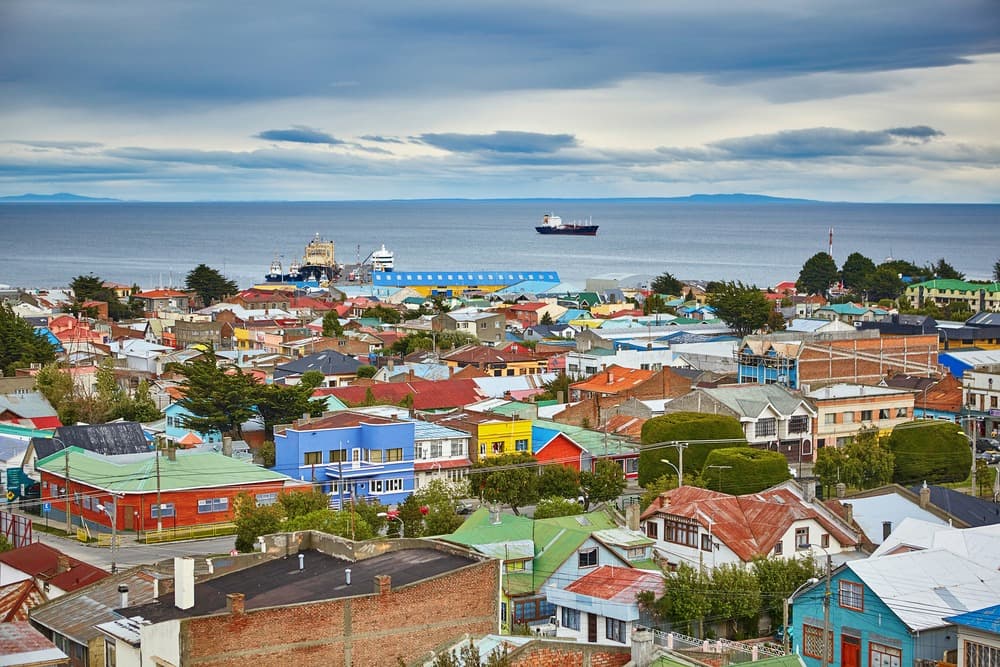
You can also visit the viewpoint at Cerro de la Cruz. It offers stunning panoramic views of the colorful houses of the port and the Strait of Magellan.
On clear days, you'll glimpse in the distance the Tierra del Fuego archipelago, Mount Sarmiento (reaching 2,246 meters), and part of the Brunswick Peninsula. From this vantage point, you can also see Punta Arenas beach, where old sailing ships are moored. Take in this comprehensive view of Punta Arenas to capture beautiful photographs.
Excursions Around Punta Arenas
Punta Arenas is an excellent starting point for numerous excursions. It's the ideal place to engage in humpback whale watching. The excursion typically lasts a full day, departing from the city's port toward Tierra del Fuego.
Go see the penguins on Isla Magdalena. You'll discover one of the world's largest colonies of Magellanic penguins (approximately 150,000).
Then head toward Marta Island, which also harbors exceptional marine fauna. Here you'll find over 1,700 sea lions, as well as South American dolphins, cormorants, elephant seals, and Southern skuas.
From Punta Arenas, reach the Alberto de Agostini National Park and its fjords, Karukinka Park and its superb forests, or the Cape Horn National Park and its glaciers (Balmaceda and Grey). Trekking enthusiasts will find plenty to enjoy. For relaxation in peace and quiet, spend a night in the isolated villages of Puerto Williams or Porvenir.
Climate
The residents of Punta Arenas are accustomed to harsh climatic conditions. The climate is subpolar oceanic, much like the entire southern tip of the South American continent.
Temperature variation is relatively modest due to proximity to the ocean. Temperatures range between 14° and 20°C in summer and can drop sharply in winter (−18°C).
Precipitation is relatively low, averaging 376 millimeters annually. From July to August, during winter, a freezing wind makes the atmosphere glacial, not to mention snow and hail. The wind's force can reach 130 km/h.
Getting There
By Air
Despite its location at the far south of Chile, Punta Arenas is fairly accessible. Flying is often the preferred mode of transport for those wishing to reach Punta Arenas as quickly as possible.
Flights land at Carlos Ibáñez del Campo International Airport, located 20 kilometers north of the city center. With three runways, this airport is served primarily by three airlines: Aerovías DAP, Sky Airlines, and LAN Airlines.
LAN Airlines offers flights from Puerto Montt and Santiago, as well as from Río Gallegos and Ushuaia in Argentina, and from the Falkland Islands. Sky Airlines serves Punta Arenas from Balmaceda, Puerto Montt, and Santiago.
Aerovías DAP offers regional flights from Porvenir, Puerto Natales (charter), and Puerto Williams. This airline also provides international flights from Ushuaia, Río Gallegos (charter), and Río Grande (charter).
Traveling from France to Punta Arenas takes more than 24 hours. Flights must make two or three stops, including Santiago, Chile, before arriving at your destination.
To reach the city center from Carlos Ibáñez del Campo Airport, you have two options:
By Taxi
Taxis will take you to the city center for approximately 9,000 pesos (roughly €11).
By Bus
Several bus companies operate service between the airport and the city center. Tickets cost between 3,000 and 4,000 pesos (roughly €6).
There is no central bus station in Punta Arenas. Bus Sur and Buses Pacheco companies offer service from Puerto Natales and from Río Gallegos, Río Grande, and Ushuaia (in Argentina).
You'll also find companies like Cruz del Sur and its affiliates for travel from Osorno or Puerto Varas to Punta Arenas.
By Sea
Punta Arenas is also accessible by boat. Vehicles coming from Argentina must take the ferry to cross the Strait of Magellan. Ferries depart from the village of Porvenir.
You can also take a ferry from Puerto Montt or Quellón to Punta Arenas. The journey takes 24 hours. During the crossing, you'll sail past fjords and Patagonian channels. From Punta Arenas, take a bus that will transport you to Punta Arenas.
Attractions in Punta Arenas
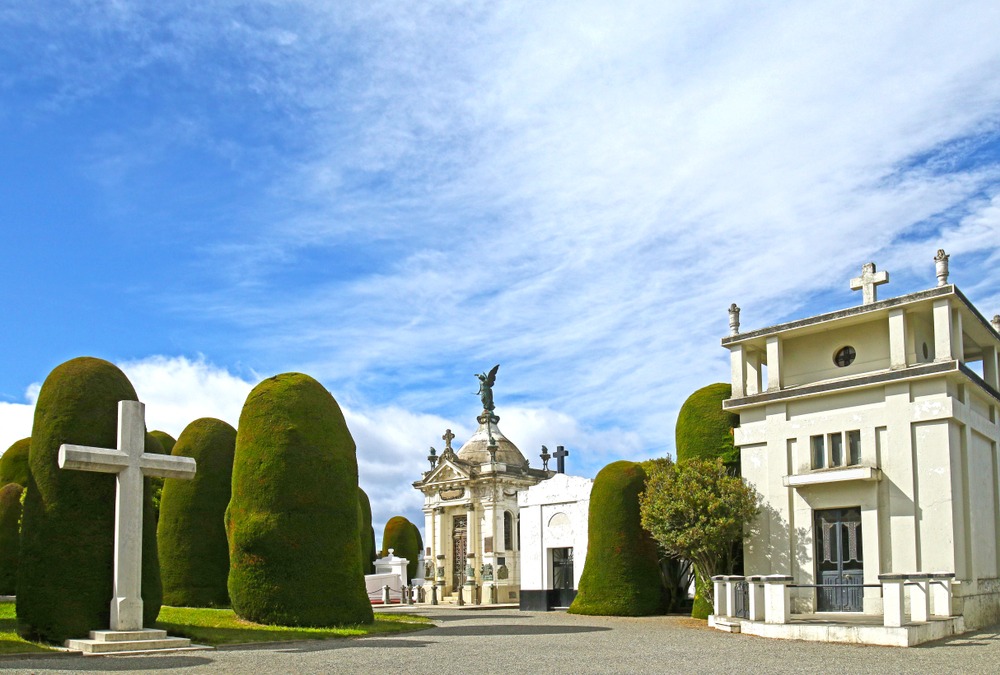
Cimetière de Punta Arenas
Inauguré en 1894 et classé monument national, le cimetière Sara Braun de Punta Arenas raconte l'histoire des grandes familles patagoniennes à travers ses mausolées et ses légendes.
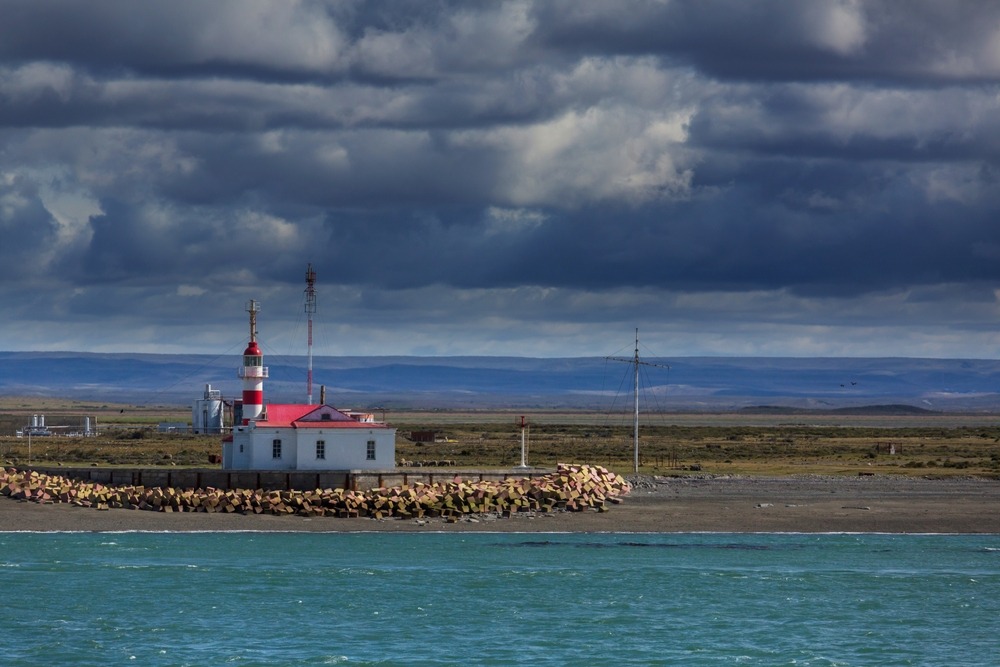
Le détroit de Magellan
Voie navigable de 611 km reliant Atlantique et Pacifique, le détroit de Magellan traverse la Patagonie chilienne entre fjords, glaciers et faune australe.
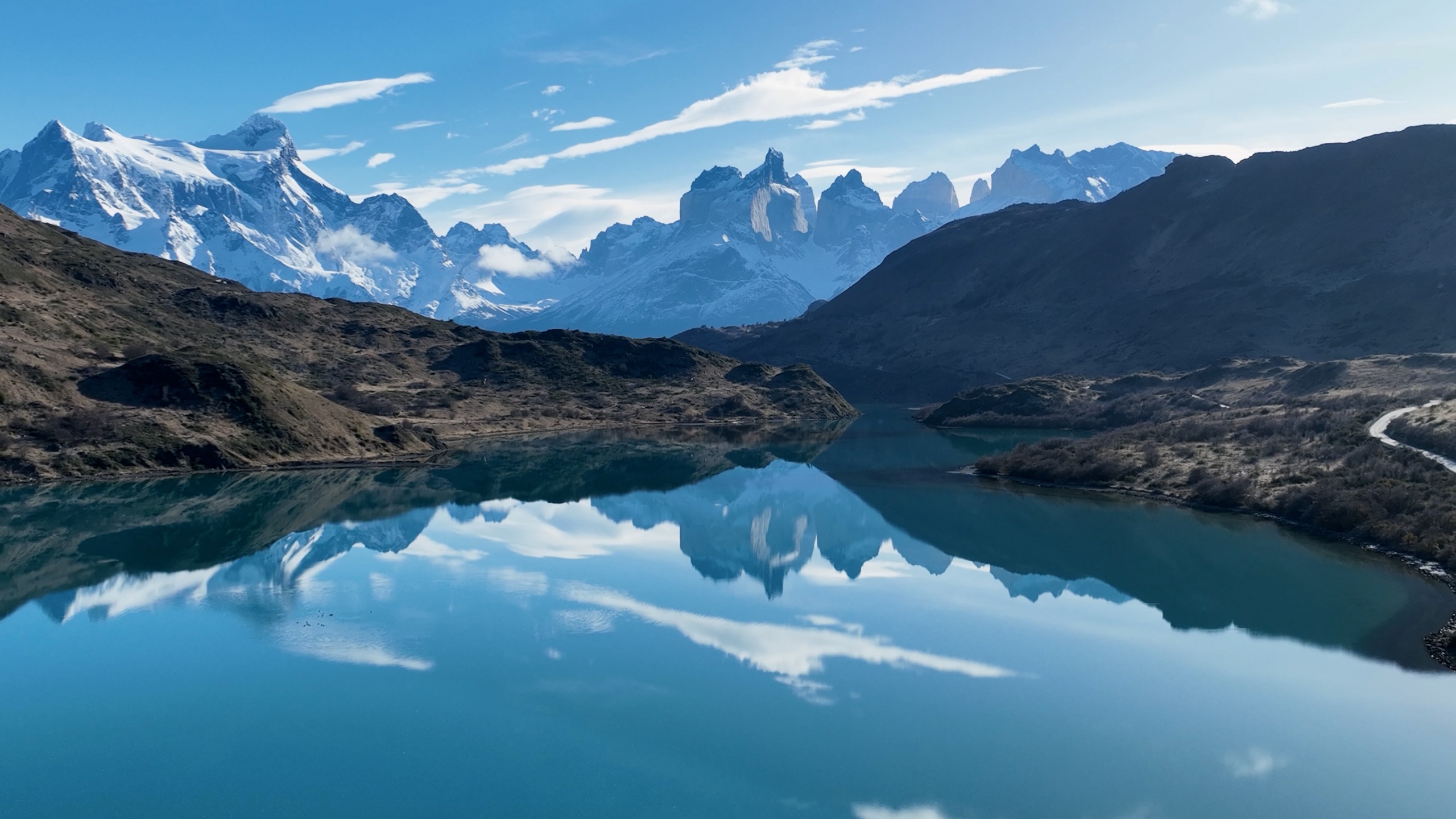
Parc National Alberto de Agostini
Au sud de Punta Arenas, le parc Alberto de Agostini protège 1,4 million d'hectares de fjords et glaciers de la Cordillère Darwin, accessibles uniquement par voie maritime.
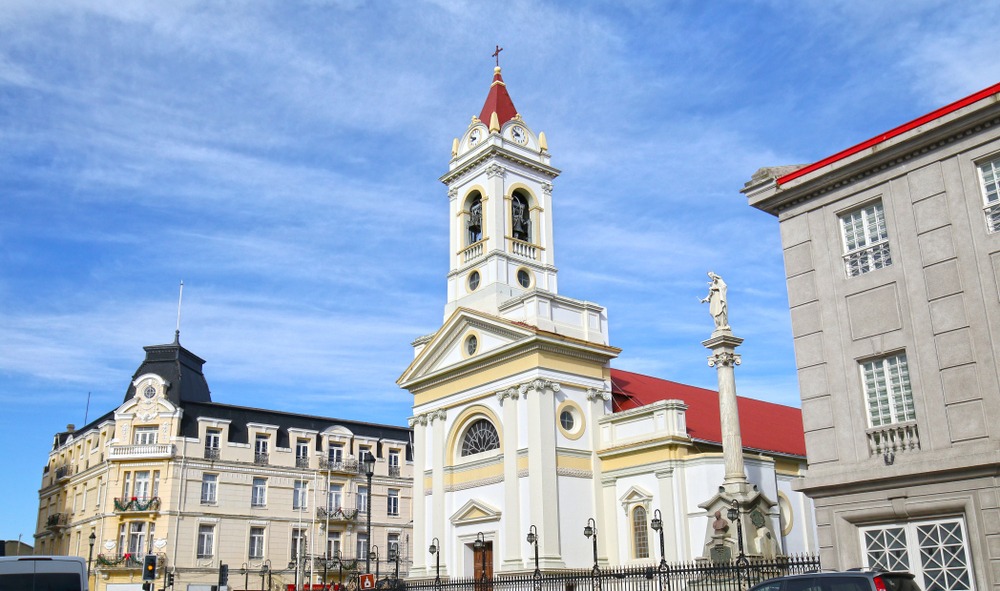
Cathédrale du Sacré Cœur
Sur la Plaza Muñoz Gamero à Punta Arenas, la Cathédrale du Sacré-Cœur conjugue architecture néoclassique, vitraux européens et plus d'un siècle d'histoire patagonienne.
Want to discover this destination?
Our local advisors design your tailor-made trip.