Beagle Channel
Beagle Channel
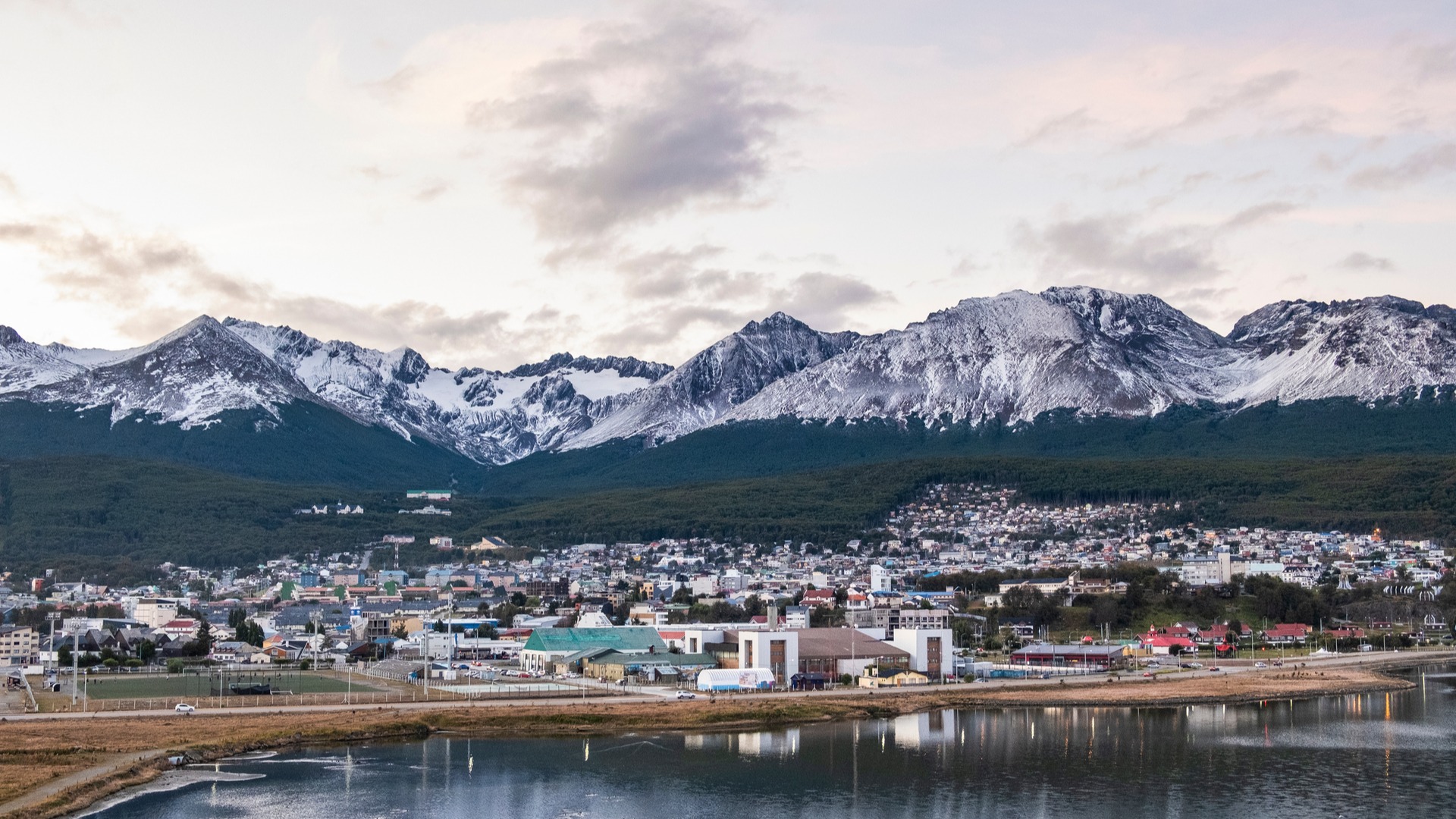
The Beagle Channel borders Ushuaia to the south and connects the Atlantic to the Pacific between Argentina and Chile. Boat excursions allow you to observe penguins, sea lions and the famous Les Éclaireurs lighthouse set against glacial mountains.
The Beagle Channel separates the large island of Tierra del Fuego from smaller islands to the south, at the border between Argentina and Chile. Approximately 240 km long, it connects the Atlantic Ocean to the Pacific Ocean. From Ushuaia, boat excursions allow you to observe colonies of sea lions, Magellanic penguins and seabirds against a backdrop of snow-capped mountains and subantarctic forests.
Quick reference guide
- Access: boat departures from Ushuaia's port (Muelle Turístico), a few minutes' walk from the city centre.
- Recommended duration: 2 to 3 hours for a standard excursion; a full day for combined circuits with the national park.
- What to wear: warm and waterproof clothing essential, even in southern summer; wind can be fierce.
- Best time: October to March (southern summer), when penguins are present on the islands.
What you'll see
Excursions pass along Bridges Island, Penguin Island (Isla Martillo) and Lobos Island, inhabited by maned sea lions. Les Éclaireurs lighthouse, often mistakenly called the "lighthouse at the end of the world", marks the eastern entrance to the channel. The Argentine shores are lined with Magellanic beech forests (lenga) displaying brilliant colours in southern autumn.
History and context
The channel takes its name from the HMS Beagle, the British ship that charted it during two expeditions between 1826 and 1836. Charles Darwin participated in the second. The Yaghan peoples navigated these waters for millennia before European arrival. Ushuaia, founded in 1884 as an Argentine penal colony, developed on the northern shore of the channel.
Highlights of the visit
The penguin colonies of Martillo Island
Martillo Island is home to a mixed colony of Magellanic penguins and, more rarely, chinstrap penguins. Some excursions allow guided landings to observe the birds just metres away. The nesting season runs from October to March.
Les Éclaireurs lighthouse
This red and white lighthouse, built in 1920, is one of Ushuaia's iconic photographic symbols. It stands on a rocky islet to the east of the channel. Boats approach it without landing being possible.
The sea lions of Lobos Island
Lobos Island concentrates a large colony of maned sea lions (Otaria flavescens). The noise and smell of the colony are perceptible well before the boat approaches.
Mountain and glacier landscapes
The Darwin Cordillera, on the Chilean side, offers a backdrop of glaciated peaks. On clear days, reflections on the water and low clouds create remarkable photographic conditions.
Photography tips
Morning and late afternoon light accentuates reflections on the water and snow-capped relief. Plan for a telephoto lens for penguins and sea lions from the boat. Wind can cause camera shake: favour fast shutter speeds. Overcast days reduce contrast and work well for animal portraits.
Location and access
The Beagle Channel borders Ushuaia directly to the south. The Muelle Turístico (tourist quay) is located in the city centre, accessible on foot from most hotels. Several companies offer daily excursions of varying lengths. For circuits including a landing on Martillo Island, advance booking is recommended during high season. The Tierra del Fuego National Park is accessible by bus or taxi from Ushuaia and can be combined in the same day.
Nearby attractions
- Tierra del Fuego National Park — lenga forests, peat bogs and hiking trails west of Ushuaia.
- Museum of the End of the World — history of the Yaghan peoples and the penal colony, in the city centre.
- End of the World Train — replica of the train that served the former prison, with a journey through subantarctic forest.
- Martial Glacier — cable car and hiking above Ushuaia with sweeping views over the channel.
Frequently asked questions
The southern summer, from October to March, is the ideal time: penguins are present on the islands, days are long and weather conditions milder. In southern winter, excursions are less frequent and temperatures are extremely low.
Some excursions include a guided landing on Martillo Island to observe the penguins. Most other islands, including the lighthouse island, are accessible only by observation from the boat.
Yes. The border roughly follows the middle of the channel. Excursions from Ushuaia generally stay in Argentine waters; longer circuits to Puerto Williams (Chile) require customs formalities.
Absolutely. Even in January, wind on the channel can make the felt temperature very cold. Plan for multiple layers, a waterproof windbreaker and gloves, whatever the season.
Yes, this is a common combination. A morning excursion on the channel (2-3 hours) leaves the afternoon free for the national park, accessible by bus from Ushuaia's city centre.
Interested in this visit?
We can include it in your personalised itinerary.