Traveling to Patagonia
Separated by the Andes mountain range, Patagonia connects Chile and Argentina. This southern region of South America is renowned for its spectacular landscapes.
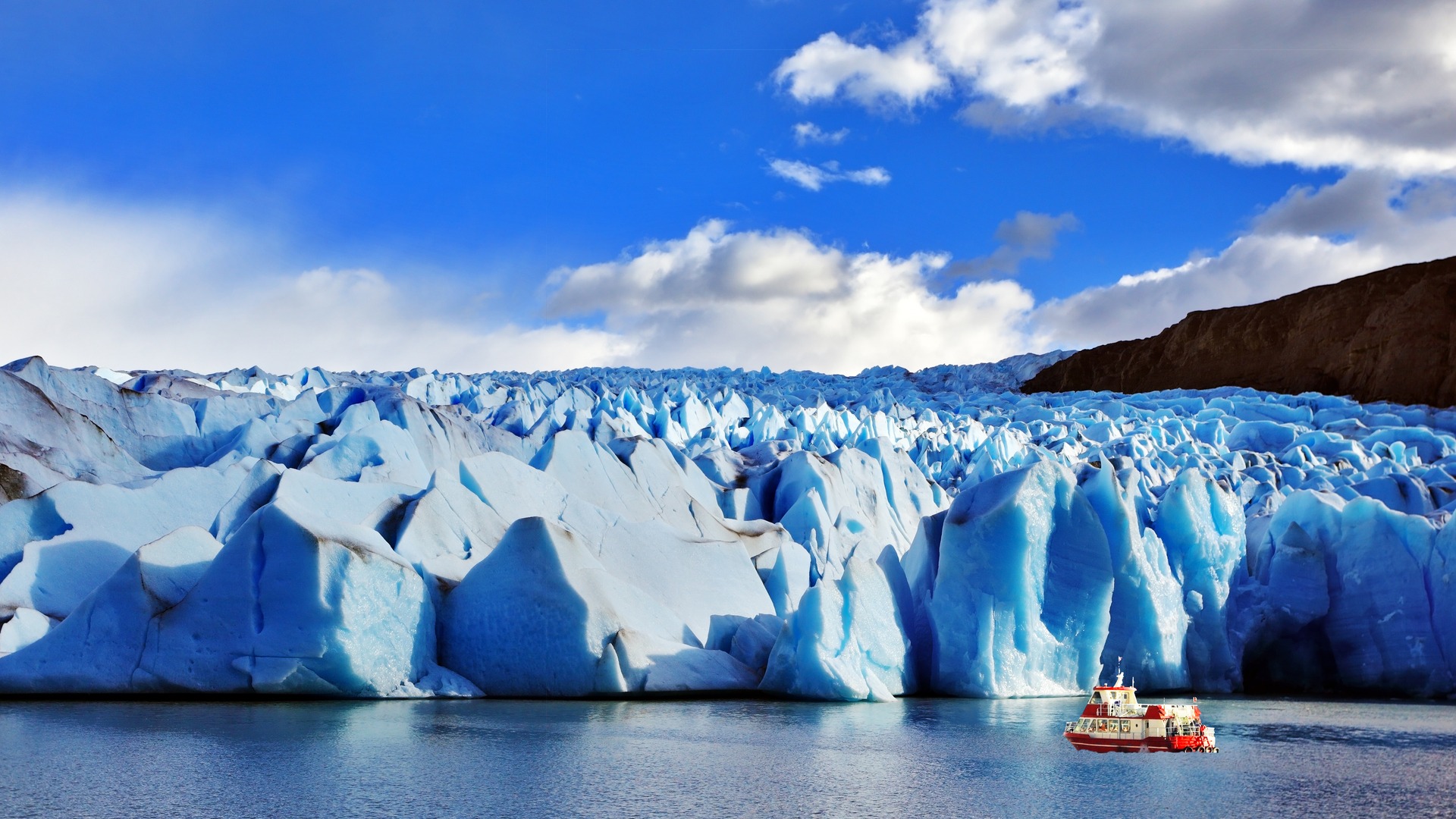
Separated by the Andes mountain range, Patagonia connects Chile and Argentina. This southern region of South America is renowned for its spectacular landscapes. Composed of steppes, mountain ranges and coastlines, it promises incredible trekking adventures or boat journeys, closer to wild nature and great glaciers! But traveling to Patagonia requires careful planning – as well as knowledge of southern hemisphere seasons… Here are some practical tips for a successful trip to the Far South!
When to travel to Patagonia?
The seasons
Patagonia is a southern region. Before setting your travel dates, remember that the seasons are reversed compared to Europe:
Summer (December to February): between 5°C and 22°C
Autumn (March to May): between 0°C and 10°C
Winter (June to August): between -3°C and 5°C
Spring (September to November): between 2°C and 18°C.
The most favorable seasons for exploring Patagonia are autumn and spring. Southern winter is very cold and windy, making this period not recommended (particularly in the heart of the Andes where temperatures can drop rapidly). For trekking enthusiasts, October through May are the ideal months.
Regions and their climate
Extending over 800,000 km² between southern Argentina and Chile, Patagonia comprises glaciers, steppes, subpolar forests, coastlines and mountains. Influenced by the Andes, the Pacific Ocean and the Atlantic Ocean, it is home to distinct geographical zones:
The central region is a vast arid steppe situated at low altitude.
The South Pacific coast: in the north, regions have a maritime climate. In the south, they experience a subpolar oceanic climate (cool temperatures and abundant rainfall).
The South Atlantic coast is often swept by violent winds.
The Andes mountain range has two types of climate: humid and cool on the Chile side (Pacific slope), dry and windy on the Argentina side (Atlantic slope).

How to get to Patagonia?
There are no direct flights from France. To reach the Far South you will need to take a flight to Santiago, Chile (approximately 15 hours) or Buenos Aires, Argentina (approximately 14 hours). Then you will need to take a domestic flight to one of Patagonia's small airports (approximately three hours of flight):

From Chile: it is possible to take a domestic flight (scheduled) to Punta Arenas. In summer, flights to Puerto Natales are available.
From Argentina: there is a domestic flight to El Calafate.
Note that there are no cross-border flights between the two countries: if you land in one of the capitals, you must take a domestic flight to reach Patagonia.
What are the formalities for traveling to Patagonia?
Entry requirements for Argentina
Upon arrival in Argentina, you must present a valid passport that is valid for at least 6 months from the date of entry. For a tourist stay of less than 90 days, a visa is not required.
Attention: 48 hours before your flight, you must complete the "Electronic Declaration of Entry into National Territory" on the website of the National Directorate of Migration. In return, you will receive a confirmation email (which you must present when boarding).
On April 7, 2020, Argentina lifted all Covid-19 restrictions for travelers (vaccinated or not). As your departure approaches, do check the health situation.
Entry requirements for Chile

When entering Chile, you must present a valid passport that is valid for at least 6 months after the date of entry into the country. Local authorities will issue you a Tarjeta Unica Migratoria, a "single migration card" that you must keep with you during your entire stay (it will also be requested when you leave the country). A visa is not required for a tourist stay of less than 90 days.
How to get around the Far South?
Car rental
Renting a vehicle is a way to travel without constraints. For long journeys: travel by van rather than by car! In addition to giving you a sense of adventure, it will give you complete autonomy. But freedom comes at a price: expect around €100 / day to rent a van (€70 for a car).
To avoid surprises at the border, know that it is difficult to cross a vehicle between Chile and Argentina. You must present your insurance (which serves as a permit). In case of non-compliance, authorities may refuse passage. Note that waiting times to cross the Patagonian border can reach 4 hours during the tourist season.
By train
The train is another way to discover Patagonia. In addition to admiring its splendid landscapes, you can interact with the indigenous population. A tip? If you explore Argentine Patagonia, take La Trochita! Also called Viejo Expreso Patagónico, this steam train will take you traveling through time and through the Chubut region.
By bus

The coach is the ideal means of transportation for discovering Patagonia. Indeed, the region has many companies (and it is the simplest way to cross the Patagonian borders). A tip? During high season, buy your tickets several days before your departure.
By ferry or cruise ship
Taking a cruise ship or a ferry is also a common way to travel in Patagonia! Crossings are regularly organized to discover the fjords and glaciers.
How to pay in Chile and Argentina?
Payment methods
In Chilean Patagonia, the currency is the Chilean peso and in Argentine Patagonia, the Argentine peso. If you move from one country to the other, go to a currency exchange. The goal? Avoid making too many withdrawals at ATMs, as bank fees are high.
Similarly, fees are charged on card payments. While many merchants accept payment cards, know that they charge a recargo ("surcharge") of 5 to 15%! Prefer cash payments instead!
Cost of living
Patagonia is renowned for its high cost of living. Budget an average of €50/day per person for the cheapest daily budget, meaning low-cost accommodation (hostel/dorm style), with public transportation and no restaurant…
Tipping is common in Argentina and Chile. It is customary to leave a tip (10% of the bill or 5% if the amount is large). This is not mandatory, but not leaving a propina is rather poorly viewed!

What to pack for exploring South America?
Appropriate clothing
Patagonia is known for its unpredictable weather. It is possible to experience all four seasons in a single day! Therefore, pack thermal wear, fleece jackets and waterproof clothing, as well as sunscreen (SPF 50) and sunglasses. Thus equipped, you will be able to brave the cold, rain, gusts and intense heat. Also bring a pair of waterproof shoes.
A universal power adapter
Chile uses C/L type plugs and Argentina uses C/I type electrical outlets. While many hotels adapt to European plugs, bring a universal power adapter anyway so you can recharge your devices anywhere. The voltage in these two countries is lower than in France (220 volts versus 230 V) but this is not a problem.

What to see and do in Patagonia?
In Argentine Patagonia
Valdés Peninsula: this peninsula in Chubut province is renowned for its rare vegetation and singular wildlife. You will encounter Guanacos and Maras… Designated a UNESCO site, this area is also an extraordinary place to observe whales and sea lions!
Los Glaciares National Park: located in Santa Cruz province in the southwest of Patagonia, this protected area (designated a UNESCO World Heritage site) contains numerous lakes, forests, mountains… and 47 major glaciers!
Tierra del Fuego National Park : created in 1960 to preserve its flora and fauna, this park (located in the southwest of Tierra del Fuego) offers countless walks, stairs, walkways and viewpoints…

In Chilean Patagonia
Punta Arenas: this isolated city is one of the departure points from which to embark on a cruise to Antarctica, heading towards the glaciers. During your stopover, take the opportunity to admire Sara Braun Palace – an architectural masterpiece built between 1895 and 1905.
Puerto Natales : renowned for its historic center, this charming town of Última Esperanza is also an essential destination where you can stock up before heading off on an excursion into the heart of the famous Torres del Paine park…

Torres del Paine National Park: this exceptional site contains and protects a multitude of ecosystems. Renowned for the diversity of its landscapes, the park is popular for its glaciers, valleys and large lakes. An ideal spot for trekking and observing wildlife!
Frequently asked questions
The most favorable seasons for exploring Patagonia are the southern spring (September to November) and southern autumn (March to May). For trekking enthusiasts, the ideal window extends from October to May. Winter (June to August) is not recommended due to very low temperatures and violent winds, particularly in the Andes.
No, French nationals do not need a visa to stay in Argentina or Chile for a tourist stay of less than 90 days. A passport valid for at least 6 months after the date of entry is sufficient. For Argentina, you will need to complete an online electronic declaration 48 hours before your flight.
There are no direct flights from France to Patagonia. You must first reach Buenos Aires (approximately 14 hours of flight) or Santiago, Chile (approximately 15 hours), then take a domestic flight to Patagonia: to El Calafate from Buenos Aires, or to Punta Arenas (and Puerto Natales in summer) from Santiago. Plan for approximately 3 additional hours of flight.
Patagonia is a destination known for its high cost of living. The minimum budget is estimated at around €50/day per person (dorm accommodation, public transportation, no restaurants). Van rental costs around €100/day, compared to €70/day for a car. Prefer cash payments as many merchants charge a recargo (surcharge) of 5 to 15% on credit card payments.
The weather in Patagonia is very changeable and it is possible to experience all four seasons in a single day. It is recommended to pack thermal underwear, fleece jackets, waterproof clothing, a pair of waterproof shoes, SPF 50 sunscreen and sunglasses. A universal power adapter is also advisable.
In Argentine Patagonia: Valdés Peninsula (UNESCO-designated), ideal for observing whales and sea lions; Los Glaciares National Park (UNESCO-designated), with its 47 major glaciers. In Chilean Patagonia: Torres del Paine National Park, renowned for its glaciers and treks; Punta Arenas, departure point for cruises to Antarctica; and Puerto Natales, gateway to Torres del Paine.