Pehoé Lake
Pehoé Lake
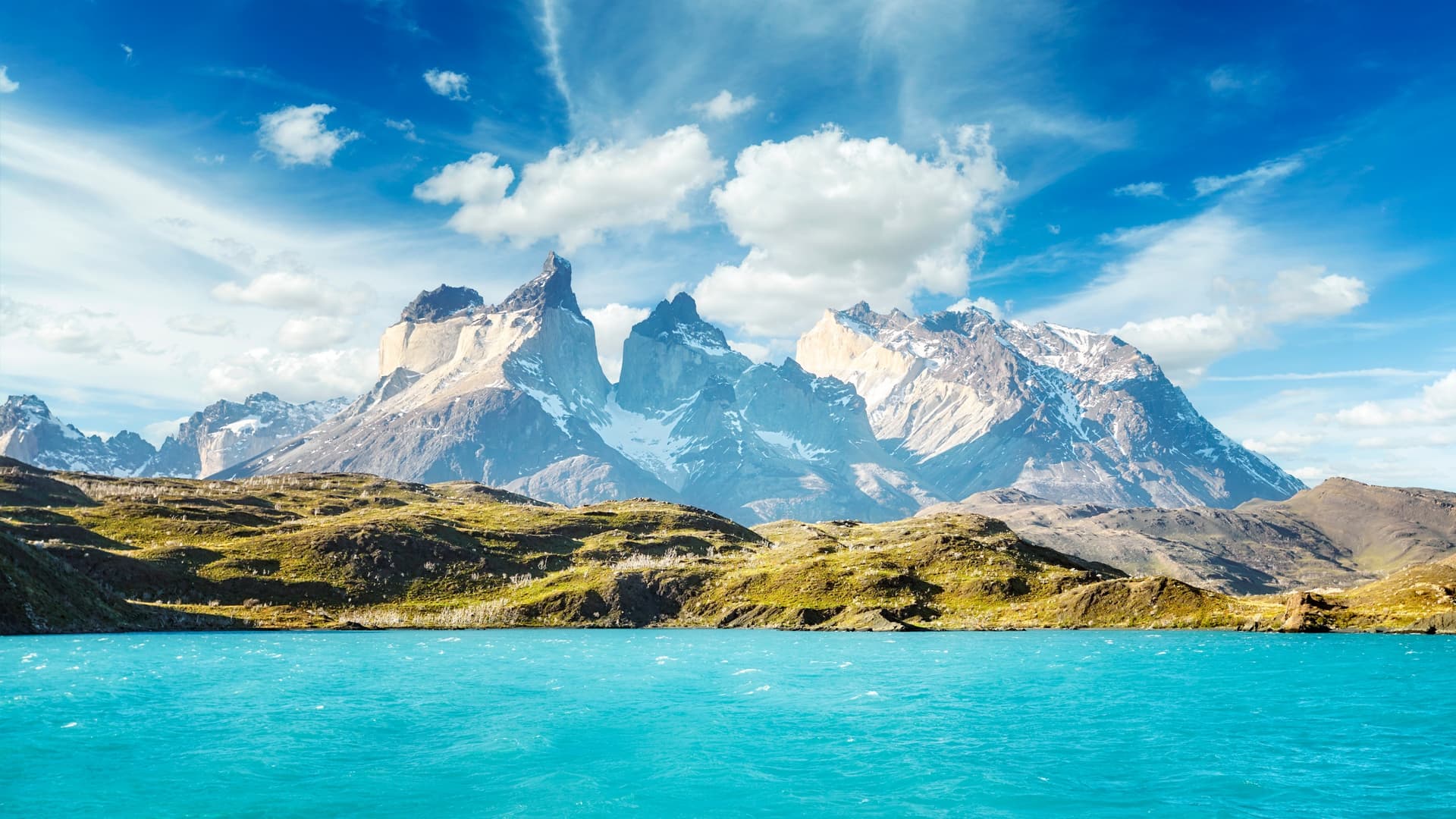
In the heart of Torres del Paine National Park, Pehoé Lake stretches across 22 km² of turquoise waters facing the Cuernos del Paine, 150 km from Puerto Natales.
Discover Patagonian nature from a different perspective. Pehoé Lake, with its deep and crystalline blue waters, is the dream attraction for adventurous spirits seeking challenges, exploration enthusiasts in search of exceptional places, and those yearning to contemplate rarely discovered wonders. It also forms a vital ecosystem supporting a rich variety of local fauna and flora. Let yourself be captivated by the beauty of indigenous grasses and wild flowers that add splashes of colour to the landscape. Head to southern Chile.
Its history
Pehoé Lake came into being in 1959. Later, in 1978, it earned UNESCO Biosphere Reserve status.
Its name, "Pehoé," derives from the words "hidden lake" in the indigenous Tehuenche language. In this language, the word for "pain" translates to "blue."
Today, one of the most magnificent attractions
Pehoé Lake is a natural splendour that invites contemplation. It was even recognized by Italian media TGCOM24 as one of the world's 10 most beautiful lakes. Indeed, it is surrounded by majestic mountains and bordered by lavender. This body of water ranks among the turquoise jewels of Torres del Paine National Park.
Geographically, it sits between the Chilean and Argentine border, 150 km north of Puerto Natales. Visitors love the bleached branches of trees that add a touch of wild nature to this 22 km² lake.
Fed by the Río Paine and Skottsberg Lake, this location is known for its crystalline and turquoise waters. It owes its magnificent blue hues to the Salto Grande falls and "glacial flour." These captivate the eye especially when the Cuernos del Paine peak reflects on its surface. Visitors are invited to contemplate this exceptional landscape, where the waters of the Río Paine emerge from the Salto Grande falls.
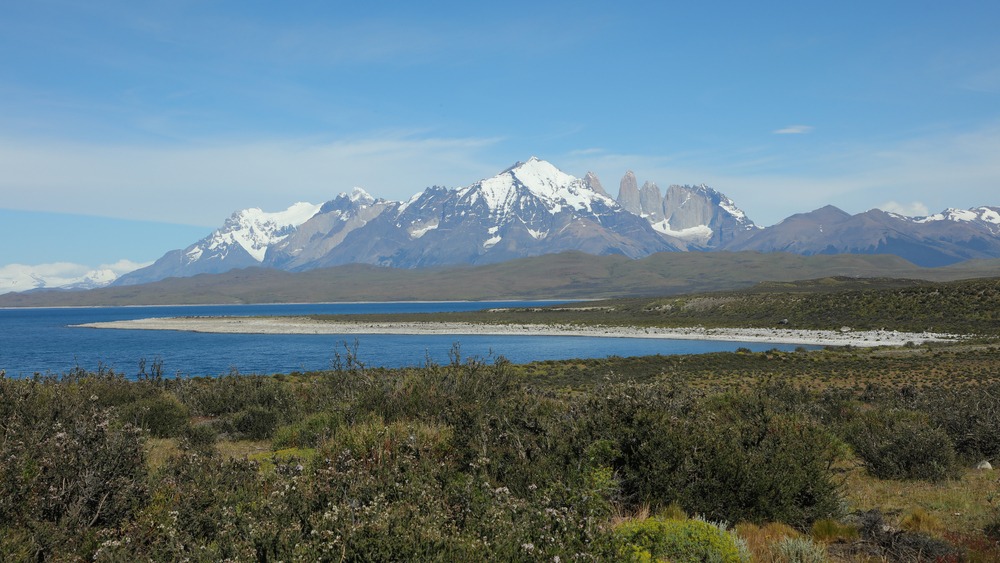
While not suitable for swimming, this expanse of water seduces through its magnificent panoramas. Thanks to its position between the Andes cordillera and the Patagonian steppe, it offers an exceptional vantage point over Paine Grande mountain and the Cuernos del Paine. Waters flowing from the Salto Grande cascade add to the purity of this remarkable place.
Glacial water, constantly shifting from teal to purple to amber, creates a hypnotic spectacle at sunrise and sunset. The Cuernos del Paine reflect beautifully on its surface.
Exceptional wildlife to discover
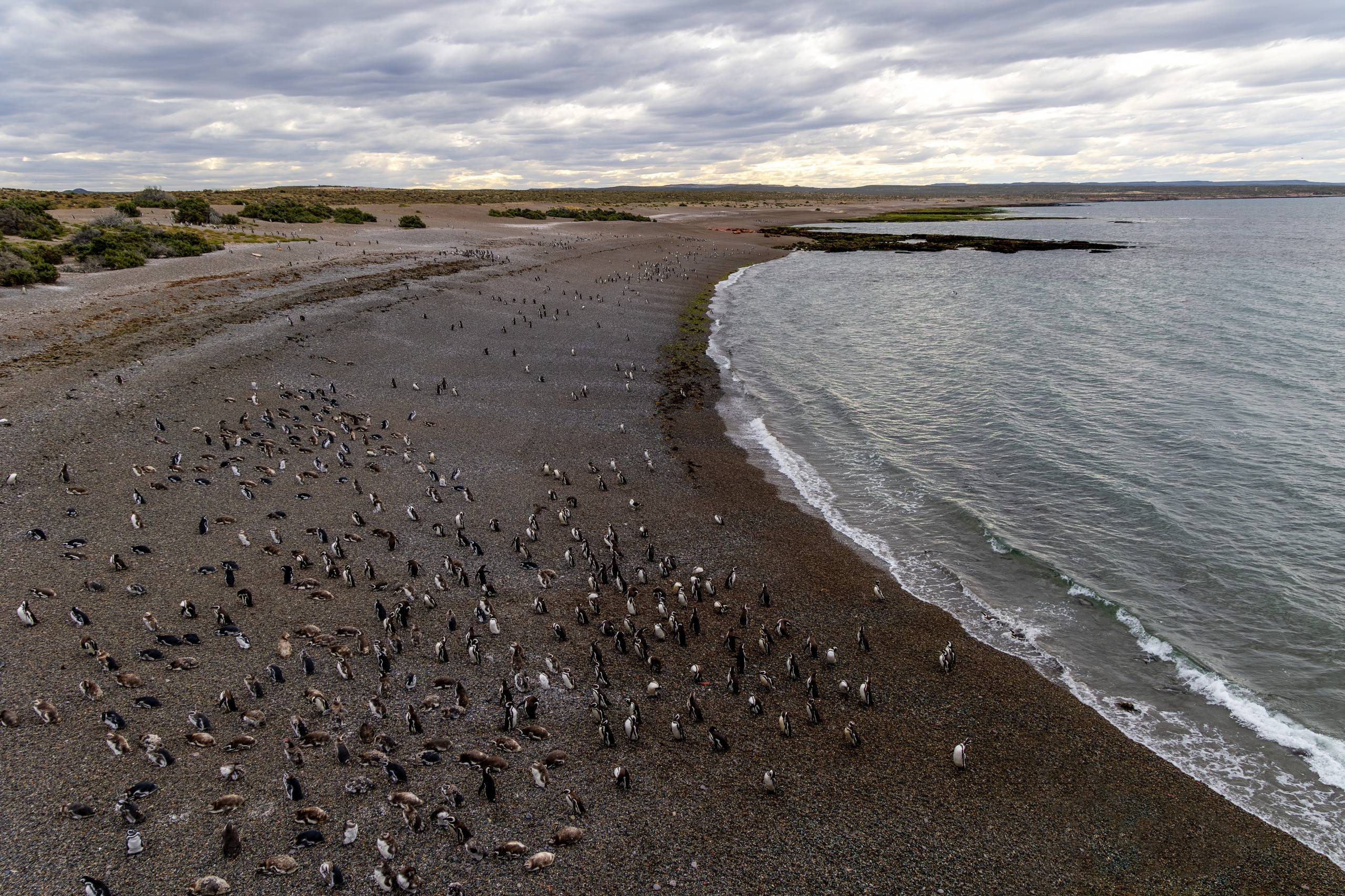
This expanse of water is not merely a location of exceptional natural beauty. It is also home to a great variety of fauna. Guanacos, these charming camelids, are regular visitors to the lake's shores where they peacefully graze on grass and indigenous flora. The luckiest visitors might perhaps spot ñandus, also called rheas, flightless birds resembling ostriches. The sky above Pehoé Lake is often graced by the Andean condor, recognized as Chile's national bird. This national symbol, which fascinates both tourists and locals alike, finds in the park one of its favourite habitats.
In this region, various raptors have made their home. They are ready to perpetuate their lineage. Among them, the Magellanic owl, the black-breasted hawk-buzzard, the chimango caracara, the austral pygmy owl and the cinereous harrier roam their natural habitat. Among the winged inhabitants of the park is Darwin's rhea. Moreover, rare specimens such as the Chilean flamingo, the Coscoroba swan and the Magellanic woodpecker add a unique touch to the region's avian richness.
A short excursion to Grey Glacier
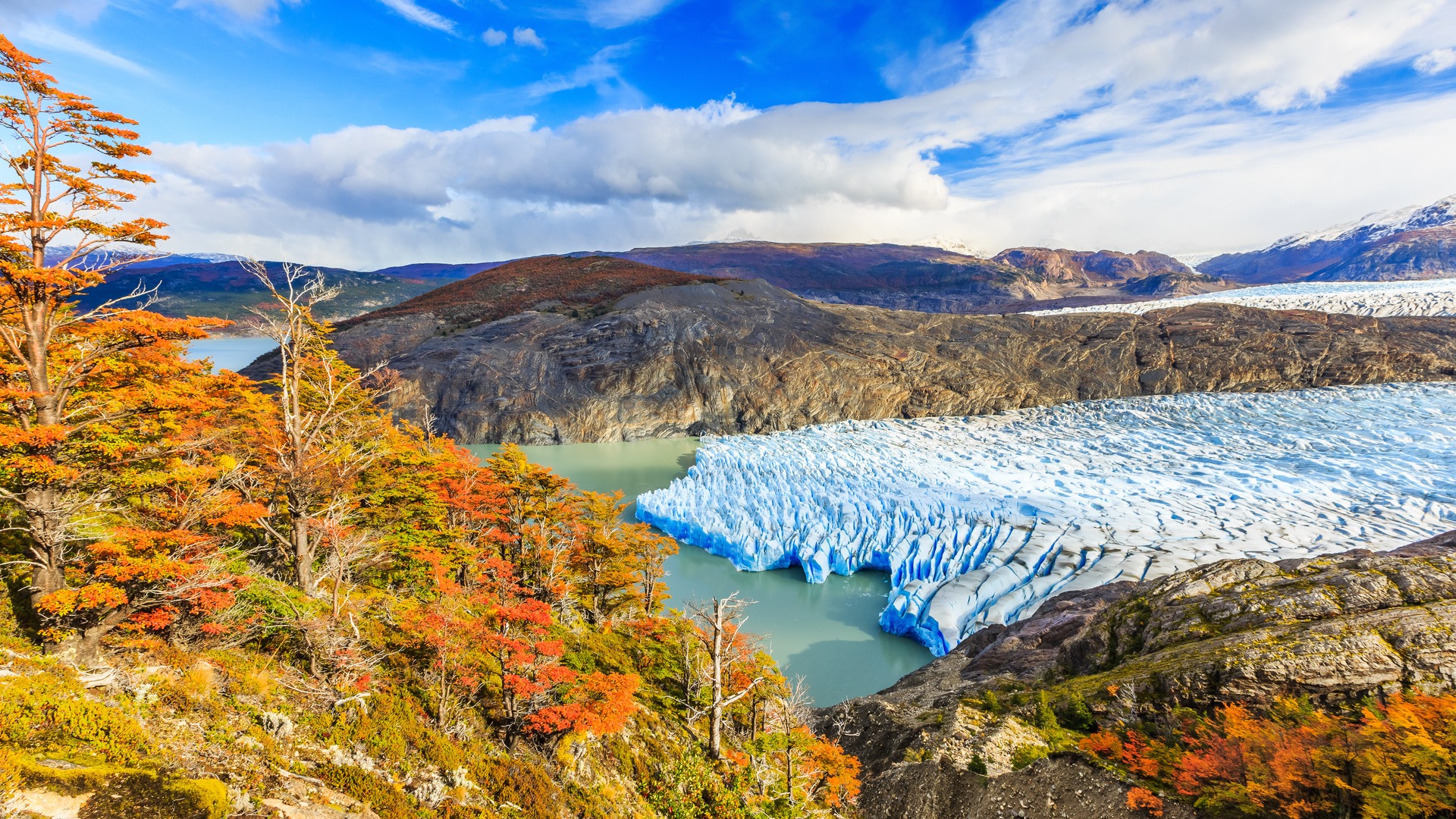
Excursions to Grey Glacier, situated 8 km away, give you the chance to observe vast expanses of ice. Ecotourism enthusiasts flock here to explore local fauna and flora, while the famous Torres del Paine, ranked by National Geographic among the world's most beautiful sites, add to the park's renown.
What is the weather like at Pehoé Lake in Chile?
A temperate Mediterranean climate prevails in the Pehoé Lake region.
In July, maximum temperatures struggle to break 60°F. During summer, wind persists from the west and sometimes blows at speeds reaching up to 70 mph. Winter, which extends from December to February, is characterised by milder temperatures in this region.
The best times to visit are November and March.
Must-see points of interest
Your excursion will surely be even more wonderful if you venture to discover these other key locations:
- Refugio Paine Grande: starting point for the W Trek.
- Salto Grande Waterfall: impressive cascade feeding the lake.
- Salto Chico Waterfall: to explore southeast of the lake.
- Lago Grey: nearby, known for its glacier and boat excursions.
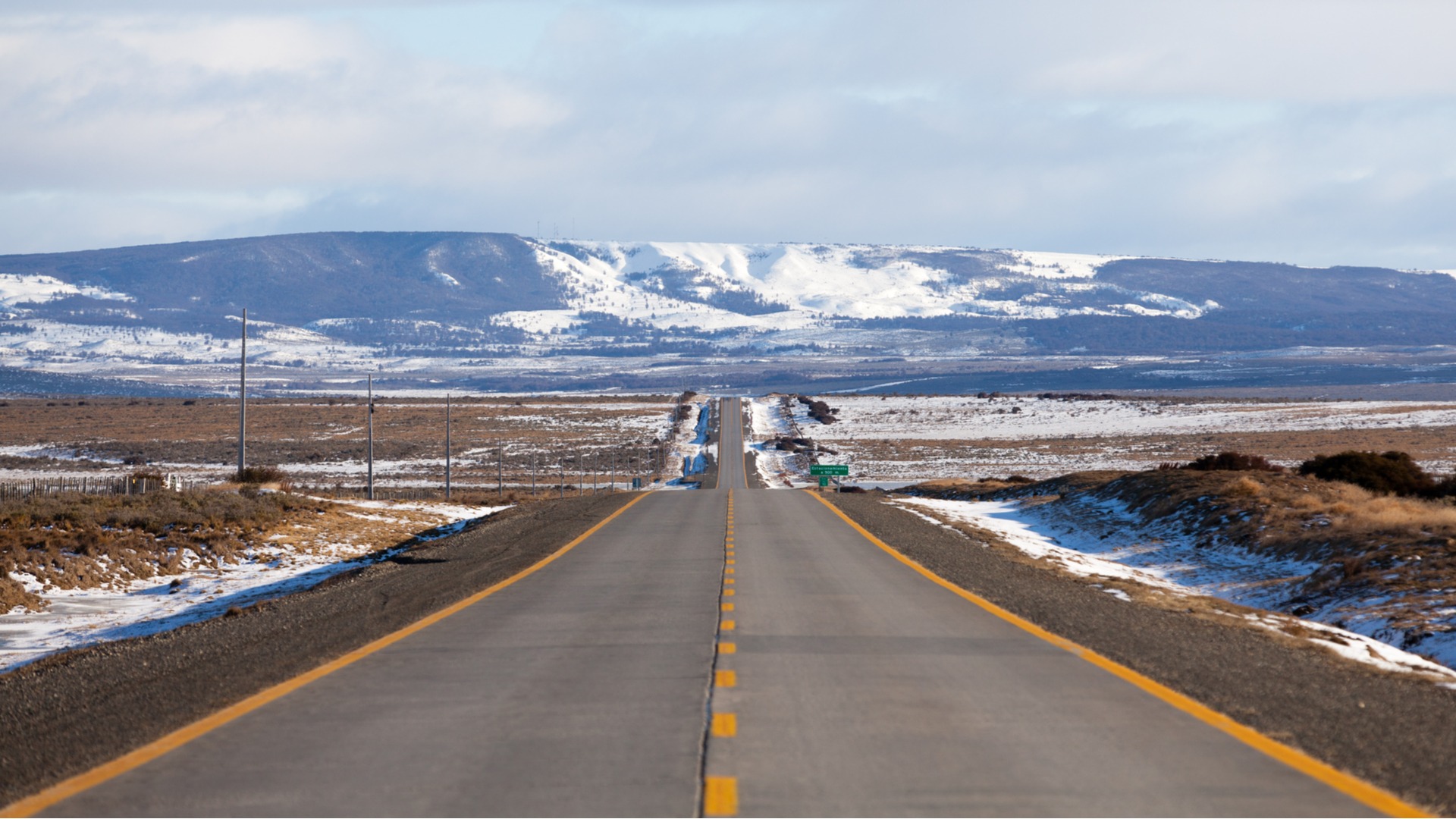
The lake is accessible by a 2-hour drive from Puerto Natales in the heart of Torres del Paine Park. You can also take a ferry from Paine Grande Lodge to the northwest, lasting about one hour. It is also possible to reach it on foot via hiking trails or by using boats.
Nearby
Interested in this visit?
We can include it in your personalised itinerary.