El Chaltén
El Chaltén
At the foot of Fitz Roy, El Chaltén is Argentina's trekking capital. Legendary treks, Andean wildlife, glaciers: here's everything you need to know.
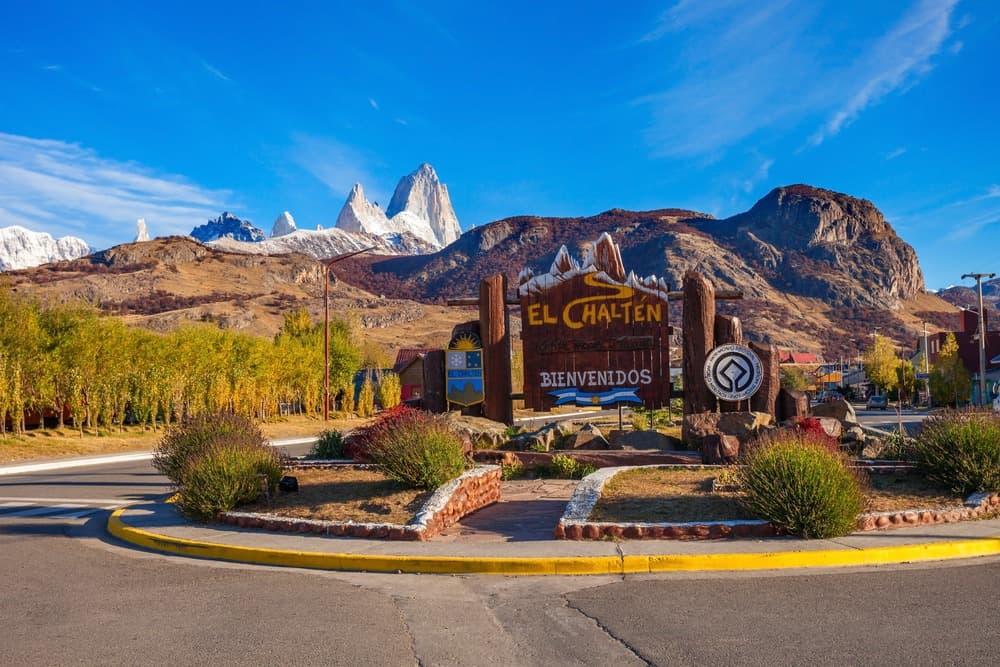
In southwestern Argentina, the small village of El Chaltén has become an essential stop on Patagonia's tourism circuit. The settlement overlooks the northern sector of the Los Glaciares National Park. A closer look at this colorful village that offers a multitude of outdoor sports.
A Bit of History
The name El Chaltén comes from a sacred mountain to the ancient Tehuelches: Fitz Roy. Its imposing and singular silhouette was frequently shrouded in cloud. The Tehuelches believed this was smoke, which gave this aboriginal name to the famous summit. "Chaltén" means the "smoking mountain."
In the 17th century, Spanish colonists invaded the territory. This occupation was marked by the "Campana del Desierto," during which conquistadors imposed their power through violence and exterminated indigenous populations, particularly the Mapuches and Tehuelches.
It was in 1877 that explorer Francisco Moreno discovered the Chaltén mountain. He named this summit "Fitz Roy" in honor of the captain of the Beagle, the ship that brought Charles Darwin to Patagonia.
Toward the end of the 19th century, another Francisco Moreno expedition aimed to demarcate the border between Chile and Argentina. The group consisted of Scandinavians and Germans, accustomed to Patagonia's harsh climates. They founded the first estancias near Lake Viedma. Today, the streets of El Chaltén proudly bear the names of these pioneering heroes.
Before the mid-1980s, El Chaltén was the subject of a major sovereignty dispute between Argentina and Chile. This tense period concluded, via Law 1771/85, with the creation of Argentina's youngest city on October 12, 1985.
From 1987 onward, El Chaltén's population and infrastructure continued to grow. On January 12, 2015, El Chaltén was declared "National Trekking Capital."
El Chaltén Today
El Chaltén is located in the Southern Andes, 215 km north of El Calafate. It's a picturesque village dotted with wooden chalets. Its population ranges from 400 inhabitants in winter to 900 inhabitants in summer thanks to active tourism.
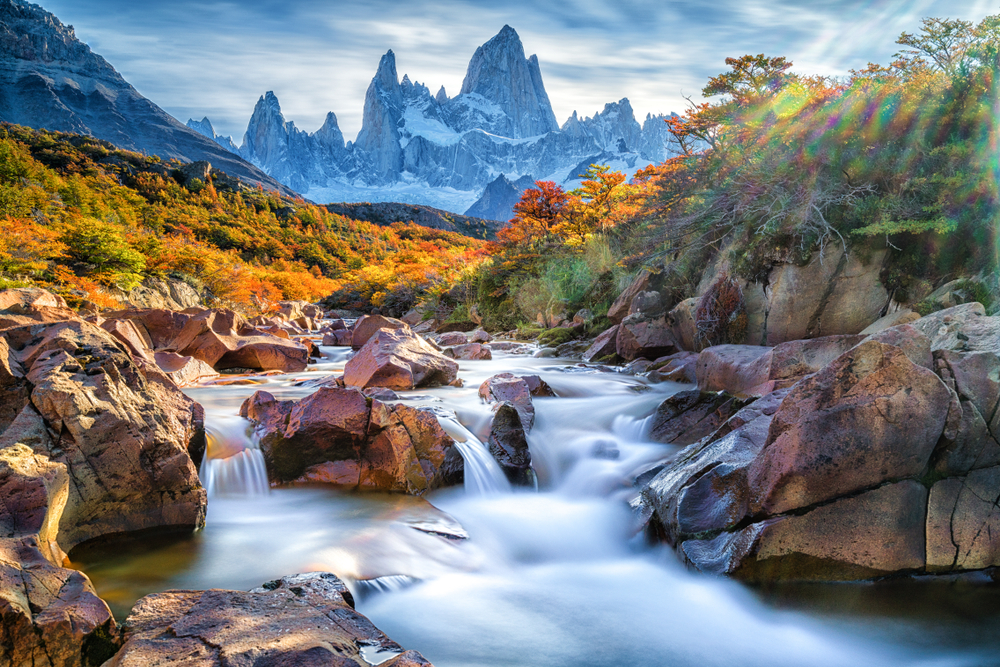
Just near the village stand majestically the peaks of Fitz Roy (3,405 meters) and Cerro Torre (3,128 meters). El Chaltén is the starting point for numerous circuits of varying difficulty and length, as well as highly technical climbing routes.
In this virtually uninhabited valley, at the confluence of the Río de las Vueltas and Fitz Roy rivers, wildlife finds pristine paradise. Many endemic animals exist only in this fragile environment, such as the Huemul, a deer species facing extinction.
For those wanting to soak up the local atmosphere, the ideal time to visit El Chaltén is October. Indeed, on October 12, residents celebrate "la fiesta del pueblo." The agenda includes barbecues, a grand ball, concerts, and numerous equestrian activities!
El Chaltén: Trekkers' Little Paradise
El Chaltén serves as the departure point for numerous treks to experience during a trip to Argentina. Less well-known than El Calafate, El Chaltén nonetheless promises breathtaking scenery, especially between October and April. During this period, the weather is particularly pleasant and the skies clearer.
The trails are numerous and most paths are well-marked. The easiest hike leads to Laguna Capri. Plan for three to four hours (round trip). This circuit offers several viewpoints of Fitz Roy.
El Chaltén is also the ideal starting point for a trek to Los Glaciares National Park, which borders the village. This park, spanning 539,300 hectares, is dotted with glaciated peaks, forests, and lakes. Most importantly, it is home to 13 glaciers, some among the world's finest.
Within this national park lies the legendary Fitz Roy, towering at 3,405 meters. From El Chaltén, 8 hours of hiking is enough to reach its base. This mythical mountain of the Andes gave its name to the village of El Chaltén.
Another day hike from El Chaltén is the Los Tres route, which undoubtedly offers the best vantage point. Los Tres (meaning "The Three") refers to the peaks of Poincenot, Fitz Roy, and Cerro Torre.
Cerro Torre is another summit worthy of your attention. Hidden by clouds 300 days a year, this rocket-shaped granite tower is crowned with immense ice and frost formations balanced precariously above abysses. Though modest at 3,128 meters, Cerro Torre remains nonetheless the most difficult and slender of the summits. It has inspired the most incredible lie in mountaineering history.
For hiking and trekking enthusiasts, the best time to visit the park is between late February and early March. This is also when wildlife makes its appearance. For example, you'll find the pudú, the world's smallest deer. You may also observe unusual birds, such as the condor, the world's largest.
Before attempting to climb Fitz Roy or Cerro Torre, make a pilgrimage to the small Chapel of Los Escaladores. It's a place of remembrance honoring mountaineers who have died on Fitz Roy since 1953.
Finally, before planning a stay in El Chaltén, check the dates of the "National Trekking Festival." This event celebrates trekking, as well as free climbing, trail running, and mountain biking, not to mention the speed climbing competition.
Activities in Abundance
From El Chaltén, you can take a small boat cruise to the foot of Viedma Glacier. If you have the spirit of an adventurer, strap on crampons to tackle the glacier.
If you plan to spend several days in El Chaltén, take the opportunity to explore the surroundings. In particular, discover one of the world's largest ice caps: the Campo de Hielo Sur.
For those preferring more verdant landscapes, Lado del Desierto is a wise choice. This magnificent isolated lake is the perfect spot to breathe fresh air while enjoying a pleasant moment of serenity.
Fine food enthusiasts will be delighted with their stay in El Chaltén. The village is home to two artisanal chocolate shops. At a restaurant or café, don't forget to order a cup of hot chocolate, both smooth and creamy.
Climate
In El Chaltén, seasons are well-defined throughout the year. Summer is mild, with average temperatures around 12°C. Days are long and sunny, but windy, with moderate precipitation. Winter is quite glacial, with an average temperature of 2°C. Days are short, with little wind and sporadic snowfall.
By Car
From El Calafate, which has an airport, you can reach El Chaltén by car. To do so, travel National Route No. 40 (215 km), then Provincial Route No. 23. From the North, you must take the same routes: No. 40, then No. 23.
By Bus
Bus service departs from El Calafate to El Chaltén (215 km). Several buses serve this route daily, with a journey of approximately 3 hours. From the north of Perito Moreno (220 km), bus services are less frequent. It's preferable to inquire in advance.
Attractions in El Chaltén
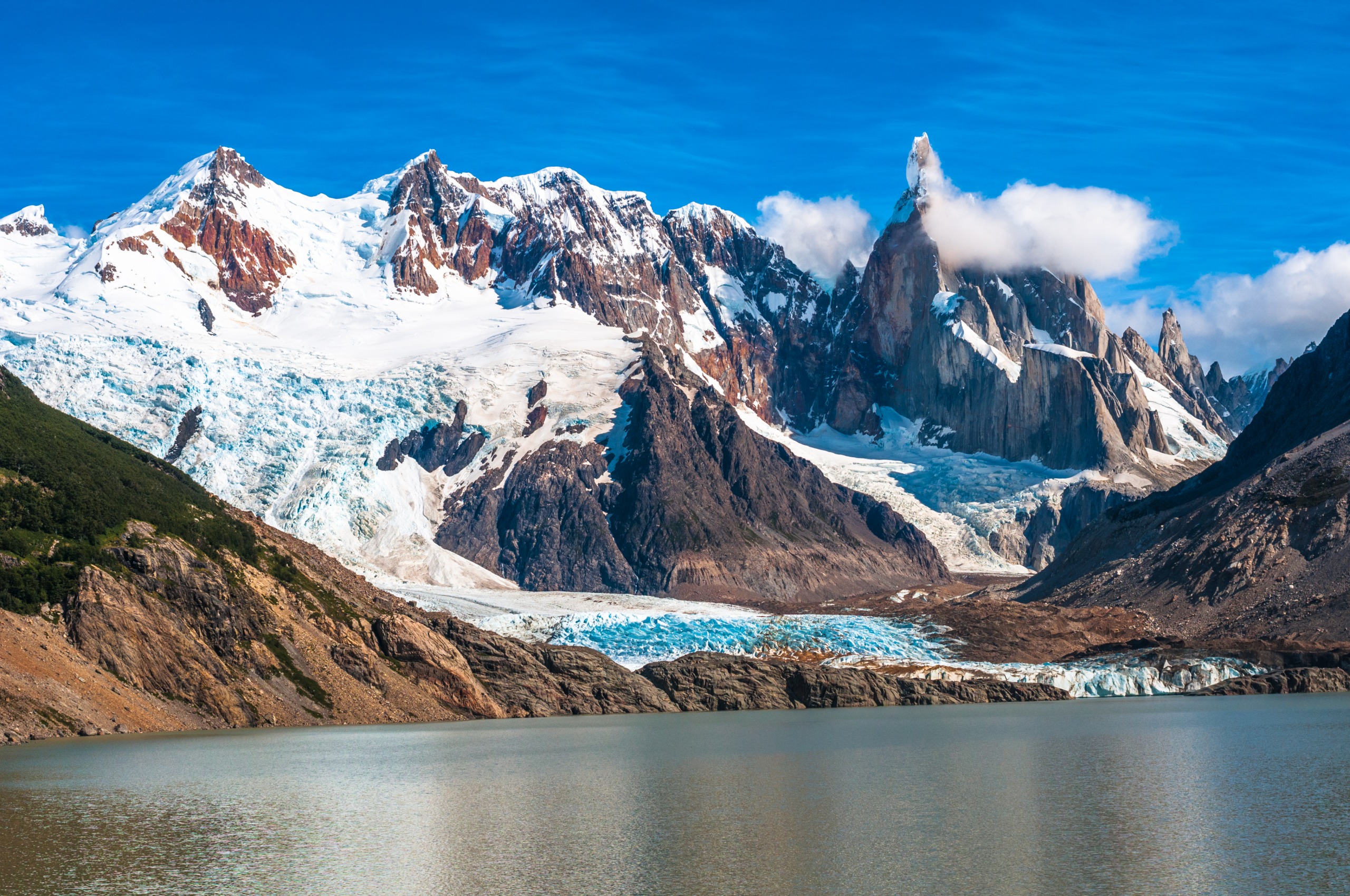
Cerro Torre
Flèche de granit de 3 128 m dans le parc national Los Glaciares, le Cerro Torre se découvre depuis El Chaltén par un trek accessible jusqu'à la Laguna Torre.
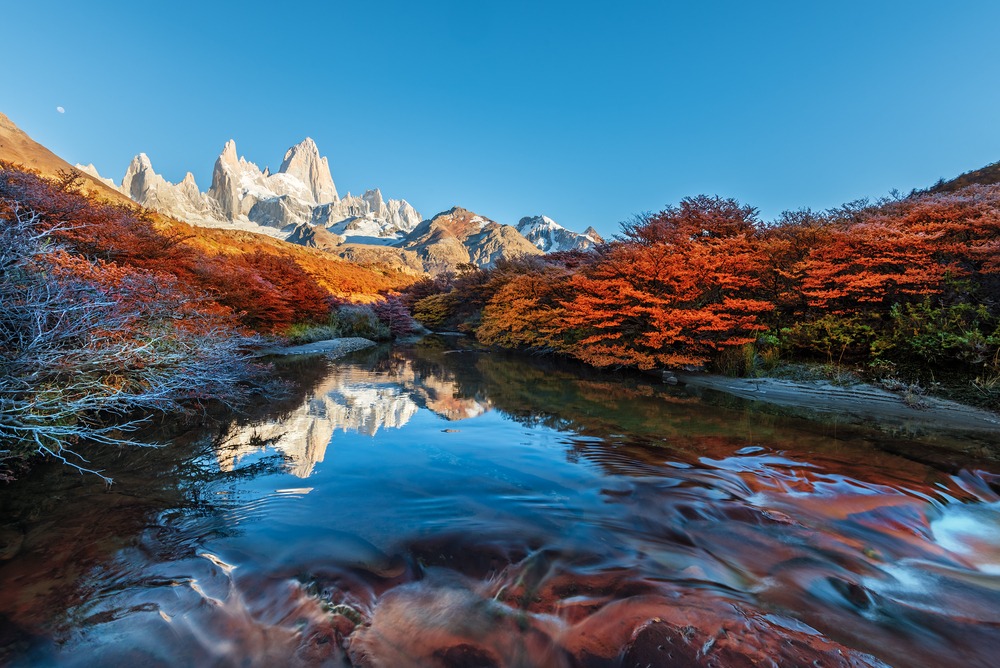
Fitz Roy
Sommet granitique de 3 359 m dominant El Chaltén, le Fitz Roy se découvre par trois grandes randonnées accessibles sans matériel technique.
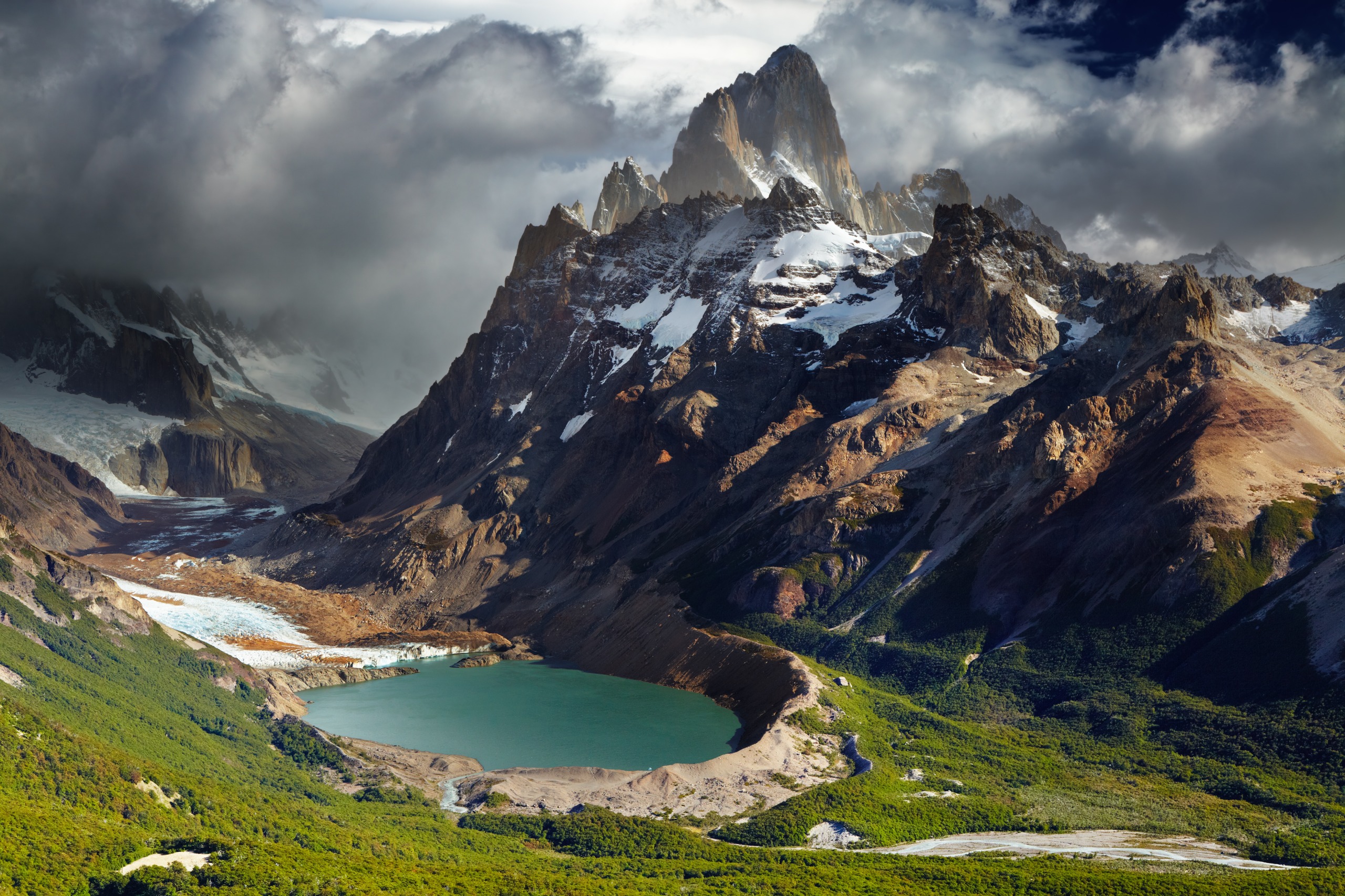
Lago Torre
Lagune glaciaire au pied du Cerro Torre, accessible par un trek de 21 à 24 km au départ d'El Chaltén, dans le parc national de Los Glaciares.
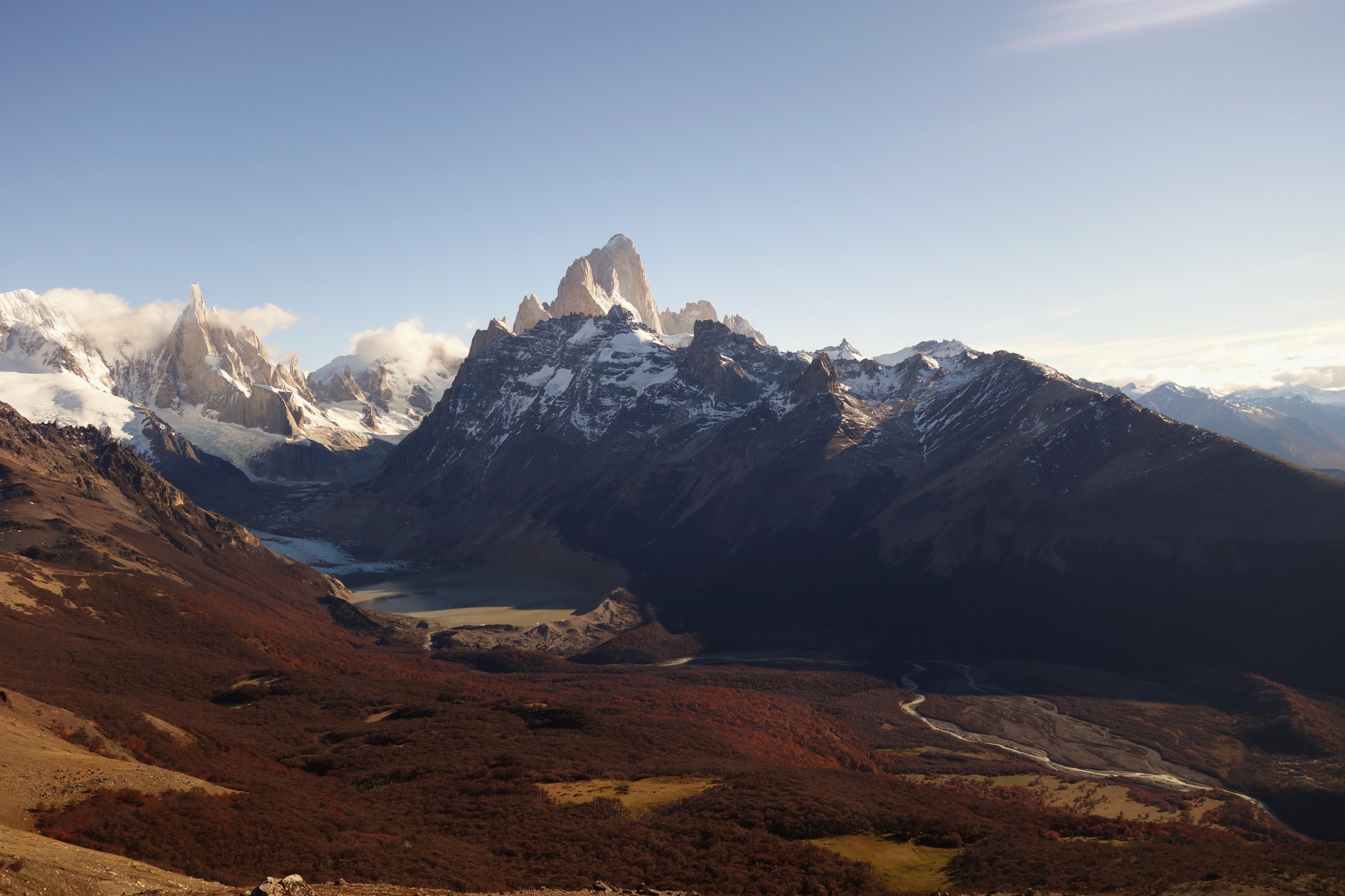
Pliegue Tumbado
Au départ d'El Chaltén, le trek du Pliegue Tumbado prend de la hauteur pour offrir une vue rare sur le Fitz Roy et le Cerro Torre, jalonnée de fossiles marins.
Want to discover this destination?
Our local advisors design your tailor-made trip.