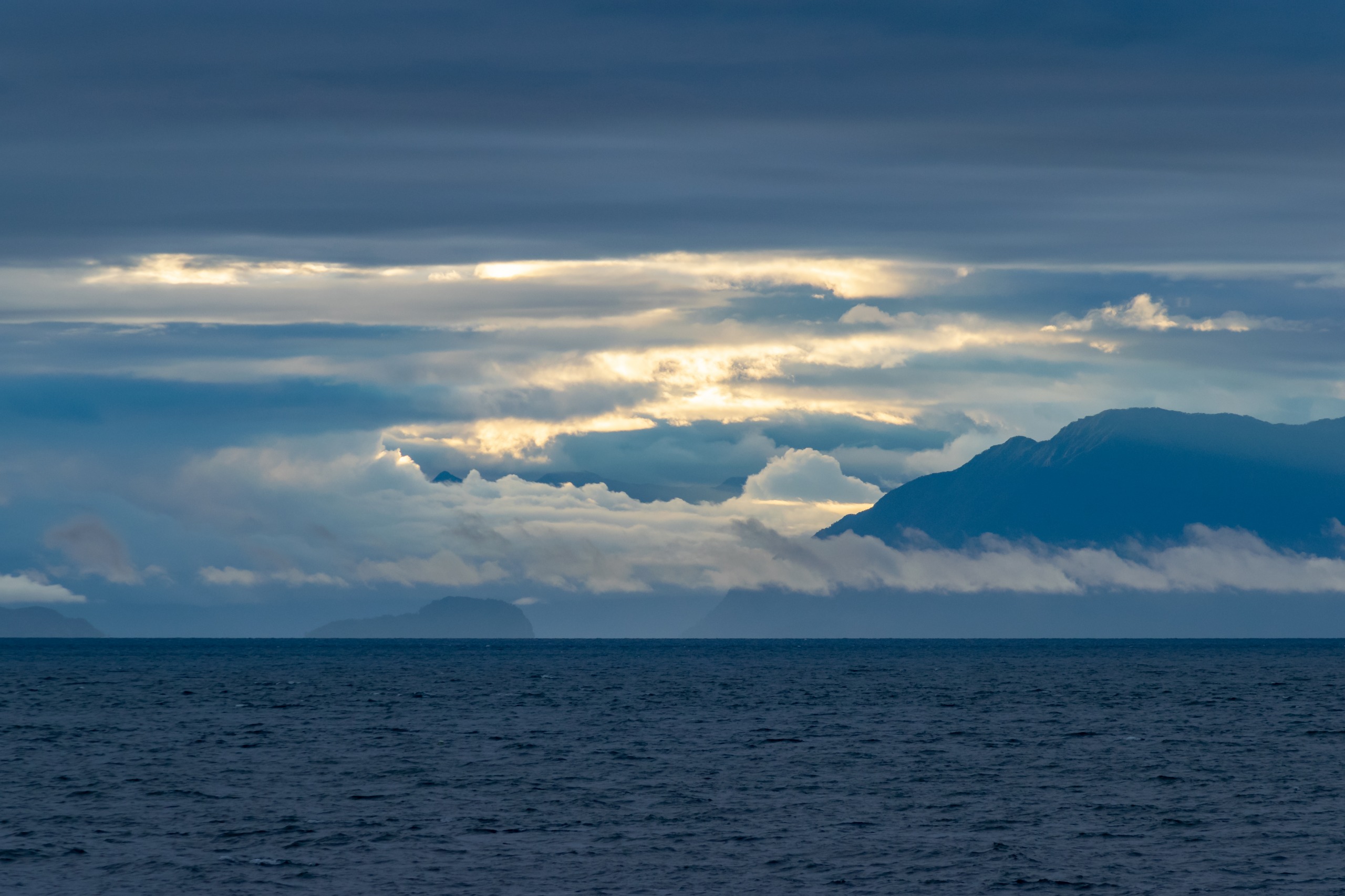
Seno de Reloncaví
The first fjord of Patagonia south of Puerto Montt, Seno de Reloncaví combines calm waters, snow-capped volcanoes, dolphins and isolated villages accessible only by boat.
Seno de Reloncaví is an interior fjord in southern Chile, located in the Los Lagos region, beyond Puerto Montt. It is one of the first fjords encountered when traveling toward Patagonia: calm waters bordered by temperate forests, snow-capped volcanoes as a backdrop, fishing villages accessible only by boat. The fjord concentrates rich marine life and an end-of-the-world atmosphere that remains relatively undisturbed.
Practical Information at a Glance
- Main access: from Puerto Montt or Ralún, by road then boat or local ferry.
- Recommended duration: a full day minimum; two to three days to explore the riverside villages.
- What to wear: waterproof clothing and warm layers, even in summer — the weather changes quickly.
- Accessibility for people with reduced mobility: limited; jetties and paths are often not adapted.
What You'll See
The fjord stretches for several dozen kilometers between hills covered in Valdivian forest. The waters mix fresh water (from the Petrohué and Cochamó rivers) and salt water, creating an ecosystem favorable to Peale's dolphins, sea lions and seabirds. Salmon and mussel farms dot the shores, testifying to the local economy.
History and Context
The region was inhabited by the Huilliche people before Spanish colonization. The Jesuits established missions here in the 17th and 18th centuries. In the 19th century, German colonists settled around Puerto Montt and left an architectural imprint visible to this day. The fjord remained isolated for a long time, accessible mainly by sea, which preserved its villages from rapid urbanization.
Highlights of Your Visit
The Boat Crossing
Navigating the fjord from Ralún or Cochamó offers direct views of Yates volcano and the snow-capped peaks of the Cordillera. Local vessels transport both residents and goods — an immersion in the region's daily life.
The Village of Cochamó
A small village at the head of the fjord, Cochamó is the starting point for the valley of the same name, nicknamed "Chile's Yosemite" for its granite cliffs. The wooden church, a national heritage site, deserves a stop.
Marine Life
Peale's dolphins are regularly observed from boats. Sea lions gather on certain rocks. Local fishermen know the best observation spots.
Local Gastronomy
Restaurants and guesthouses serve mussels, clams and salmon sourced directly from the fjord's farms. Curanto, a traditional dish cooked underground with seafood, meats and potatoes, is a specialty of the entire Chiloé and neighboring fjord region.
Photography Tips
Morning light, before clouds cover the peaks, is ideal for photographing volcanoes reflected in the water. From the boat, favor the east side to frame Yates volcano. Fishing villages offer beautiful scenes in late afternoon, when boats return to port.
Location and Access
Seno de Reloncaví is located approximately 50 km southeast of Puerto Montt. The road first runs along Llanquihue Lake before reaching Ralún, the fjord's northern access point. Local boats provide links to Cochamó and villages at the head of the fjord. There is no continuous road along the entire shore; some sectors remain accessible only by sea.
Nearby Attractions
- Puerto Montt — the region's main city, logistics hub and transport gateway to Patagonia.
- Vicente Pérez Rosales National Park — Chile's oldest national park, with Todos los Santos Lake and Osorno volcano, accessible from Puerto Montt.
- Chiloé Island — neighboring archipelago, known for its palafitos, UNESCO-listed wooden churches and unique culture.
- Cochamó Valley — trekking and granite climbing, accessible from the village of Cochamó at the head of the fjord.
Frequently asked questions
Southern summer (December to March) offers the longest days and the best chances of clear skies. Spring (October-November) is also pleasant, with fewer crowds. Avoid the heart of winter (June-July) if you wish to navigate: weather conditions are difficult and some local services are reduced.
A day allows you to reach Ralún and take a short boat ride. To reach Cochamó and explore the head of the fjord, plan for at least two days with an overnight stay.
Cochamó and Ralún have small inns and guesthouses. The offering remains limited; book in advance during high season.
Peale's dolphins are mainly seen from boats while navigating. Observations from shore are possible but less frequent.
Yes. Puerto Montt is the common departure point for Seno de Reloncaví and for ferries to Chiloé. The two destinations combine naturally on a five to seven-day circuit in the Los Lagos region.
Want to discover this destination?
Our local advisors design your tailor-made trip.