The village of Caleta Tortel
The village of Caleta Tortel
At the end of the Carretera Austral, Caleta Tortel stretches across 7 km of cypress boardwalks above fjords. A car-free village, shaped by wood and fog.
The village of Caleta Tortel is absolutely worth the detour simply to discover for the first time its network of wooden boardwalks, standing in place of conventional streets. Here's an overview.
Caleta Tortel
Perched in Chilean Patagonia, Caleta Tortel emerges like a coastal gem. This village offers an escape off the beaten path. Rooted in the history of cypress wood, it stretches along the shores of the Gulf of Penas, but it is its elaborate network of wooden boardwalks, replacing conventional streets, that sets it apart. Venture into this remarkable village, where the absence of cars and the charm of stilt-built homes offer an unconventional experience within unspoiled nature.
Its history
In the nineteenth century, the Caleta Tortel region remained largely unexplored. In the early twentieth century, the Chilean government encouraged the colonization of Patagonia. In 1901, the Compañía Explotadora del Baker obtained a concession to establish 1,000 settler families, giving birth to the first settlements in Caleta Tortel. However, in 1906, the company went bankrupt after the death of 56 workers from Chiloé. Despite subsequent concessions, only a handful of settlers took up residence.
Early development of the region was marked by the establishment of a radio-telegraph station by the Chilean Navy. In 1955, the municipality of Tortel was officially created in tribute to Jean Tortel, a French sailor. The population grew slowly and a school was built in 1970. In the 1980s, 80% of the territory was declared natural parks. In 2003, Caleta Tortel was finally connected to the rest of Chile through the construction of the Carretera Austral.
Discovering Caleta Tortel
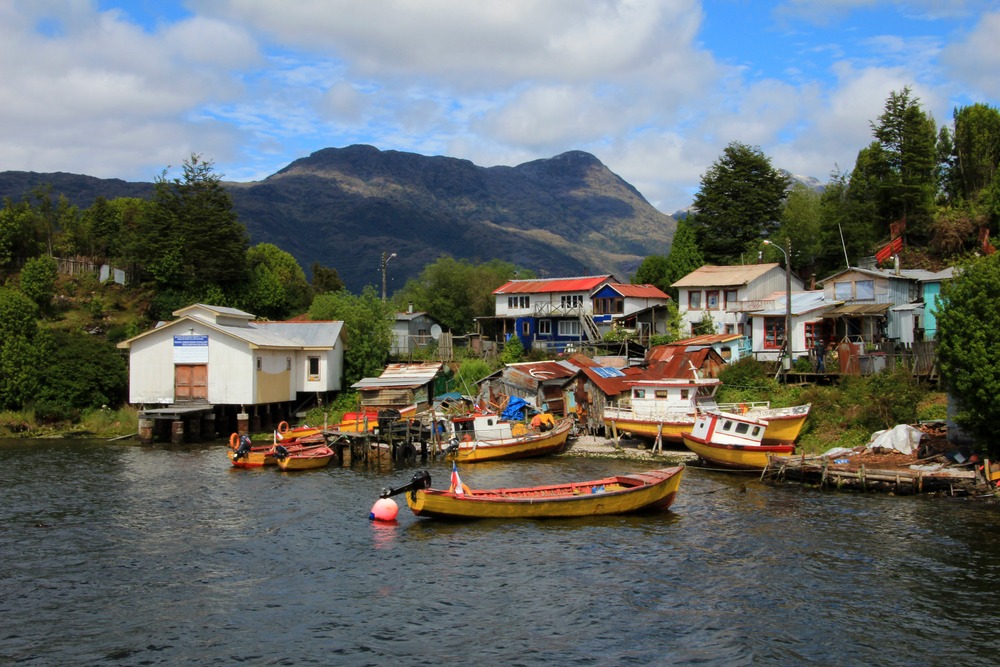
Caleta Tortel is a coastal village within the province of Capitán Prat, in the Aysén region of Chile. It had 523 inhabitants in 2017. It serves as the administrative center of the municipality of Tortel. Built essentially of wood, this village presents itself as a maze devoid of cars and conventional streets. Houses stack together harmoniously and wild vegetation covers the landscape.
Located at the end of the Carretera Austral, in the heart of a wind-exposed gulf, between the mouth of the Baker River, Chile's largest, and a small bay of the Baker Canal, Caleta Tortel stands out for its stilt-built homes, representative of Chiloé architecture. These houses are connected by a network of wooden boardwalks built from Guaitecas cypress, which has become a distinctive element of local culture and a prized tourist attraction. Stretching across 7 km, these boardwalks cling to the gray cliffs of the Gulf of Penas, forming a complex network that winds between the mountain and the bay.
Its topography is marked by rugged geography, composed of islands, fjords, channels, and estuaries. Recognized as a heritage site, the village preserves the history of the region's first settlers.
Good reasons to explore the village
Natural beauty
Facing the Pacific Ocean, you'll find yourself at the heart of an irregularly contoured fjord, dominated by modestly sized mountains adorned with winter whiteness. On the horizon, modest islets punctuate the ocean expanse. The majestic Baker River, among Chile's most beautiful, winds nearby, carving out a remarkable estuary. Just steps away, the opportunity presents itself to reach rocky shores or beaches.
An off-the-beaten-path experience
Caleta Tortel presents itself as an escape from the crowds that flock to other parts of Patagonia. With an atmosphere of "the end of the world," it's the ideal destination for an off-the-beaten-path experience in Chile.
Connection with nature
The ferry from Puerto Natales stops at Caleta Tortel, making this stopover particularly appealing, especially during a sailing cruise among Patagonia's fjords.
History and tradition
Visiting Caleta Tortel goes beyond aesthetics and allows immersion in an authentic cultural identity. Rooted in tradition, the local community warmly shares its love for this preserved corner. The builders of Tortel, brave loggers and fishermen, left their mark on history.
What to do?
Hiking
Take the trails winding around Caleta Tortel, including the circuit to Cerro Bandera. This half-day hike offers breathtaking views of the Baker River and Tortel Bay. The paths can be wet in places, so make sure to wear waterproof boots, especially after heavy rains.
Discover Katalalixar National Reserve
It's a collection of wild islands, nestled within forests and accessible only by boat. Katalalixar lies between the glacial expanses of northern and southern Patagonia. The absence of tourist infrastructure guarantees an experience where you'll have the islands all to yourself.
Discover the history of Isla de los Muertos
A few minutes' boat ride from Caleta Tortel lies a small island with a dark past and singular beauty. Nestled among ferns and dense trees, this island is home to 59 wooden crosses, erected in memory of workers who undertook road construction in these lands in 1905.
Stroll across the boardwalks
Traversing the wooden maze of Caleta Tortel is an irresistible invitation to exploration. Let yourself be seduced by these wooden structures that reveal panoramic vistas. Surrendering to the winding paths of the village becomes an experience steeped in enchantment.
Observe marine wildlife on an excursion
Participate in boat excursions to observe marine life. The waters teem with a variety of fauna such as dolphins, sea lions, and seabirds. Depending on the season, your outing may also bring encounters with whales.
Discover glaciers
Embark on a longer boat adventure to admire local glaciers such as Glacier Jorge Montt. Expect an authentic experience, especially if the sea is rough. The experience can be difficult to organize, but the view of a glacier is worth the logistical challenges.
Taste local gastronomy
Sample local dishes, with particular emphasis on fresh seafood such as king crab.
Paddle close to nature by kayak
Explore the coasts of Caleta Tortel by kayak. This activity offers a unique perspective on the glaciers, fjords, and local marine life, with excursions ranging from a few hours to several days.
Location
Caleta Tortel, also known locally as "Tortel," stands in the Aysén region, in the heart of Chilean Patagonia. Situated within a labyrinth of islands and fjords of Capitán Prat province, it stretches along the coast, near the delta of the Río Baker, a major river in southern Patagonia.
Strategically positioned between the glacial expanses of northern and southern Patagonia, it reveals its full splendor south of Laguna San Rafael National Park. This privileged location offers stunning views of landscapes scattered with icebergs and glaciers, accessible within minutes from the Carretera Austral, the main highway that runs through Patagonia.
Climate
This village enjoys an oceanic climate with Mediterranean influence. It is characterized by cool summer temperatures, cool winter temperatures but always above 0°C, and precipitation distributed throughout the year.
How to get to Caleta Tortel?
By boat
The Tabsa ferry takes 2.5 days to travel from Puerto Natales to Caleta Tortel.
By bus
For this option, you have two possibilities: either from Cochrane (to the north) or from Villa O'Higgins (to the south). Choose between Katalina and Los Glaciaires bus services.
By car
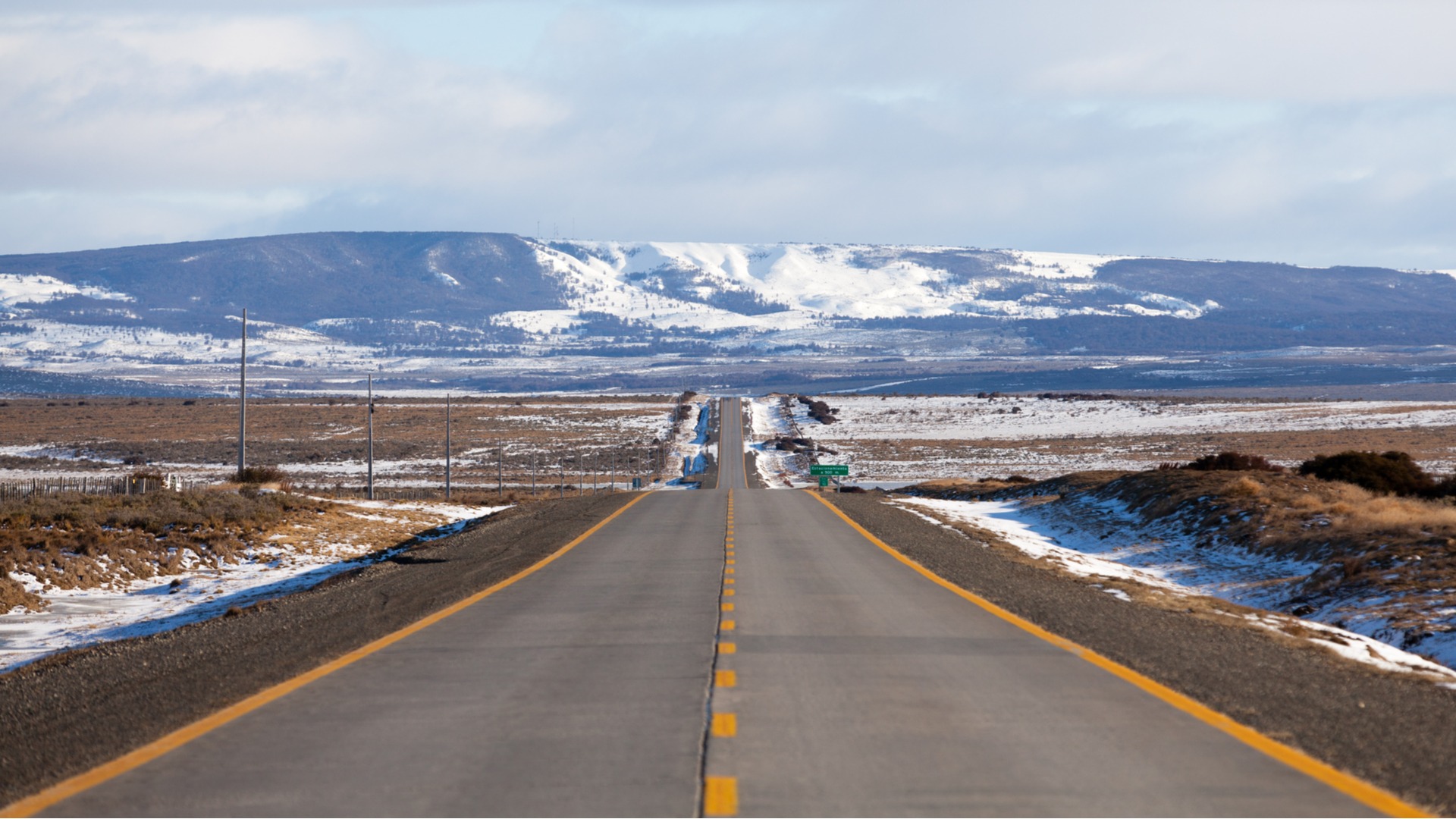
Exit the Carretera Austral (Ruta 7) by taking the appropriate exit, then follow route X-904 along the Río Baker for approximately 30 minutes. However, vehicle access within this village is not permitted. You must therefore park at the entrance and continue on foot.
Want to discover this destination?
Our local advisors design your tailor-made trip.